112 · WORLD CLASS TRACK MEET
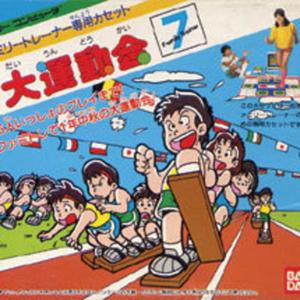
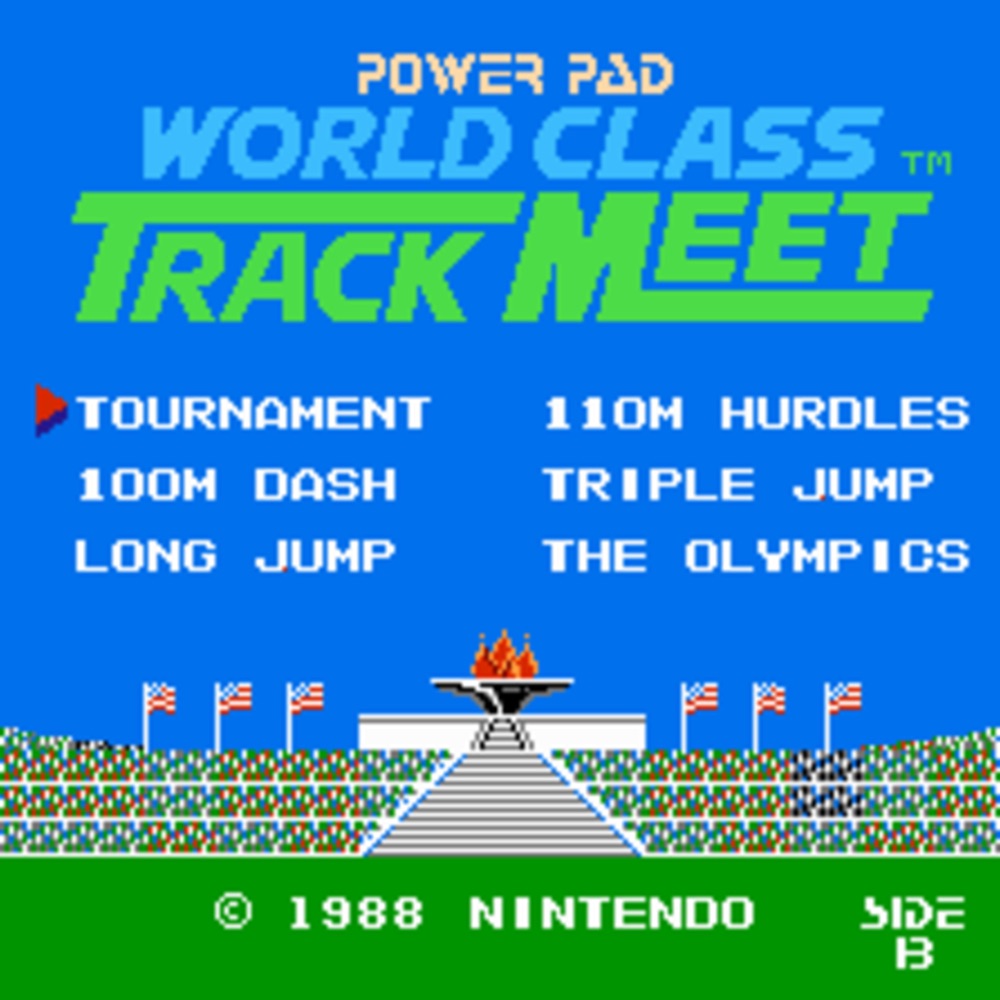
This action packed game turns your home into an exciting stadium! With the performance of the Power Pad, this will dare you to increase your phsyical ability and surpass your athletic goals.
SHOW NOTES
NES Advantage
NES MAX
Street Fighter 1
Sid Meier's Pirates!
R-Type NES Conversion
PC-Engine
Master System Games
Fantasy Zone
Alex Kidd
Space Harrier
Wonder Boy
OutRun
AfterBurner
- RUN, JUMP, AND RACE TO YOUR HEART’S CONTENT
- Introductions
- World Class Track Meet
- Repurposed Stadium Events now sold by Nintendo to promote the Power Pad
- Not a real problem, but could you have bought this game twice?
- Nintendo Play Station is at Auction
- EGL
- Accessories
- NES Advantage - June 87
- NES MAX - 1988
- ROB and defunct hardware (Think Rockband)
- State of Gaming in 1988
- Arcade
- 16 bit is now available
- Where are the ports of?
- Pac-Man
- Street Fighter 1
- Sid Meier's Pirates!
- R-Type https://www.youtube.com/watch?v=i180SFOH4sQ
- Zelda II, Castlevania II, Final Fantasy, and Dragon Quest are out in Japan
- Sega Master System
- Fantasy Zone
- Alex Kidd
- Space Harrier
- Wonder Boy
- OutRun
- AfterBurner
- PC-Engine is out there
- Despite being known as the Turbo-Grafx 16 it used an 8-bit CPU
- Arcade
- What Are you looking forward to next?
- RPGs
- The next SHMUP king
- Platformers that try to mimic Super Mario Bros.
- 25:43 - SONG
- 29:47 - Break
- 33:53 - Sean Resets
- 36:05 - Back in
- 38:15
Auto-generated transcript. Each paragraph starts with its timestamp. Speakers are not identified.
World-class track meet. Run, jump, and race to your heart's content.
And welcome to NEStalgia, a chronological exploration of every NES game released in North America. I'm Mike. And I'm Sean. And that's all for today. That's it, really. Seriously, we're going to end the podcast right now. Good night. What I mean is that it's just me and Sean today. It's a nice intimate record because this game, as some of you know, isn't really that important. So others have abandoned us. Yeah, it's basically we're getting a duplicate.
We accidentally played the same game twice, but it turns out that they just released it twice. Yeah, this one's this one's strange because the person who releases it changes to like to make a long story short here. World-class track meet is the way almost everyone who grew up with an NES knows this game. And you know it fairly well because it also got packaged in later on with Super Mario Brothers and Duck Hunt. So a lot of late NES buyers, if you bought it around like 90 or 91, you probably got this as like the sole pack-in game, which is great. I mean, three games on one card is pretty cool. The value. Yeah. Well, I mean, I don't even know what an NES would be going for in 1990.
It'd probably come with everything, too. You know, the power pad, the zapper, hopefully not Rob. Stickers, probably. Yeah. Stickers are cool. Yeah, I like stickers. Where do you stand on the whole like putting stickers on your console? That's stupid. But as a kid?
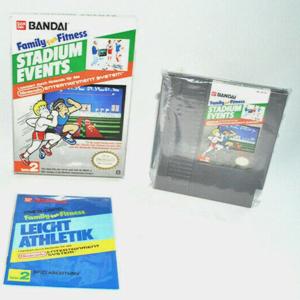
I wouldn't have done it. Okay. I didn't do it either. Yeah. I think I one time put stickers on my Guitar Hero guitar, and even I regretted that. I said, what am I going to do? And I was able to trade it. So that was great. To get back to the point, World Class Track Meet is better known as stadium events in the chronologicalness of everything. We've already played stadium events. So you're wrong if you thought this was track and field now turning into World Class Track Meet.
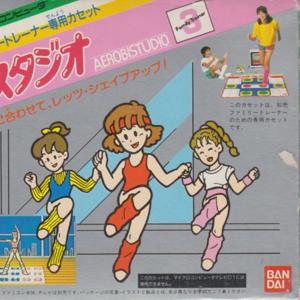
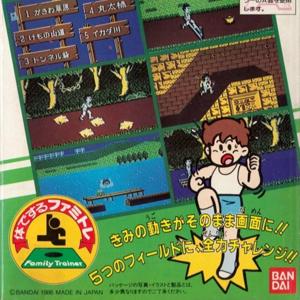
This is stadium events now being bought out by Nintendo from Bandai. You remember Bandai had the Family Fun Fitness Pad, and Nintendo said, hey, that sounds great. We'd like to buy that and all of your games, and we'll release something called the Power Pad. Yeah. So we know all about the Power Pad. We've talked about like at least, you know, we were talking about the old version of this, but it's basically the same thing.
Do we want to go through like the essential games list for this now? I think we will. One quick thing, though, since we're talking about the Power Pad. Do you know why they called it the Power Pad? To go along with the Power Glove. Power Glove was later. You know, they had plans for the Power Glove. Okay, cool. I think it had a lot to do with that now you're playing with power tagline. Now you're cooking with gas.
So I think it's like, you know, yeah, that'd be funny if their tagline was now you're cooking with gas and they called it the gas pad. I like that. Yeah, no, we will do the essential games list very shortly, but there was just one immediate problem that I had about this thing.
And something didn't sit right with me, okay? If 23,000 copies of stadium events were allegedly sold before it was like taken off the market, right? Mm-hmm. And that's all alleged. We will never know how many. Some people think it's as low as like 1,000 copies were actually sold. But even if 23,000 sold, there is a real problem here that some lesser informed person could have bought the same game twice.
They could have already owned stadium events, liked it so much, and then said, wow, I like games with pads so much I'm going to buy world-class track meet. And then they find out it's the same game because it literally, outside of a repaint on the title screen, even the way that the selection for the different modes, they're all placed out the same way using the same text. So it's just a logo swap. Honestly, like the actual circumstance is different, but this happens with me today.
Like just with the fact that, you know, I own a game on some service. Like maybe I just bought a Humble Bundle, didn't notice I already owned it, and I buy it again on sale on Steam. Like this happens to me all the time. Right, right, right. But with different circumstances surrounding it. So, you know, it's a problem as old as time.
And we've touched a lot on the stadium events episode about rarity of games and what video games are worth and collecting video games. But I wanted to add to that here because now that World Class Track Meet exists, we should talk about is there anything actually like worth it of stadium events and the fact that like World Class Track Meet sold millions of copies. So it's kind of weird that just because a game is packaged differently that it sells for an incredible more amount of money when you're virtually playing the same programmed game.
Yeah. I mean, I'm not a collector aside from like some things that I just think look cool, I guess. But, you know, if you see a game that's got the PlayStation that's got that green greatest hits, it doesn't quite look as cool, I guess. Or obviously it doesn't carry as much market value as the original Black.
So, I mean, it's just market forces. I don't know. No, it's true. I mean, there's a demand for it because, you know, as I was talking about that, I was kind of thinking like, well, I'm kind of talking about collector's editions too, right? Like, why would a collector's edition be worth more than a normal version if you're just playing the same game? Sometimes it's about the packaging more than anything.
So, I don't think when collecting video games, I actually feel like that whole market has very little to do with like love of video games and more to do with just this like obsession of completion. Yeah. You know, you want it, you want the things, especially the things that are in higher demand, like say stadium events because there's only so many known copies of it. You want them because only so many few people can actually complete the collection because of its availability.
Exactly. And it's the same as, you know, the conspiracy theory that says that all modern art is just a conspiracy by the mega rich to consolidate all their money. Yeah, that's true. Do they get taxed on that? I have no idea. Yeah, but it's a good way to move funds into art because like, I feel like they don't get taxed on that. And then, and then they. I don't know. I'd have to, I'd have to read up some stuff about Sotheby's. I'm not sure. Got it. Yeah. Sotheby's, they're behind this whole thing. The whole shebang. And if we're going to talk about auctions, we might as well talk about it's over now. But at the time of this record, there are three days left on the Nintendo PlayStation auction for Heritage.
Heritage auction. Put it up like a month or two ago. No one knew what it was going to sell for. You know now if you just look it up and I'll post it in the show notes here. But right now it's sitting at like $228,000, which is more like upwards of $300,000 after like all the fees and stuff. Yeah. What do you think this thing's going to finally hit? I mean, I'm not sure how auctions mutate over time. I don't know if there's like a huge uptick in the last few minutes. I imagine they would. So if that's the case. I think that happens especially for online auctions there too. I would say maybe it'll hit half a mil.
This is a random guess. Yeah. And that's what they're all about. You know, random guesses. First off, for those of you who have no idea what I'm talking about, you're like, you just said two companies. No, I didn't because I never said Sony. Nintendo PlayStation was the like add-on successor to the Super Nintendo that was going to be able to play CDs.
And then Sony took their ball and left. Yeah. Basically, Nintendo was like, no, we're actually cool without CDs. We got this new flash disk format for N64. And Sony's like, what the heck? We'll just make our own. We already have the software set up. So they released the PlayStation instead. One of these was found in the wild and is now at auction. Before anybody yells about this should be preserved, it has been preserved. The BIOS is dumped. There's no games for it. So you don't have to worry. Yeah. What? You don't have to worry about that anymore. I initially guessed that this would easily be the highest selling video game thing of all time.
But that's not much. That's like $100,000, right? I could have sworn there was something that just went for over a million. Wasn't there? Over a million? I don't know. I guess I'm just talking on my ass. Yeah. I mean, I'm trying to think, but I can't think of anything that went for over a million. I believe a brand new copy, like a sealed copy of Super Mario Brothers was bought by some art collector for like $100,000. Because they don't get it that that thing is not necessarily in demand.
Yeah. But as time goes on, Super Mario Brothers is going to be like the coveted video game. And to have it completely sealed is worth some kind of art. We don't really know what video game art is right now in like the same way that, you know, when they were doing the Renaissance, they didn't think like, oh, this thing's going to be selling for, you know, billions of what our dollars are currently worth. I must be thinking more about the comic book world because that gets up there. The comic book world right now. Yeah. It's like Superman.
Well, Action Comics number one, the first appearance of Superman is close to like 3 million. Okay. Yeah. And I'm pretty sure if another copy of like Detective Comics 27, which is the first appearance of Batman, if that went up for auction now at like a 9.8 or something like that, which would be unheard of, that would easily go over 3 million. And now before we entirely move on from this sidebar, that also sort of raises a question. Yeah. I think that's a question because, you know, with physical material, you can restore it.
Like, you know, I don't know what the process is for, you know, the pulp paper that a comic book was written on. It's very easy to restore it. You can restore it and you can restore paintings and you can restore statues. But I don't really know what happens when the chip in a Nintendo game starts to degrade. Like, I know that we have it all digitally preserved, but will these physical boxes mean anything if the actual chip inside is degraded? Yeah. No, it's very true.
Does it become like a form of art that the cartridge itself has the logo of the game that used to work, printed more money on it? You know, this was kind of experienced in the early 2000s when the – and it didn't happen to all NESs, but the pins, the contact pins on the actual console themselves started to decay. And they wouldn't read the games properly. And everybody thought like, oh, no, our NESs are broken. But what they figured out is just to insert a new 52 pin to the NES and that would get the cartridges reading like normal.
But that's – what's that? Yeah. Right, right, right. It becomes a new NES. But also, it's not the same thing because all you did was change your NES. That's like just saying that you don't have an original Nintendo Entertainment System. It's not changing the cartridge itself. So I think that's a great question. Yeah. I think it would have to be handled in a weird way similar to how comic books and art handle it too where you have a person who detects for restoration. And if it is been – if like Action Comics number one comes in at like CGC 9.5, right? And they do some – well, you can't get a 9.5. You can only – you get a 9.6. Sorry about that.
They would give it a purple label on the CGC to note that it's restored. And that would bring it down like several hundred thousand dollars because of that note that it's been restored. And it also depends on the kind of restoration too. Like did you take a cover from a different Action Comics number one or did you just like – did you press it? You know, sometimes presses are so good you can't even tell and they don't get listed on the restored.
And then you have to wonder, has mine been restored or has it not? But – so those are all things to consider. But maybe there's like a thing for that for video game collectors too where they – like they get separated between like working copy and like this was at one time a working copy. And it's just like a pile of mush now. Yeah. I mean it's a really scary thing to think about. But thankfully the real fight in video game preservation is mostly done.
Yeah. You know, a lot of the games that mean something throughout time are readily available for you. It's when it gets to stuff like the business side where like Nintendo doesn't want anyone to know what happened at their company ever other than the current thing that they're working on. That stuff's all getting lost unless someone preserves it.
Prototypes of games, that stuff's hard to find because they don't like – they don't have readily available. Like it's really cool if you see someone collecting Sonic prototypes because there's like a whole community for that. You can play like six different prototypes of Sonic the Hedgehog 3. But you have to imagine that they were making that game. They went through like hundreds of versions, right? Like they must have had hundreds of working copies with little bug fixes here and there. It's going to be really hard to find all that stuff.
Who's that for? I don't know. But the fact that it can easily be preserved for kilobytes means that we should be trying to do that stuff. No one should be worried about how are we going to play Super Mario Brothers in 2100. Like someone will find a way. It's not going to be that hard. But how are we going to play Destiny 2 in 2100? Right. We probably will be able to.
Similar to how like people are still playing Final Fantasy 11. That just blows my mind every single day. It's like there's that Final Fantasy 14 is like apparently really good. So many people play that. And then there's also this other community of people playing a decade older MMORPG that still gets updates. Unbelievable. What was this about? This was about World Class Track Meet. World Class Track Meet. And we're going to decide if it's essential in the Essential Games list.
I would like to note before we go any further. And I'm noting in here for the true listeners because I'm sure some people heard that we were going to the Essential Games list and just turned this thing off. Because they knew what we were going to say. But we're going to do a whole thing after this on like the state of video games in 1988 with Sean. You can tell because of how much time is left. Yes. And I think that's going to be really fun. So you should definitely stick around for that. As for our Essential Games list votes for World Class Track Meet, Sean, where do you stand? Well, you know, there's something to be said about World Class Track Meet.
It is the same game. So it will get the same score. But it is a cool oddity that you don't really see that anymore of just the same game under two titles. So it's not essential, Mike. All right. I have to double down on this and also say not essential.
Sean made a brilliant point. And that was that if a game is the same and has been voted not essential, it should be not essential again. Again, where things get tricky because we will review this game one more time.
Where things get tricky is that the next one also has Super Mario Brothers and Duck Hunt on it. Two essential games. Oh, okay. So does that one become more essential than either of its counterparts? Is the whole the sum of its parts? I don't know. We'll have to find out in that episode. I think that's pretty close. Like honestly, in the grand scheme of things, probably less than 200 episodes away. So even though you think you're far away from the time you will ever hear about World Class Track Meet again, just know that it is always running slightly behind you.
Sean, let's talk video games 1988. Okay? All right. I have not prepared you at all about this. I have no idea what we're going to do. I haven't like looked up outside information. But I've heard that people want to hear your opinions on these things. I highly doubt that. And they like what you have to say. You have a very focused point of view, if I may say so. Oh, thanks, Mike. So first, I just want to get on the topic of accessories for the NES.
Okay. The power pad was the focus of World Class Track Meet and the Family Fun Fitness pad before that. Nintendo released with a little thing called Rob. Oh, yeah. We haven't talked about Rob since the second time he ever released a game and then went away for good. What do you think is like on if you're like a kid in 1988? Just remember, people are just now starting to own Nintendo Entertainment Systems and they're getting their Rob. They know that there hasn't been a game out for Rob, or they don't for the last three years.
What's going on with that? Do you throw that out at this point? Are you done with Rob? No. Okay. So when I was a kid, there was a remote control robot called Rad. Like R-A-D. I had it. Yeah.
I had that in my room up until I moved out. It was just buried under stuff. Yeah, yeah. And so I mean, at least me, like even with more recent examples, like the iToy, like that was just in a cupboard somewhere. I never throw anything like that out. Got it. Because it is a novelty item and you never know when you might need it.
The iToy is a great example because that's even like a little more of a niche thing. I was thinking right away with defunct hardware, I think of all the rock band and Guitar Hero gear. Yeah. Like everybody has this plastic drum set somewhere in their house that they don't use. Like nobody threw it out, but it's just there. I want to play it again. But I would never throw that stuff out either. Like that's just how I look at peripherals. And no matter how unwieldy they are, I think that if I bought it, I'm going to keep it. So that's how I stand on it.
And true to form, I am somehow the same way because even though I don't have anything in my apartment, back at my parents' house, I kept everything in terms of defunct hardware. Things that for consoles that I've just like bought but never bought any games for. Even have stuff like that. I have Game Gear that I own nothing for. Right. It doesn't make any sense. But you never know when you're going to need that stuff. And that's a hoarder mentality. I know. And I don't think anyone should feel bad if they throw out their defunct hardware.
But I'm going to take a good guess that anybody who bought Rob still has it in 1988 on the off chance that they might make another game for Rob. Remember, they never canceled Rob. They never said like he's out of print or we're not. Rob is canceled. Right, right. Rob is canceled. Rob's dead. They never did anything with that. And I think that's just a little strange. I think I would have felt some ill will towards Nintendo like what happened to him.
Because the Zapper is getting continuous releases. Yeah. And the Power Pad is – it will get some stuff. Yeah. But I wouldn't be angry per se. Especially because – could you buy it by itself? Yeah. Apparently you could. Ooh. But I don't know – like I don't have any images to verify it of like it at a retail store. Yeah. It usually came packaged with the NES.
I mean if it just came with it – Or maybe it came with Gyromite. I mean if it just came with it then I really couldn't feel bad about it. But if I went and I bought it because I thought this was going to be the future of video games – Right. I would have some doubts about my judgment but also be a little more pissed off. And the other accessories to keep in mind right now that are actually useful is something we referenced on the show before, the NES Advantage. That is a giant like square block that then has an actual joystick and arcade-like buttons.
You know like the size of – a little bit bigger than a quarter but they feel like a normal arcade press and stuff like that. That was designed to be like for pro players because remember pro players went to the arcade. Yeah. So if you really wanted to step up – And that's still a thing. Yeah. It is. I mean you see that now even with the Xbox – what do they have? They have the Xbox One X regular controller but then they also have the Elite controller I think it's called. Well I was more looking into like the USB arcade – Oh like fight sticks. Fight sticks. Yes. Okay. Right. Now the problem with the NES Advantage that I am thinking about is that as of right now outside of maybe the shmups there's no real like use for that joystick.
I mean looking back on how often we've played games that are just so arcade – that they show their roots in the arcade so heavily. Like I imagine that almost any game on the NES feels a bit more comfortable on this thing. But they still only read the same direction that a D-pad reads. It's not like you can – A joystick does have a very different tactile response than as a D-pad. So I don't know. I think I would maybe enjoy some of these games more if I was using a joystick. Yeah. And I don't know if you play on a traditional NES controller but that's what I do. And sometimes I do wish the buttons were bigger.
So I think that that would have been nice too to have like a full separate arcade feel for each button as well as having a dedicated hand to your – You know, I just feel like the way that I hold – The way that I hold the controller now is very based on the DualShock and the Xbox One controllers.
So my index fingers are like arched. I'm showing Sean right now. But you guys know what I'm talking about. Like where the L1 and R1 would be. They're like that. And so I don't know how people used to play NES games and stuff like that. Like I don't know if they held the controller with like their – all the rest of their fingers tucked behind the controller. But I do the same thing and tuck in the index fingers on the top of the square box. You know what? I've done some research into 80s movies and I just – I look at the scenes in which they're playing video games and they seem to just hold it like a remote control with two hands.
Got it. Okay. Yeah. And if you would look into our next accessory here, if you would look up the NES Max, that comes out in 1988. The exact date isn't known so I can't say if it's already out or not. But this takes on the shape of a more familiar controller. But you never really see this in any promotional work or anything. Kind of looks like a mistake. Yeah. Kind of looks like a mistake. I actually thought it could be a little more comfortable than the traditional NES controller. It looks like it at least has the attempt at ergonomic design. But it just – those curves. If you're looking at it yourself, listener, the curves just look wrong.
Because they're too jagged? Is it the – like they're too blocky? It's like when you try to – if you're not an artist and you try to do like a freehand circle, like compare that to like an actual circle. That's what I like. Somebody tried to draw the idea of a controller, but they tried to do like a freehand circle. I don't know how I'm describing this. I understand. And also, I kind of like this joystick better. I'm actually surprised to see this that far back.
It looks – It's not as pronounced as an arcade joystick. It looks more like something on the GameCube. You know, like that GameCube analog. See, I was looking at some very low-res images. I thought it was just a red D-pad, but you're right. That is a joystick. Yeah, if you look at one top down, it will look like a terrible like thumbprint D-pad, but it's actually a joystick. So it sort of looks like what's on the 3DS. Yeah, that's true. Yeah, the 3DS was a little more strict in movement. This one has a little more wobble to it. Wibble. The weebles wobble, but they don't fall down.
Yeah, so I really like this controller, and I do want to get my hands on this. I also like that it has a turbo option. Not that the NES Advantage had that as well, but this one seems in better proximity to the bottom of your thumbs, which is what I use for the B&A. I just switch off between them. I only ever use one thumb. I should make that note. That's good. I don't play with the controller down on a table and use my – Hey, if you have to, then that's fine too, though.
I mean, I think some people actually do that for like world record strategies and stuff like that. Yeah, and if you are looking for this controller, I mean, looking at it right now, it looks like it's only 18 bucks. Oh, great. Okay, so I can pick that up because we just made a million dollars on the podcast last month. That's true. So shout out to all the donors. I think that's disingenuous, Mike. Okay. That's probably true. We didn't make a million. We made a billion.
We made a billion dollars, and we're going to open – we're going to re – basically, we've talked to Nintendo. We're going to open up the factories again and print more NESs. We're also going to put up a paywall around the podcast, so see you later. Do we need a paywall if we made a billion dollars? We want more money.
All right, so that's it for Nintendo for a moment. We'll come back to them. I want to tell you what's going on at the arcade. What's happening? Because I want to know what – where are our ports? We have gotten a lot of great arcade games, right? Mm-hmm. Port it over to the NES, but we are missing some really, really good stuff, okay? We're missing Pac-Man. Okay? True. From 1980.
Yeah. Why can't Pac-Man be on the NES at this point? I mean, I've looked at the other home console ports of Pac-Man, and I don't think I want that. Okay. If that's what they're going to do with it, like the Atari 2600 version, I'm sure it could be done a little bit better on the NES, but there's – I don't know what kind of processing power is going into that Pac-Man. Yeah, yeah. Okay, I understand. But it is something – But it's advanced. Yeah, it's so advanced. I don't want to have that experience with Pac-Man. All right, here's the next one. Street Fighter 1.
Capcom is very loyal to the NES. That is strange. Why isn't this getting a port? When did Street Fighter 1 come out? That was 87. Really? Yes. Okay, so we had the proto Street Fighter. Yes, we did. And we still haven't gotten – I mean, it's only been a year. Do we ever get Street Fighter 1? Well, I don't think we ever do. We don't ever. We get Street Fighter 2010, I think.
So what? You don't know about Street Fighter 2010? I've never heard of it. It sounds like you're talking about Street Fighter 4 or something. Yeah, I almost don't even want to spoil it for you because it's like one of those things Capcom doesn't want anyone to know about. So when do we get to play that?
That we get to play in 1990. Yikes. So we're two years away from that. And we'll never see Street Fighter on the NES. So, yeah, I don't know. I mean, I thought this was – That one, I think, especially knowing that, like, maybe they couldn't program the two-player mode into it. And that was like, well, that's the whole point of having the game is to fight against friends, right? Like that kind of combat system. So maybe they were just – they were like, yeah, whatever. You know, we'll figure this out.
Two games that I'm pretty sure we're going to get on the NES but have not come out yet. But they are out. First one is R-Type. Okay? Famous shmup series. I think we're going to get that. No, no, no. That was Z – Sector Z. Sector Z. And all the Konami shmups. But R-Type is a different one. And I'm pretty sure we get that on the NES. But if we don't, I'll be upset.
But I guess what I meant to say is that we're getting so many shmup games, you would think that this would just be a natural fit if it's doing well in the arcade. True. You know, I guess I just don't know what their thought process is as to like – like maybe the idea of expanding to the home market isn't as widely thought of as a good idea for some companies. But like is – who made R-Type? R-Type is made by Irem. So, yeah. They should know better. And the official word is that R-Type will not come to the NES. We will not see it. Are we sure? Yes. That's what I have. Not in the future. I've just checked the catalog and know.
Apparently in like 2015 someone did make a like homebrew R-Type for NES that does work. And honestly, I'll link the video. It looks pretty cool. Okay. So, it's got that going on for it. I'm like, that's something. I don't know how realistic it is to the arcade game because I never played that. I played the later R-Types. I never played any of them. Interesting. Okay. R-Type is cool. It's like Contra Meets. Interesting. Okay. Because the alien thing is much more pronounced. Huh. Okay. And the other game I was going to mention that this one I know comes to the NES in a different way. Sid Meier's Pirates is out not in the arcades but on PC.
That's insane. And I can't wait for that one. But it's not here yet. So... Is that another 1990? I feel like that's late. Yeah. Just because of... You know, but then that begs the question too. For Sid Meier's Pirates to make it to the NES but for Street Fighter 1 not to be able to. It's like who's really trying here? You know? Like is Capcom really giving us everything they could? I think that I'm more excited for all of these curiosities from the PC than I am from anything that comes from arcades. Just because I think that there's a lot more to explore there. So I am really hyped to play Pirates on the NES. The NES. It will come to the NES in 1991.
Well, all right. Let's get ready. All right. And then there's another console out there. You might have heard of this one. It's called the Sega Master System. You know? I know of it. We don't really talk about it here on the show.
Not much is known about the Sega Master System in our world because it didn't... It was in North America as early as 86 but it just didn't really sell well here. It did a lot better in Europe and shockingly in Brazil. It did really well.
Yeah. I mean when I was a super NES guy and my friend had a Genesis. Like that's the only exposure I really had to Sega when I was a kid. And when I learned of the Master System before it, I didn't even know like what games were on it. But when you think of the Master System, I'm just wondering. This is just a test and it's okay if you don't know. What do you think of when you think of the Master System? I know of no game that is just associated with the Master System. Got it. And that's totally fine because absolutely the games I'm going to list out for you are strictly mostly arcade ports. Yeah. There's nothing here.
Was Shadowrun a Master System or was that Genesis? It might have come out on the Master System but I think it would be a mess. Like even Sonic the Hedgehog actually did come out on the Master System after the Genesis. Wow. But like there was no real reason for it to exist and it is a bit of a different game. I was actually referring to the box art for Sega Master System games. They're all the same. They all have that like dot matrix like grid.
Hold your horses. It's fine. Just type in like Sega Master System box art and you'll know what I'm talking about. It's just graph paper and then like a cartoon drawing of a character from the game. Oh this is gross. I hate it. I don't know why they thought that would be a good idea to make everything look uniform. It actually makes it look more boring. But even forget the box art for a minute. The games that are out.
Okay. And I'm only doing up to our point in 1988 because I think that's important to think about all the games we played on the NES. And then here are the big hitters on the Master System and you tell me if Sega has a fighting chance against Nintendo right now. Fantasy Zone. Alex Kidd in Miracle World. Space Harrier. Wonder Boy. Outrun. And Afterburner.
No. But you know they had Space Harrier. Space Harrier is cool. They had Outrun. Outrun is great. We talked about that almost more. Yeah. In our episodes. So they had a couple like cool things but no they don't have the library to compete right now. And I think even just being able to list off only six that are actually like even noteworthy. Yeah. Says something about the rest of these games. Exactly. And if it wasn't bad enough for Nintendo having that Master System competition. New competition has just entered Japan.
But will never be a threat in North America for them which is where we focus our news on. But the PC Engine has just come to Japan. That's better known as the TurboGrafx-16. Do you have any familiarity with this console? I've heard of it. I remember when I would read about the different versions across platforms. Like I would see PC Engine and just thought that that meant it was a PC game. It does. It feels like that right? Yeah. But I guess not. I also have heard of TurboGrafx-16. But I know nothing about it. So the cheeky part about the PC Engine there's nothing misleading there. The TurboGrafx-16 implies what Sean? That it's so good looking but also 16-bit. Yes. And it is not 16-bit. It used an 8-bit CPU.
And listed it twice. Right, right, right. And everything about the console is noticeably 8-bit. Okay. It had a larger display field than the NES. But that doesn't help it when essentially you're still only capable of making the same games.
16-bit though was available in the arcades now. The arcades are mostly making 16-bit games. So we're going to start to see a lot of disparity between the quality of the ports. That's already been a thing. Right, right. But now like especially because you're dealing with a totally different type of system. You're just going to see basically total redesigns of the development. You know? Yeah. Just like oh we'll make the NES version of that. Yeah. It's sort of like those overlapping periods. At least with like Sony. When there would be games released on PS1, PS2 or PS2 and PS3. And they had to be completely different games. Yeah. Sometimes you would even see that with PS1 and N64 games. Like the N64 game would just be a different game.
So let's bring it to Nintendo. Okay. All the way back. We're going full circle. Mm-hmm. Zelda 2, Castlevania 2, Final Fantasy, and Dragon Warrior or as known in Japan Dragon Quest are all out in Japan at this point in 1980. Do you think that like I feel like Zelda 2 is something that Americans are very aware about. Like that being out in Japan and they probably are hearing about it in different like trade magazines if you're into the video game scene. But do you think anyone actually has an appetite for Final Fantasy or Dragon Quest at this time? I don't think so. At least in North America.
That's what we're talking about. Yeah. I don't think that the idea of a JRPG is really in anybody's head right now. Right. And if you are into RPGs, you're playing computer games completely. There's nothing on NES that's come close to being an RPG in the way that a computer game has been. Yeah. I imagine at least Ultima is out right now. Ultima is out. Yep. I think actually the first three Ultimas might be out right now.
So that's what you're thinking of. And what Final Fantasy is going to supply is not even an RPG in that regard. So this is a completely new genre that we haven't seen yet for all intents and purposes. So I don't think anyone's really thinking about it. Yeah. And keeping in mind, too, that even though those were the games listed, there's some other notable ones, too, like Super Mario Brothers 2, which we just will never get.
That's out in Japan, too. So it just kind of makes you think, like, you know, is Nintendo being too precious with the system right now? Are they are are what based on what we're looking at in terms of what's been released so far in 1988, knowing that these games do exist? Is it do you think it's more of a localization problem that they have to translate these games and they're figuring that out? Or do you think that they're just saying for for control of the quality of the product? If Zelda 2 gets released, Zelda 1 stops selling.
I think that with their curation, especially time period, you know, we only had a crash however many years ago. It was 83. So five years ago. And so I can understand why they would be precious with it. Obviously, some garbage games have made it through this system. So it's not perfect.
But to be fair, almost all those garbage games have been related to third party. We haven't really seen too many garbage games from Nintendo themselves. They're they're usually very carefully about what they put out. Yeah. And that's that's the essence of this question. And I think that because you just look at the difference between the NES and its competition right now, that it's night and day. And I think that has to do with, well, first party development and also curation of what else gets on the system and what it moves over to its secondary markets like North America.
All right. And as we continue to do our chronological exploration of the Nintendo Entertainment System, what are you looking forward to in in on the NES that we haven't seen yet? Not game wise, but like maybe it's a game mechanic or a type of genre or a like something that you've already played. You want more of something like that. I think of something like Rygar for me. Like, I really like that. And I kind of want something that does that again, but better. Well, the I mean, we just said Final Fantasy.
I'm I'm going to try that out because I actually have only played maybe an hour of it on the PlayStation port. OK, but beyond that. I have to go back to, you know, something like Raid on Bungeling Bay. I want weird experiments again instead of like very tightly controlled genre affairs.
So that's why I'm looking forward to pirates. I want to see more stuff that you can do on this system. Yeah. There seemed to be a period in mid 87 where we were getting a lot of and it was mostly coming from third party developers that were willing to take a chance on, you know, single development teams that were bringing out games like Raid on Bungeling Bay or Spelunker. Yeah. Or even Jaws, even though we're a big fan of that game. Right. I think I think now we're kind of seeing because the console becoming more mainstream and it's selling a lot more units. You're seeing, well, this worked and sold really well.
It's consolidating this. I think the weird thing to that, and I put this on my list of things I'm looking forward to next, is if if people are paying attention to what's selling well. Right. We're seeing a lot of shmups and maybe that's because they're easy to program, but also because they're selling well and they're dominant in the arcade.
Why aren't we seeing anything that tries to mimic Super Mario Brothers on an effective scale on like a game that plays just as good as Super Mario Brothers, but isn't Super Mario Brothers? I think that a lot of developers and again, I'm not a game developer, so I don't know. A lot of developers are trying to do Mario with this or Mario plus that. And that's what happens in you. That's what when you do that, you get Karnoff.
Right. And while it definitely doesn't have the same feel like the successful ones, like Mega Man, I guess you can say, has lineages with Mario as well. So, I mean, that is something that was built off the back of the standard. Right. Okay. That's a good point. I didn't consider a game like Mega Man being in the Super Mario Brothers world.
Not Super Mario world. Like a man in Super Mario world. And the last thing I'm looking forward to, you know, I'm just looking forward to what can dethrone our current shmup king and be the next shmup king. Like, it's funny that this genre that I feel like I had no attachments to before, I'm now thinking like, have we seen the peak? Or can it really get better on one console? Like, obviously, if I go play some games from some shmups from like the Super Nintendo or, you know, the PS1 or Sega Saturn, like those games are going to blow these NES ones probably away. But I feel like on this console, we still are seeing some progressive movements on these genres that we think are done.
That being said, they will have to move mountains to get me to think that more can be done with shmups on this system. And I know there's still years to go. Mm-hmm. But I will be surprised if we find one better. So my last question then, are you worried that we're eventually going to regret doing this podcast as we enter a, like a unclear fog of the same over and over again? Do you think that will happen? I think we'll find a way to keep it interesting. I mean, how many games have we played so far? Like 150? We have not played 150. I wish. I'm pretty sure we've played 115 or something like that.
It won't let me check right now. My finder is dead. So that's not good. We do find a way to talk about interesting things in games that we feel like we've already played. And maybe the volume that we have to look forward to of same-y games, like that's, it's disconcerting. But I still think it holds value. I think we'll be able to talk about it. As everyone who's been shouting at me as a listener probably knows right now, we are on episode 112. So we have played 112 video games.
Unless you count, WorldCrest, TrackMe, and Stadium Events is the same game, in which case we've only played 111 unique games. However, I'd argue that's a really cool amount of video games. This project is really working out. And I hope that you guys at home who are listening and playing along, I hope you're playing all these games too, not just the ones that appeal to you. Because it shapes my perception of video games in a whole different way because I'm being exposed to games I never would have played. Oh, yeah. In both good and bad ways.
And I think it forces you also to look at a game and try to actually think about like, well, they weren't trying to make total garbage. So what were they trying to do? Yeah, no, it sort of gets into art criticism. I mean, that's all we're doing is just art criticism at a very amateur level.
But what is that game? It was one of the early episodes when we were still trying to like decide, at the side. But describe to the listener what we were doing. It was your example of like the nadir of NES games. It was like, you know, coloring in. Oh, color a dinosaur. Okay. That is an episode I'm really looking forward to doing. Color a dinosaur. Because I don't know what we're going to talk about. You might just hear us drawing. You know, we might just hear like the sound of crayons as we color in our dinosaurs.
I think there's still value in all of this. Yes. Yeah. I mean, we get a lot of great episodes coming up for those of you guys who are still listening. We're going to do Adventure Island next week. It's a pretty good game. Made by Hudson Soft.
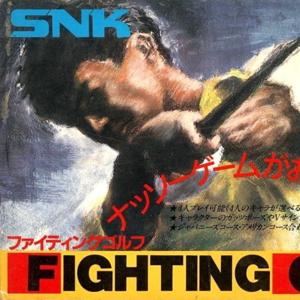
We got Jeopardy. I can't wait. Yeah. You know you want to hear us play Jeopardy. Or what about Lee Trevino's Fighting Golf? Okay. These are things that you guys want. And maybe you want repeats too. Like this episode. Did you think this was interesting that we talked about all this stuff? Well, episode 123 is all about Donkey Kong classics. Yeah. The three games that we've already played. More clip shows. This has basically been a clip show. Wouldn't that be incredible if I just took like a mega mix of the three different episodes and we just did like just made that a remaster? No. We're not going to do that.
Because every week I painstakingly write the script that everyone reads off of. You read your laugh a little early there, but that's fine. I don't usually give Sean notes and I'll edit that out for sure. Mike, I really think you're the best. Ah, thank you. But you only said that because it's in the script. So with all that said, I think we're going to close this one out. Thank you so much for listening to Nostalgia.
Please recommend it to all of your friends, especially the ones that you think won't like this. Because that's important too. Somebody might hear it and be like, oh, I'm not interested in that. And then they go home and their wife is like, honey, what's wrong? And you're like, oh, you know, Scott from work. He offered to make me listen to this podcast called Nostalgia. And I don't like it. But secretly his wife has always liked Nostalgia. And Scott. So now she sees the connection and she goes and listens to Nostalgia.
And to be honest, like if you have no exposure to things that you don't like and you only pick up things that you're pretty sure you're going to like, you have no baseline for what content can even be. That's why I watch things like, you know, Antiques Roadshow. I really don't care about antiques at all. But, you know, I just need to establish that baseline of what can entertain me. It's like why I avoid those books, you know, like a thousand and one places you must see or a thousand and one movies you have to see before you die. Don't curate my life. Books you have to read. It's like, I don't want to know. I want to read the really bad stuff too.
And you're listening to the really bad stuff. So thank you so much. I'm Mike Esposito. You can find me on at Esposito Film on Twitter. You can find Nostalgia on at NostalgiaCast on Twitter. DM us. Slide in there. Sean sends me a DM weekly via the Nostalgia account. And we'll talk to you guys later. Bye. Bye You Thank you.