448 · Harlem Globetrotters
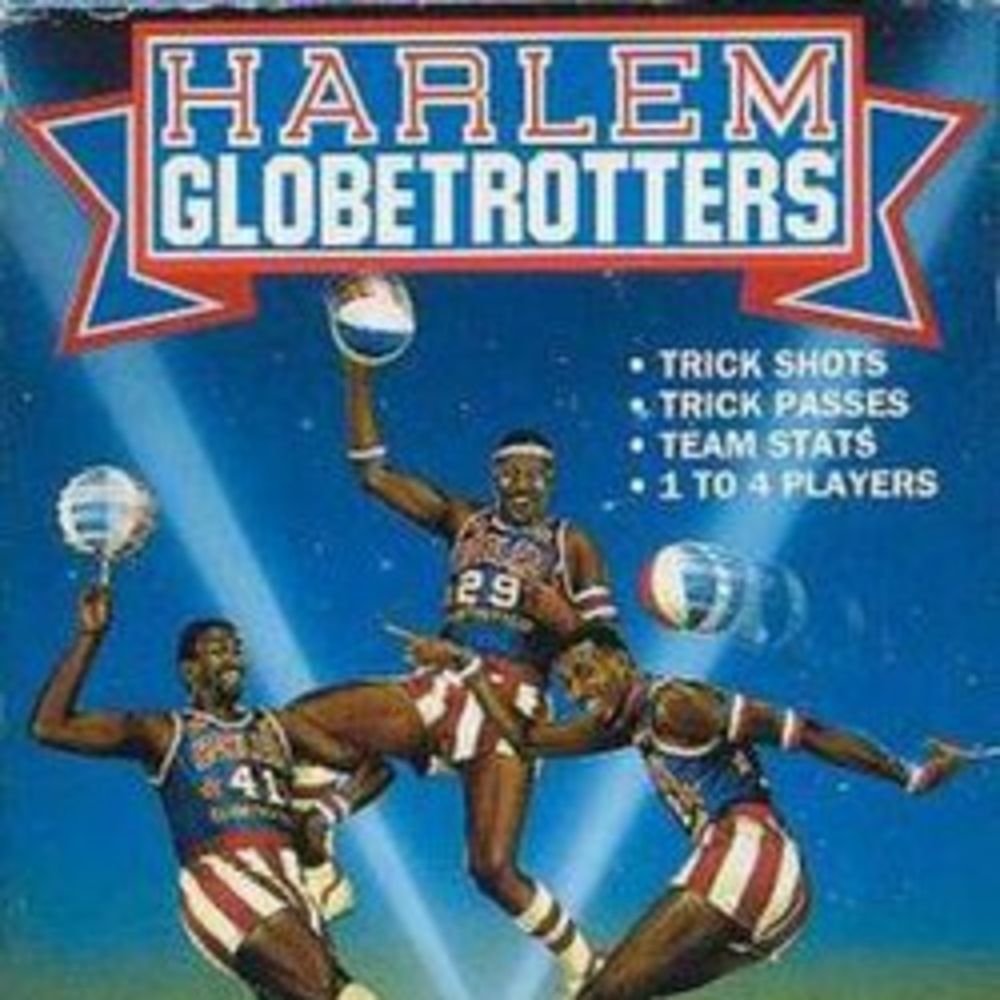
Harlem Globetrotters is a sports video game published by GameTek for MS-DOS compatible operating systems in 1990 and the Nintendo Entertainment System in 1991. The player controls the Harlem Globetrotters basketball team. A Sega Genesis conversion was planned but never released.
From Wikipedia: Harlem Globetrotters (video game) (CC BY-SA 4.0)
Harlem Globetrotters is a licensed basketball game with almost no Globetrotters in it. Mike and Sean were on this one, with Joe out. The cartridge is Game Tech's, it takes up to four players, two per side, and that is about the only unusual thing here.
Why it disappoints
- The menu fights you. Two splash screens you cannot skip, then a demo, then "press start to begin." Start takes you to a questionnaire where you press select to lock in each answer, and the last screen says "press select to begin Harlem Globetrotters basketball" even if you picked the generals.
- Where is the showmanship? The manual made it sound like the Globetrotters could steer the generals, so you would play producer and stage the funniest plays. The game is not that. You get ordinary basketball with trick shots and passes for the Globetrotters, none at all for the generals, who are simply hard mode. The best trick we saw was a dunk with five or six mid-air flips that we could not trigger again. Most others are bounce shots and behind-the-back layups.
- Rules nobody asked for. Why keep referees and shooting fouls in a game about bending the rules? The closest thing to a gag is the ref tripping on the way to the foul line, which got a real laugh the first time. Pressing B on the jump ball can pull his pants down.
- Thin basketball. There is no block button, so a jump shot is nearly unstoppable. We could not grab a single offensive rebound, which turns the game into back-and-forth steals. The computer jumps to block at exactly the right moment, and the ball then bounces in front of you with no recovery.
- One exhibition, then nothing. Finish and it says "that's it" and offers to start over. No playoffs, no other teams, no sequel. We wanted a pile of mini games, like keeping a ball spinning on a finger.
Worth knowing
Hype music during offensive possessions is the one thing the presentation gets right, and we had not seen it in other sports games. The whistling theme song is in there, one of only two tracks, which sent us into a barbershop conspiracy (red, white and blue ball, barber-pole spin, "Big Barber"). The manual also carries six pages of Game Tech ads, including a Talking Super Password that never came out and, as of 2026, has not even leaked as a ROM.
The bottom line
Skip it. We both voted no on the Essential Games List. Sean called it a pretty bad game that may as well be a demo of a launch-era NES basketball game. We felt the same: there are better basketball games and better ways to experience the Globetrotters, who did not list themselves as designers the way Bill Elliott did.
Written from our conversation in this episode.
- It's unpredictable! It's unequaled! It's an action-packed entertainment treat for "kids" of all ages!
- 1. The premise: no season, just the show versus the fall guy
No season, playoffs, or story mode, just exhibition games between two very differently motivated teams. Developed by Softie, published by GameTek, arriving on NES in March 1991, a year after the 1990 MS-DOS version. - 2. Who you're actually playing against
The Washington Generals had by this point lost thousands of exhibitions to the Globetrotters as a matter of design, not accident. Their entire job for decades was to play it straight so the Globetrotters' comedy would land. Picking "the other guys" means picking the side of basketball history that exists specifically to lose. - 3. Framing it for listeners
This isn't Double Dribble or Tecmo NBA Basketball, and it's not trying to simulate a real league. It's a comedy basketball game built around one specific real team's stage act, tricks, showboating, and a referee who's fair game for pranks. - 4. The pre-game interview as a disguised settings menu
Before every match the game asks a string of plain-language questions, functioning as a full options menu formatted like small talk. - 5. High Score Board: the referee is not safe
During a jump ball, timing the B button correctly pulls the referee's pants down and hands your center the ball automatically. During a free throw, a well-timed B press as the ref runs past will trip him outright. - 6. Two teams, two very different experiences
Only the Globetrotters have access to the game's showboating trick moves, like a special behind-the-back pass and a clean-break slam dunk with distinct crowd cheering. Playing as the Generals is a much straighter experience by comparison. - 8. No block button, and what that does to defense
Steal is the only defensive option, no separate block. That makes a well-executed jump-shot loop close to unstoppable, a real design weak spot worth flagging honestly. - 10. The real Globetrotters rivalry behind the game
The Washington Generals lost more than 13,000 games to the Globetrotters across four decades, and exhibition mode is a fairly accurate reflection of their scripted career. Worth mentioning the team's real 1948 win over the Minneapolis Lakers, which helped push the NBA toward integration by 1950, a rivalry that outlived this game by decades before quietly ending in 2015.
I. Setup & Premise
- The pitch: you are either the show, or the team paid to lose to it.
- No season, no playoffs, no story mode, just games between two very differently motivated teams.
- Developed by Softie and published by GameTek, arriving on NES in March 1991 a year after an MS-DOS version released in 1990 (Wikipedia).
- The NES version has an identity problem right away:
- Unlike most other basketball games on the system, there is no real season or tournament structure, only exhibition play.
- The game is upfront that one side is supposed to be entertainment and the other side is supposed to be a straight man (Wikipedia).
- Who you are actually playing against:
- The Globetrotters' longtime on-court foil, the Washington Generals, had by this point lost thousands of exhibitions to the Globetrotters as a matter of design, not accident.
- Their entire job for decades was to play it straight so the Globetrotters' comedy would land.
- Picking "the other guys" in this game means picking the side of basketball history that exists specifically to lose.
- The simplest way to frame it for listeners:
- This is not Double Dribble or Tecmo NBA Basketball; it is not trying to simulate a real professional league.
- It is a comedy basketball game built around one very specific real team's stage act, tricks, showboating, and a referee who is fair game for pranks included.
II. What Makes It Stand Out
- An options menu disguised as a pre-game interview:
- Before every match the game asks a string of plain-language questions, functioning as a full settings menu formatted like small talk (GameFAQs FAQ).
- Weird detail: the referee is not safe:
- During a jump ball, timing the B button correctly pulls the referee's pants down and hands your center the ball automatically (GameFAQs FAQ).
- During a free throw, a well-timed B press as the ref runs past will trip him outright (GameFAQs FAQ).
- Two teams, two very different personalities:
- Only the Globetrotters have access to the game's showboating moves; playing as the Generals is a straighter experience (GameFAQs FAQ).
III. Gameplay Structure
- Basic controls:
- D-pad: move your selected player.
- A on offense: pass toward a teammate.
- B on offense: hold to jump, release to shoot (GameFAQs FAQ).
- B on defense: steal the ball; there is no separate block button.
- The predictable path to blowouts:
- Fouls are almost never called against the computer (GameFAQs user review).
- Perimeter passing is the reliable path to points: pass along the three-point line until the defense falls out of position (GameFAQs FAQ).
- Turnovers fuel easy runs on defense:
- Standing beside the opposing point guard and pressing B often forces a turnover (GameFAQs FAQ).
IV. Unique Gameplay Elements
- Trick moves exclusive to the Globetrotters:
- Special behind-the-back pass (Select plus direction) moves ball faster but is intercepted more often (GameFAQs FAQ).
- Clean-break slam dunk timing triggers distinct crowd cheering (GameFAQs FAQ).
- Genuinely undocumented behavior:
- The "Piggy Back Slam" and "Ball on Elastic" remain mysterious even to expert FAQ writers (GameFAQs FAQ).
- Defense with almost no answer to a hot shooter:
- Because there is no block button, a well-executed jump-shot loop is close to unstoppable (GameFAQs user review).
V. Reception
- A game its own fans call rough around the edges:
- 2002 GameFAQs user review calls the experience "pretty bad" in variety (GameFAQs user review).
- What that same review actually liked:
- Graphics were called quite good for NES hardware; pre-game question format was highlighted as thorough (GameFAQs user review).
- Context of the critique:
- Specific complaints feel like an honest fan's punch list rather than a dismissal.
VI. Sequels and Spinoffs
- No true NES follow-up:
- The Globetrotters license did not return to Nintendo hardware until 2006 (Wikipedia).
- Comparison games:
- Double Dribble: the straight sports sim contemporary.
- NBA Jam: the design descendant for exaggerated gameplay.
VII. Pop Culture
- The real rivalry the game is built on:
- The Washington Generals lost more than 13,000 games to the Globetrotters across four decades.
- Exhibition mode is a fairly accurate reflection of their "scripted" career.
- A real 1948 Globetrotters win that changed basketball itself:
- The team beat the Minneapolis Lakers, helping push the NBA toward integration by 1950.
- A rivalry that outlived this game by decades, then quietly ended in 2015.
VIII. Essential Games List Vote
- Case against Essential:
- Two modes and lack of structural depth.
- Weak defensive systems and low replay value.
- Case for Essential:
- Unique referee-harassment mechanics match the real team's stage act.
- A rare, authentically licensed sports-entertainment curiosity for the NES.
Found automatically from the transcript and checked, but it can miss things or pick the wrong page. Spot a mistake? Tell us.
Games
- Harlem Globetrotters mentioned at
The episode's game: GameTek's 1991 NES basketball game, an exhibition match with only a few trick shots.
- Double Dribble mentioned at
The earlier NES basketball game with cut-in dunk scenes, which the hosts say feels more like a Globetrotters game.
- The Simpsons: Bart vs. the Space Mutants mentioned at
Last week's game, whose theme song worry Mike compares to the Globetrotters' theme being included.
- Wheel of Fortune mentioned at
One of GameTek's game-show games advertised in the manual.
- Jeopardy mentioned at
Another of GameTek's NES game-show games.
- Classic Concentration mentioned at
GameTek's NES version of the Concentration game show.
- Double Dare mentioned at
The Nickelodeon-based game GameTek also published.
- Hollywood Squares mentioned at
Another GameTek game-show adaptation advertised in the manual.
- Talking Super Password mentioned at
The cancelled NES game advertised in the manual with box art, of which no prototype is known to have surfaced.
- Bill Elliott's NASCAR Challenge mentioned at
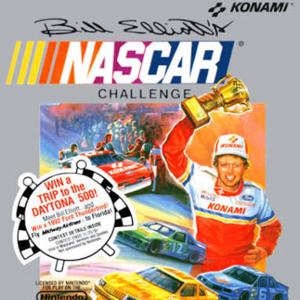
The hosts contrast this game with Harlem Globetrotters: Bill Elliott put his name on that game as a designer; the Globetrotters did not. Covered in episode 447.
Companies
- GameTek mentioned at
The publisher of the game, whose manual has six pages of ads for its other games and which later went bankrupt.
People
- Michael Jordan mentioned at
The star of Space Jam, in the hosts' joke about playing for the Washington Generals.
- Roman Reigns mentioned at
One of the wrestlers with an entrance theme, in the hosts' comparison to the Globetrotters' theme song.
- Dwayne Johnson mentioned at
Another wrestler-turned-actor with an entrance theme, "The Rock".
Teams and leagues
- Harlem Globetrotters (the team) mentioned at
The exhibition basketball team the game is licensed from, and the subject of Mike's childhood game story.
- Washington Generals mentioned at
The Globetrotters' perpetual opponents, who famously won once, and who you can pick in the game.
- National Basketball Association mentioned at
The league the hosts say has ignored the Globetrotters' winning streak.
- Savannah Bananas mentioned at
The baseball novelty act the hosts say is doing for baseball what the Globetrotters did for basketball.
- New York Yankees mentioned at
Used in the hosts' joke about MLB disappearing and the Yankees becoming a traveling novelty act.
Film, TV and music
- Space Jam mentioned at
Mike's joke that Michael Jordan was promised he'd play for the Generals if the Looney Tunes lost.
- Sweet Georgia Brown mentioned at
The whistled theme tune the Globetrotters play, which the hosts try and fail to whistle.
- Harlem Shake mentioned at
The other track Mike jokes the game includes.
- Meet the Mets mentioned at
The New York Mets' team song, offered as a rare sports-team theme.
- Interstellar mentioned at
The film Sean brings up in the Yankees-as-a-novelty-act riff.
- Super Password mentioned at
The word-association game show behind the unreleased NES game.
Terms and events
- Kayfabe mentioned at
The wrestling term for keeping a staged event believable, used to describe the Globetrotters.
Articles, videos and sites
- NEStalgia Essential Games List mentioned at
Where the hosts' verdicts are collected; this one was not essential.
Auto-generated transcript. Each paragraph starts with its timestamp. Speakers are not identified.
Harlem Globetrotters. It's unpredictable. It's unequaled. It's an action-packed entertainment treat for kids of all ages.
And welcome to NEStalgia, a chronological exploration of every NES game released in North America. I'm Mike. And I'm Sean. Sean, you bet on the generals? Sean, always. Got to bet on the underdog once in a while or you're never going to get enough action. Sean, we joke, but do you know about the infamous game where the generals actually won? Sean, I'm going to be honest, Mike. I know so little about the Harlem Globetrotters.
Sean, that's how little you know. You just proved how little you know about the Harlem Globetrotters. Sean, try and say Harlem Globetrotters five times fast, Mike. I don't even want to say it one time fast because we're going to have to say it a lot during this episode. I dunked on you a little bit there to use a basketball term, so I'll back off a little bit. Oh, is that where it comes from? Yeah, that's where it comes from, actually.
Wow. Yeah, I know nothing about the Globetrotters aside from they play against the generals, so please enlighten me. Well, so I did go to a Harlem Globetrotters game when I was a kid, and so you have Talladega and I have the Harlem Globetrotters. Together, the two of us have just a—we are the experts and authority on these kinds of things. It's why people listen to us. I don't think anybody is going to listen to another opinion on NASCAR ever again after our episode last week.
I'm pretty sure you're right. So the Harlem Globetrotters, you know, if you didn't know, I hate to say this, but it's all real. All of it is real. It actually happens. These two teams always have to play each other. And the Harlem Globetrotters are just a vastly superior team. Or maybe not. Maybe the generals are just having a bad century.
But they are—but they're part of the same organization. They are. Well, yeah, if you look into it, I know, I know. If you look into the accounting, there's some weird stuff going on and everything. But it's—trust me, Sean, it's not scripted. It's all real. Those guys are putting their bodies on the line game after game to do these tricks in the—during the matches. Sure. And whatever kind of basketball kayfabe you need to pay—like, put forward, then by all means. It's just kind of crazy because the NBA has ignored the, like, 13,438-game winning streak that the Harlem Globetrotters are currently having. And they just won't let them into the league, nor will they let any of the players be drafted. It's kind of insane.
It seems to be some anti-Harlem bias. Are there any basketball players from Harlem? Like, in the NBA? In the NBA? I don't—I—if you want to bet on something else crazy, you already bet on the generals. If you want to bet that there are no NBA players from Harlem, sure, I'll take that bet. But, uh, so here—here's another illustration of how little I knew about this. When I was a kid, obviously, when I was, you know, a teenager, I learned that the Harlem Globetrotters were a—an entertainment sports act.
Um, but when I was younger, I thought that they were an NBA team. And they just, like, were historically great. And that's why everybody, like, made references to them being amazing. Uh, it was kind of confusing to learn that there was, like, kind of a fake sport of it. Um, but— I have no idea what you're talking about.
Okay, how was the game? The game that I went to was amazing because they were—I mean, you know, you've never seen dunks like these. The amount of time that they can spin a ball on their finger—I can't spin a ball on my finger for one second. So they are doing it an infinite amount more time than me. Well, in that case, like, most people do it infinite. Sure. I guess—yeah, I guess anybody's qualified to be on the Harlem Globetrotters.
Um, and then what—what happened was the one time the generals won was because the Harlem Globetrotter team wasn't keeping track of the time. They knew they were down, and you're supposed to win, you know, in epic fashion. But, uh, they weren't keeping track of the time, and they were down 12 with two point—down 12 with two minutes left to go. And they could not make it up.
And, uh, they lost. And apparently there was some—there was some tears, uh, from the fans. There was, um, there was probably an investigation in Las Vegas. If anybody bet on the generals that game, there was probably an investigation. Um, but I think it's just funny that, uh, that the generals did happen to win just that one time. And all the more reason why it is so strange, uh, that you can play as the generals in this game.
Um, it is the Harlem Globetrotters versus the generals. That's the league. You can do four-player NES action here, where two players can be on the Harlem Globetrotters, and two players can be on the generals. Why would you ever pick the Washington generals to be the team of your choice? I cannot understand. Because you like underdogs, obviously.
Yeah, but they don't even get to do any of the cool tricks in the game. Like, honestly, like—so, okay, when I opened up the manual, um, I thought that I was getting a very different game than what this turned out to be. Like, I saw a control scheme that said that you, as playing as the Globetrotters, could also sort of control the generals. So that it almost turned it into this very, like, like, you know, sports entertainment experience. Where you were just trying to find ways to make the most, like, weird plays happen. Because you're kind of controlling both teams at once.
And that is not at all what's there. Like, this is a game in which there is vast asymmetry. Where if you play as the Globetrotters, you get to play regular basketball, but with trick shot and trick pass, uh, availability. And then if you're the generals, you just don't get to do that. Um. Playing on the generals is just hard mode. Yes. I've never seen something like this, where there's play with cool features or play with nothing. Um. But this game does it. It does it. It doesn't let you do it right away, though. You're greeted with a pretty antagonistic, um, starting screen here. Uh. Did you have any issues starting up a game? Do you know what I'm talking about?
Um. I kept pressing, like, A, B, start. And I kept, like, cycling. Is that what you mean? Yes. Okay. Because what happens is, so first there are two splash screens. One for Game Tech Presents and then one for all the credits in the game. You can't do anything. You just have to watch those as if this is some kind of, like, PS1 game with loading or something. And then it starts, it goes right into what appears to be the game. Only it's doing, like, a, you know, tech demo of the game. So it says, press start to begin. So you press start. So now you're treated with this, like, idea that start is the way to confirm things in this game.
You immediately go to the questions. The Harlem Globetrotters are asking you questions about the kind of game you want to play. And, like, you know, what's going on here? Have you seen the player? He's got, like, he's got a really scary smile. He's got, like, a Joker smile going on. I mean, I've seen the player. Yes, he does. His face does contort in unnatural ways that are quite uncanny. And is there a big shadowy guy behind him? Like, what's going on there? There's just this big black outline. You don't see outlines around people like that? Not like that. What do you mean people like that, Sean?
Whoa. No, it's like you're just obviously not one of the people that see auras. Of course. I can see your aura, Mike. That's what they mean. The Harlem Globetrotters are aura farming. Now I'm hip with the kids. Like, old-timey aura. Oh, right, right. That girl in college that had all the crystals kinds of auras. Yeah. The Harlem Globetrotters do have a bit of an old-timey quality to them. Even that, like, their song, their theme song, which sounds crazy, right? Whistle it. Well, I can't whistle it because I can't whistle. Do it right now. No, see, I can't do it. I miss, like, one note and I'm, like, complete. I start doing a different song.
But the funny thing is, is, like, how many other, like, do the Buffalo Bills have a theme song? Yes. No, no, no. So, like, forever, like, one that, like, like, a theme song that they come out to? To come out to? I mean, no. But. You know what I mean? Like, like, like, wrestling has, like, The Rock has his theme song. You know, Roman Reigns has his theme song. The Sabres have a theme song. Okay, so, so there, it is, like, a thing to have a theme song that you come out to. Yes. Got it. Not in my sports teams.
You have that Italian song on the seventh inning stretch? Oh, yeah, yeah, sure. There's traditions, right? Like, we even have Meet the Mets, but, like, we're not playing that before every game as if it's, like, oh, my God, that's the New York Mets music. Like, they're showing up as a surprise. You are playing that every game. Right. But the Harlem Globetrotters, on the other hand, you know, they do have this, that song with the whistle that is kind of, it has, like, a barbershop quality to it, you know?
Yes. I, again, I've never been to a game, so I don't know what the vibe is supposed to be, but I always imagined it being, like, this is the most wholesome possible product you could ever see. And that whistle song is probably the most, like, the biggest thing that informs that
uninformed opinion. You know, I didn't want to say anything, but now that I'm looking at it, the Harlem Globetrotters are very barbershop coded. Barbershop coded. Yeah, because, like, think about it, the basketball that they use is not the same as the NBA with the orange. It is a red, white, and blue ball to match their red, white, and blue jerseys and everything. To match their barber pole spinning thing? Right, exactly. When they spin that ball, right, the red, white, and blue, it matches that barber pole. Most of them have haircuts.
Exactly. You have to open your eyes. Dude, you're getting it, you know? I think that this whole thing was by Big Barber to get you to go get a haircut. A buzz cut, even, you know? Just, like, why screw it, you know? It's like, shave all your hair off, and then, like, we'll keep doing that for you. But buzz cut people statistically have to go to the barber more often than people who let their hair grow out. Well, I mean, they probably don't want everybody to be buzz cut people because they might catch on that they can just do that at home.
They want at least some people with, like, regular haircuts. Thankfully, the theme song for the Harlem Globetrotters is included in the game. It is one of two tracks, but don't worry, it's in there. Just like we were worried about if the Simpsons theme song would be included, the Harlem Globetrotters theme song was included as well. That and the Harlem Shake. Sure, yeah. Do the Harlem Shake.
And that just reminded me that I completely lost my point about this whole section, which was the antagonistic menu of, remember, folks, rewind a little bit. The button that you press to start the game officially is the start button. Then the Harlem Globetrotters ask you a bunch of questions of which you must press select to lock in your choice.
Not start. You must press select because you are, I guess, selecting that option. It goes against the Nintendo logic where select was to, you know, kind of switch between modes. But here we are. And then as you're at the end, it then says press select to begin Harlem Globetrotters basketball, which is interesting because you could have picked the generals and it still says press select to begin Harlem Globetrotters basketball.
But still, press select to begin after just seeing press start to begin, not a few screens earlier, is annoying. It's just downright confusing design. Well, I guess maybe they're thinking it more philosophically, like to press start to begin is something of a tautology, you know, like, like push start to begin, like press go to continue. Like that's, that's too, it's repetitive. You got to switch it up sometimes. Sure. Yeah. Keep people on their toes. Mm hmm. All right. I don't know.
Still to just like basically become five on five basketball is like, what are we doing here? Yeah. It's pretty weird that I'll get into some things that I think they did right later. But in terms of presentation, like you'd think that double dribble was the Globetrotters game because it had those sort of cut scene cut ins. Yeah. When you do, when you, when you do the dunks or just a good shot in general, like, and that there's like none of that flair here.
Like there is some flair. Um, but it's kind of happening in miniature in front of you where when you think about how larger than life, uh, that the Globetrotters, I mean, I guess you're the one that would be able to say this, um, are and how wild it is. It's just not there. Yeah. They have like superpowers. You know what I mean? Like they have the ability to like, all of a sudden one of them is on like stilts, you know? And then they're like, just like, they're just right next to the basket and they just like get it passed to them.
And that's like their version of an alley-oop. It's like, they have, they bend the rules of basketball to their liking to do, you know, fun stunts and everything. And they'll take shots from like half court and they will miraculously go in or they'll do like really fancy dribbling, you know, just to like show off that they can do this while they're versing another team.
And none of that really happens here. The closest to like a comedic moment we get is when the ref trips on the way to the foul line. Did you see that happening? Yeah, that's pretty fun. That happens every time. I feel like it does, but it's, but it was unexpected the first time. I was like, oh, that actually got a good laugh out of me. Yeah. Um, the other sort of larger than life moments are like, you know, the, the trick pass and the trick shots. And there's a couple, I feel like they, they changed contextually depending on where on the court you are.
Um, the most like unbelievable one is a dunk that the dude does like five or six flips in midair. Um, but I did not know how to trigger that again, after I saw it randomly, the rest of them are just sort of like bouncing it off the ground into the net or kind of doing a weird behind the back layup, um, which is less impressive. And then the trick passes, which like just the, the shape of the controller makes it hard to do these. Um, don't really like, they're just sort of like, again, behind the back passes, which aren't that impressive in the grand scheme of the game. It's like, that can't be it. Right. In terms of all the trick shots that are available to you in terms of just all of the globe trotter stuff.
Yeah, no, of course that there, there's so much more that they could have done so much more silliness, you know, again, that, that, that is the whole appeal is, you know, very much like how the, and I mean, they really did eat their lunch. Now the Savannah bananas have, I was wondering when we would get to that, right? They have done it for baseball now to the point where like, you know, people are going to forget about the Harlem globe trotters pretty soon because they figured out a way to like in, in, interact with the audience too. But all those things that are like so crazy, it's because like the bananas are doing it for the first time in baseball.
That's what the globe trotters were doing in basketball. It was like just things that you wouldn't expect to see at a basketball game. And here, yes, the trick shots are interesting and I appreciate you listing them out for us Sean, but like, why are there even like referees and violations in this game to begin with? Like, why is, why are we keeping rules that would cause like, uh, you know, shooting fouls and stuff like that? It's like, this should be a free for all. This should be a super fun, especially in the context of a video game. It should have like extra sensational things that only a video game version of the Harlem globe trotters could do.
And that's why, like, I thought again, from the manual, this was some like almost post sports game where you could like play, you could sort of command the opposing team to play into your hand so that you could make the most interesting, impressive, comedic plays possible. Like if you look at the controller page on the Harlem globe trotters instruction manual,
the select button during the game says that it shoots the ball for the generals. This is like, when I read this, I'm assuming that it assumes that I'm playing as the globe trotters and the start button passes the ball for the generals. Like, does that mean that when you decide to play as the generals that you're starting select button or now you're passing shoot? Because I was playing with those buttons and none of that ever happened.
When you were the generals. What? No, when I was the globe trotters. Why would start and select? No, it does change. Right. No, it's so bizarre. But I think it's because start and select when you're the globe trotters are for trick things that the generals are incapable of doing rather than make those buttons just not work for the generals. They just replace them with the passing and the shooting. But the passing and the shooting are already A and B. Yes. So they're just saying you can now do it again.
That was so disappointing because like, because like, you know, it's not like it has to be one or the other. Like select button when you have the ball would make a trick pass of the globe trotters. When the generals have the ball, it would make them shoot. It just makes so much more sense and would play into what the globe trotters were doing a lot more. Like, right. You'd be like, you'd be, you'd be like the producer.
Exactly. You know, like next to the camera guy. Like that would be your job if you could actually control what the generals are doing. So yeah, reading this, I actually kind of got excited because it was finally doing something different and actually thematically appropriate. And little did I know that they just had no idea how to make a control scheme.
It'd be funny though, if like that was the case. And then you invited two other friends over to the house for four player, you know, Harlem globe trotters basketball. And then every time they got possession as the generals, you just pressed select to take a shot and get the ball out of their hands. Like, what are you doing?
It's also like sort of giving you the feeling of what it's like to play for the generals. And we have to take a minute and just talk about what that job must be like to just go out there every... Isn't that what Michael Jordan was promised in Space Jam if the Looney Tunes lost to the Monstars? It was like, you're going to play basketball all day and you'll always lose. It's like that's... Oh my God. He was going to play on the Washington Generals.
I feel like, you know, I used to play in a hockey league where we were the worst team by far and we were paying money every week to just get our ass kicked every week. Now I'm sure these guys got paid. So I think like I actually had a worse experience. Yeah. And what was your team's name? I can't divulge that information. Oh, right. Yeah. That would dox you. Yeah. Okay. Well, since we're not going to do that on the show, let's talk about that there's no block button. Yeah. So there's only like you can steal the ball. There is a way to steal the ball. There isn't really like an animation for it. It just happens. It just switches over. But there's also no separate block button.
So, you know, a jump shot is basically unstoppable. And that is true for whether you're the Globetrotters or the Generals in this case. And so in terms of like, you know, what does the defense even do? The games do kind of like they do stay close unless you can figure out some kind of steel spam technique. I mean, I've definitely had shots blocked because the computer is very good at jumping to block at the exact correct time. And that just ends up with the ball bouncing in front of you. And it seems like it's hard coded that you cannot recover that ball.
In fact, I couldn't even get a single offensive rebound at all. So it seems like the game is designed for it to be back and forth, back and forth. And like, if you miss a shot, that means that you better steal the ball because you're not going to be able to pick that off the backboard. Did you ever get an offensive rebound in this game? No. Okay. It wasn't just me then.
We talked about the referee being tripped, but did you, I did not, I was not able to do this. I was able to see it, that during the jump ball at the beginning of the game, typing the B button correctly will pull the referee's pants down. Oh, that's cool. Yeah. And I think that means that you automatically get the ball too, which is fun.
I got to find this. I got to try it out. It'd be the only thing I do. Yeah. Well, it's, you know, it's very easy to do. You just do it right at the beginning. You can do the referee pants percent speed run.
And I'm sure it's only the Globetrotters that can do that, right? The generals aren't allowed to pants the referee. That I don't know. But yes, I obviously like, like Sean, let's be real. Most people who are playing this game are going to play as the Globetrotters. I'm just checking. I know. What I'm saying is like, I don't know the answer because nobody bothers to play as the generals. It's too bad because that's like a pretty good name for a team, you know? I was wondering why, like, like, is there, is there a pun I'm missing?
Is there some kind of piece of history I'm missing? Like, why the Washington generals and not something like, you know, the Washington losers or something, you know, like just like something, something that would better play into. I just don't know why they have that name. It's like, well, this is what we do best on this podcast. And that is sort of postulate on things that there are answers to, but we're just not going to look them up. That's the best part about this podcast. And you can't convince me otherwise.
I don't understand why if, you know, like in a world where AI exists and we can get answers in seconds. Why wouldn't you want to go back to the days where we could just debate ourselves?
My guess is that the Harlem Globetrotters and the Washington generals were regular basketball teams that, um, that, that like before things were regulated and there were like league rules and stuff, um, that they just decided that they were going to do this whole like kind of novelty act and the league that they were a part of just sort of disintegrated around them. That's my guess.
That'd be very interesting to find out that like one day, uh, you know, like the NFL disintegrates and, um, you know, there's just two teams left or something and they still just like, yep, we're just going to keep playing basketball in this league. Well, okay. I wasn't expecting to talk about interstellar, but here we go. Uh, you know, the, one of the like, wow, look how far we've fallen.
Like illustrations is that the New York Yankees are just a traveling novelty act now that they, that the MLB doesn't really exist. They just go from farm town to farm town to play for the hometown boys. Wow. Well, maybe that's sort of, uh, you know, that, that actually settles it. I'm fully convinced now that that's how it worked out. Yeah. And how does that work into big barbershop?
Oh, you know, I know how it does actually, because the Yankees only recently, not, not by the time that interstellar, when it came out, this, yeah, when interstellar came out, this rule was still in effect. They, they have to shave their beards. That's true. So, and where do you get your beard shaved? A barbershop. Unreal. Unreal conspiracy theory. Guys, if we, if you don't hear an episode from us next week, just know it's because Big Barber got to us. The CIA got to us. The CIA is Big Barber? Well, I mean, obviously Big Barber Shop owns all the big four, uh, intelligence agencies. Now, wouldn't it be funny if the leader of Big Barber was, was named Big Barbara?
That's funny.
There's, there's no sequel to this game. There's nothing, there's nothing for me to talk about, uh, anymore. Not only is there no sequel to this game, there is, after your first game, there is nothing else. There is nothing else. When you finish, did you, when you finish this game, and I, I, I almost want you to make it like the cover of this episode. Sure. When you finish the game, it just says, that's it. Press A button to start over. It should have been, that's all folks, you know, it's just like, it's like Looney Tunes style. That's it.
That's, that's the whole game. You play one game and that's the, that's the whole of the experience. But unfortunately they're not wrong either. Cause there is no like, you know, there's definitely no playoffs. There's no other teams to play, but like, there's nothing other than this exhibition mode, uh, in terms of a game. So it's like, there's so, there's so little to it. And the basketball itself is so bare bones outside of like the few trick shots that they decided to throw us as scraps. Like, fine. You want to be the globe trotters? Here's your piggyback shot.
Like, okay, thanks. It's almost like, you know, all those sort of mini games that we never really, we're never that like into, like in the, the sport, like compilation games, like for, for this to, to just like justify this game's existence. Like there had to be some stuff like that. Like have there be a game that you have to spin the D pad or spin your thumb around the D pad to keep a ball spinning.
Like what, like what blew your mind when you were like, you know, 21, 22, when you went to a Harlem globe trotters game, um, or have like a, like a Simon says to like, have like a bunch of guys pass. I don't know what globe trotter mini games would be like, but there has to be something more than the one exhibition that can be one or two or four players. I found an interesting anecdote.
Anecdote me. Okay. The manual for the game, it has like six pages of ads from game tech. The creators of this game being like, play our other games and we've played them. Believe it or not. Wait, are they all about cutting hair?
They are. No, they are. They're mostly game shows, which I'm sure the prizes were go get a haircut. Um, wheel of fortune, jeopardy, um, concentration, double dare, Hollywood squares. Remember these games? Yeah. Okay. Now here's one. I don't remember. They're advertising talking super password, talking super password, talking super password. And there's box art. Even there's, there's like a Nintendo seal of approval on the box art for this game. And it says the password for this terrific word association game is fun. It's also fantastic, enjoyable, amusing, entertaining, and exciting hours of stimulating play. And it talks to you too. That's kind of super password. Never came out, Sean.
Yeah. This has some real like, uh, like analog horror vibes going on right now. Right. But like, think about that. They're, they, they have like a box art ready for it and everything. They're promoting it amongst like a sea of older games that we clearly did get that did release. And then like this so much hasn't even had like even a ROM leak. Like we, like it's 2026 and we haven't even seen a beta version of this game. What do you think happened? I don't, I have, I think somebody's, the secret password was the CIA.
We are, we are really in deep right now. We are so deep on this. Um, this is crazy. If we weren't currently being investigated, then I feel like I'd have a bit more self, uh, self preservation. But you know, ever since that one episode. Yeah. Joe, Joe really shouldn't have said that. No. Maybe one day, maybe one day he'll be able to come back on. Uh, but since he's not here and we're out of things to talk about, we might as well finish the show with the essential games list.
Sean. Yeah. This is a pretty bad game. Um, the basketball itself isn't all that much to write home about. Um, there's way too much barbershop jingoism going on. Um, but almost also not enough barbershop jingoism to like give it the vibe. Um, yeah. There's so little Harlem Globetrotter things happening that it may as well be a demo version of like a launch basketball game from the NES. Yes. Not good. Not essential. Yeah. I'm really baffled by this one. It's just, it's, it's, it's not fun.
Um, and I feel like that's, that's like such a huge loss for the, the, to put the Harlem Globetrotters name on that. You can throw a lot of licenses on a lot of just, you know, NES games and call it a day and be like, yeah, the story wasn't there or whatever, but at least you got to play as the character or whatever. I don't really feel like I'm playing as the Harlem Globetrotters in this game. And so, you know, it's just not really serving anybody in that regard.
There are better basketball games. Um, there are better ways to experience the Harlem Globetrotters. This feels like outside of the novelty that it is a four player NES basketball game. This feels like a giant waste of, um, of just money development time. And you'll notice that unlike Bill Elliott, uh, the Harlem Globetrotters did not list themselves as designers for this game. And I get the feeling they weren't even axed for input on what they would like to see themselves do in the game.
I have one more point. Mm. Um, I did allude to having a positive thing to say about this game at the beginning and I kind of forgot to bring it back up. Um, and that's just like, they did like one thing, right. In the presentation. And that's just having sort of hype music during offensive possessions. Like you kind of get the, oh, that's huge. And, and you know what? I would have saved the game. That, that, that's just something I haven't seen in other sports games. And I've, I'm, I'm pretty, I've been pretty good about bringing up those, those little things that make things feel more authentic. That's literally the only thing this game did. Um, but I thought it bared mentioning.
Thank you for mentioning it. I would like to mention back to you, um, and maybe to the listeners, if they're going to go seek out super talking password that, or talking super password, uh, that the box art was unfortunately so small that when you blow it up to a size that is recognizable, it still kind of looks haunted. And like a lost VHS special has a very like late night with the devil quality to it. It just seems like something really bad happened on talking super password. And they were like, we have to cancel the game immediately and delete all the ROM files. Hopefully that'll be a bite by the time this, this ends. prevalence prevalence prevalence Go toolesome. Go toolesome. Go Go toolesome.