
019 · DONKEY KONG JR.
Donkey Kong had a kid?! And Mario is the villain? Everything is bananas in DK JR! For links to EVERYTHING we talked about here, check out the shownotes on www.NEStalgiacast.com
Donkey Kong Jr. is the second stop in our month of Donkey Kong, and only Mike and Sean were at the mic; our other castmates wanted off the ride. Mario has gone insane, locked Donkey Kong in a cage, and you play the son who climbs up to rescue him. We liked how different it is, and liked it less than the original.
What it gets right
- A sequel that isn't just harder. Where Donkey Kong defined jumping onto platforms, this one builds its platforming on vines and chains. After the first game made so much money, we applauded that.
- One vine or two. Hang on one and you climb slowly and safely. Grab two and you go fast, but you are more exposed to whatever is coming down. That is real depth for a small game.
- Better enemies than barrels and fire. The crocodiles run one-way paths and are easy to avoid. The birds are a bit tedious, hovering above you and dropping eggs, but when they turn around they meet you at your height, so you choose to climb or drop. Nothing felt cheap.
- Same blueprint. Three stages of rising difficulty, then a finale where you push all the keys up the chains to open the cage.
Where it falls apart
- The keys barely register. In the early stages the key sits where the level would end anyway, so you never think of it as a key hunt.
- Uneven stages. The first is a gentle intro and the second is a big jump, with yellow sponge-like platforms that drop you a little, which we called not great design. The third, the electric bars we kept calling Tron land, is simple and feels out of place, as if Mario took Junior to the jungle and yelled "come back, I've got this cool place."
- Dumb deaths. Sean kept fixating on the fast blue enemy and getting hit by the one above. It is short and not hard, and we were glad of NES continues instead of quarters.
- A flat payoff. Freeing Donkey Kong did not feel like finally getting the girl, and nobody can say why Mario is the villain.
Beyond the game
A Miyamoto interview in a UK Nintendo magazine explains the setup. The team had stage ideas left over from Donkey Kong, and Nintendo asked for a sequel with Donkey Kong as the player. He was too big for an action game, so they made a little Donkey Kong, and since it couldn't be son against father, Mario captured the dad. Asked about flipping hero and villain, he went on a long Popeye tangent instead. This is also the first game where Mario is plainly Mario, not Jumpman.
The bottom line
Play it. Joe, who weighed in by text, said the mechanics are improved and there is more variety, but it is a decent distraction rather than an essential experience. We both disagreed that it is an improvement, and nobody put it on the Essential Games List. It is the B game: worth a few minutes if you like Donkey Kong, but the mechanics that made the first one fun were swapped out for something different, not better.
Written from our conversation in this episode.
Auto-generated transcript. Each paragraph starts with its timestamp. Speakers are not identified.
Can Donkey Kong Jr. save his papa from Mario's prison?
And welcome to NEStalgia, a chronological exploration of every NES game released in North America. I'm Mike. And I'm Sean. And it's just the two of us for the rest of the Donkey Kong ride. For some reason, our other castmates don't really want to talk about Donkey Kong. They don't like Donkey Kong. I want to get off Donkey Kong Wild Ride.
I don't want to be on it anymore. I don't know. Mario has now gone insane and has set up a prison. Yeah. But you know what? Something I want to talk about real fast before we even... I assume people are familiar. We will talk about the objective. But where does this game take place? This game takes place in Mario's sub- sub-Turanean Brooklyn dungeon. It's like the jungle. It's the jungle, but also like a weird like technologically advanced area.
And you know what I'm talking about, right? Yeah, I do know what you're talking about. Yeah. It's incredibly strange. And also, Mario captured Donkey Kong, right? Because he doesn't like animals or whatever. That's his pet animal or whatever. Right? He's captured him as like a form of punishment. But then he's releasing animals. Yeah. Like half, just face crocodiles.
Just the faces of the crocodiles. And he's releasing them at Donkey Kong Jr. So it's like... I mean, that means to an end. Anyway, I think we need to talk a little bit about how we usually do this. Because if this is your first episode, I'm sorry. Second off, if this is your first episode, please listen to like Super Mario Brothers or Donkey Kong. Before you... You can't just come in Donkey Kong Jr. Yeah, this isn't fair to us. Yeah, this is improper. Anyway, let's do first impressions. Yeah. Yeah, what do you got? Okay. So I think that my first impression was like, okay, this is a pretty cool way to do a sequel.
It's not an improvement at all. On the first game. But at least it wasn't just like, all right, let's just do more levels. Yeah. It was an actual like... It was something novel. It was something new.
But it was not as fun or as memorable as Donkey Kong. Yeah. I think for me, the first impression, even like my... I remember my very first impression of Donkey Kong Jr. Was just like, this is really strange that Mario... Like, you know, because I mean, you know, it's not my first game. Like, I knew Mario before. So this is like really strange. Mario's the villain. Donkey Kong is locked up. So you're forced to play as Donkey Kong Jr.
And if there's one thing I'll reward this game for, it is that they, you know, the first game kind of defines platform games with its ability to jump over obstacles and land on platforms and stuff like that. This one, it finds a totally different way to do the platforming. And I just think that's got to be appreciated a little bit. Like, I definitely thought that it was neat that they didn't just do another like, oh, Donkey Kong's escaped and this time it's harder.
Yeah, exactly. Like, I think that the introduction of vines or whatever they use in the later levels... Yeah. Chains. Yeah. At one point, there's just chains. And like, there's actually some mechanical depth to them too in that you can decide whether you want to hold on to one or two. Right. To go fast or slow. But also be more open to attacks.
Or just obstacles, I mean. While we're on the subject too of like where they could have taken this game, imagine if it was like, oh, you thought Donkey Kong was bad? Wait till you see Donkey Kong Jr. And they made Donkey Kong Jr. the villain. Like the psychopath. Right? Like, he's the new villain and Mario is now has to like, Donkey Kong Jr.'s even worse. You know? It's like, they could have done that. They could have. Yeah. I'm glad that they didn't do that either. I'm glad that you actually play as Donkey Kong in this one. Well, Donkey Kong Jr. Yeah.
So, I guess we'll go through the objective real fast. It seems pretty obvious at this point. Mario has stolen, has kidnapped, prisoned. I don't know. It's like, he's done the same thing that happened to his girlfriend Pauline in the first one. And now he's like, I'm going to lock up Donkey Kong Jr., him who's boss. You know what I think happened? I think that Pauline has left Mario. And this is his way of taking it out on Donkey Kong. He's lashing it on Donkey Kong. But apparently, sometime between Donkey Kong and Donkey Kong Jr., Donkey Kong had a girlfriend or a wife or something and gave birth to Donkey Kong Jr. And Donkey Kong Jr. is pretty pissed that Mario imprisoned his dad. So he's going to try and save him from that by collecting keys.
Which is only really obvious in the final level. Yeah. In the other ones, it's just like the key is directly at the part where the level would usually end anyway. Well, I think, yeah, you're right. You don't associate it with collecting the key. You just associate it with getting to the end of the stage. Yeah. It would be interesting if the key was at like a different part of the level, but it's not.
No. So it's very similar to Donkey Kong. Instead, you're just going from point A to the top of the levels. This way you can get to the key and open and free Donkey Kong. However, Mario just like immediately seals him up again and takes him to the next part. This Groundhog Day nightmare situation where everything that you do just gets wiped out and maybe you have to do it again. But I think it's funny that... It's not funny at all. It's not funny. Nothing is funny about an ape being imprisoned. Okay? I don't want PETA on us. Okay. I like how they kept the blueprint of the level progression the same between Donkey Kong and Donkey Kong Jr.
You've got three levels of varying difficulty and mechanical enhancement, I guess. And then the third one is like that it's kind of a set piece, if you can call it that. In the first one, you had to get all of the weak points of the structure. And in this one, you have to get all of the keys up the string or whatever. Up the chain, I think it is. Where it's like you have all these separate objectives before you actually can do the main one. Yeah. And as you were alluding to with the gameplay, it is cool how you go up one branch or whatever you want to call them. One tree vine.
And you go kind of slow. But if you kind of extend yourself between both of them, if you hold on to two vines, you can go up kind of fast. But then you risk getting hit by one. Or a bird will hit you. Right. And there's some good enemies in this one, better than the barrels and fire in Donkey Kong. This one has the crocodiles that just like have a one way path between, you know, they're very easy to avoid.
The birds are a little tedious because they'll kind of be directly above you. But then they also drop those eggs. Oh, yeah. And they seem to when they when they make a turnaround, they seem to just go on whatever level you're currently on. Yeah. So if you are on like halfway through the stage, it'll meet you at halfway through the stage. So then you either choose to climb up or climb down. Nothing that's like cheap. Yeah. But it is all about the weaponization of animals. Yeah. Throwing animals at you. Yeah. And then later electricity.
Yeah. For some reason. Yeah. I don't really know the story. I mean, like we can go level by level if you want. The first one is, I guess, just like an introduction where the beginning is kind of boring and you're just moving across platforms. Yeah. And then you get to go on to the you get to test out that those new features with the with the vines. And is it the second one or is it the third one where you go into you go into Tron land? No, that's the third one. So the second one has the has the weird like yellow. Oh, yeah. Sponge like things that move on the platforms that like you jump on to and then they drop you a little bit. Yeah. But otherwise, they look like they're unreachable.
It's not great design. It's definitely different. And again, it's one of those things where like the difficulty between the first level and the second level is definitely a big ramp. So this way it's like, hey, that was just to teach you how to play the game. Now that you know how to play. Give us all your quarters. Yeah, die. But if you were lucky enough to get through the second level, which again, like these games aren't hard. They're easy to be beat. But if once you get to that second level, the third level is like the Tron world you were alluding to where it's like the electricity stuff going by. But it's not hard.
It's not hard. It's just it's just if anything, the thing that I found myself like stupidly getting killed on was I would see the blue guy coming really fast down the way. And I'd be like, oh, I got to jump over him. And then I get hit by the guy above me. I wouldn't even be looking at anything else. I'd just be focusing on the blue guy. So that's just like it's a dumb way to lose a quarter. So I'm glad that I have the NES version to save me from.
But then again, spending any more money on this game. One thing we didn't talk about is so let's say these games were probably like, what, 40 bucks, somewhere around there, somewhere around 40 bucks. Right. In in 1986. Yeah. How many quarters? Like, that's a lot of quarters in order for this game to be worth it. Yeah. Instead of just going to the time to play Dungeon Jr. Oh, wow. I guess like a hundred.
I think that would be if it was $25, Mike. But it's somewhere between. I didn't do the math that fast. I just figured you have to play it a lot. Like, you have to really like it. Yeah. You have to really like this game for it to be worth it. But there's like, you know, there's a rate of return on this game, which is great. You can't say the same for other games that didn't get the arcade port treatment. Mm hmm. But at that point, at this point in Nintendo's lifespan, everything pretty much has a arcade game except for Gyromite and Stack Up.
Oh, God. Don't bring that up. Yeah. I'm sorry. I thought we were done with Rob, but we're never done with Rob. We're never done with Rob. OK. So that's the Tron world. Yeah. And just because I feel like we kind of talked about that one real fast. You're dodging electricity. And there's like these. It's very simple. Very simple stages because it's just bars that you go up from one side to the other. The only notable thing about that level is just how out of place it seems. Yeah. It's almost like he brought him, you know, like he took him to the jungle and then was like, wait, real fast.
Like, come back. Yeah. Come back. Come back to the city. I got this really cool place. It's not done yet. It's a it's a it's a nightclub or something. Yeah. So then after that, now we get to the final level, which is what you're talking about earlier, where like all the keys are at the bottom of the stage and you have to, you know, by climbing the vines, push them up and unlock Donkey Kong's cage. So this way he can be free. Yes. How did you feel about that level?
How did that make you feel when you freed Donkey Kong? It was fine. Better be fine. Yeah. It wasn't. I didn't feel like I didn't feel as set successful as when I finally got the girl. Yeah. It's not as rewarding. Yeah. Because that's because I'm not a gorilla. Yeah. Like I almost feel like this is, you know, like a Planet of the Apes game. Exactly. You know, it's very strange. And in the arcade version, Donkey Kong actually like kicks Mario. Oh. Like really hard. Well, you know what? I guess Mario has been kind of a dick throughout this entire game. Yeah. So maybe if I got the arcade version and saw him kick Mario, I'd probably like it better. Yeah. I don't feel at this point in my NES canon.
I don't associate Mario with any feelings really. Yeah. It's just there. Yeah. It's a lot of jobs. It is weird though. If you think about like Super Mario Brothers coming out before this and most kids probably play that one first. Yeah. And then they're like, oh, Dunyong Jr. That seems like a fun. What? Mario is the villain? What have you done? And you know what? This is the first game where like universally he's called Mario 2. There's no Jumpman. There's no question of his identity. He's Mario. Wow. And his first role is a villain. Wow. This must have been like that one time that they didn't pay rent at the Nintendo of America
in Seattle. They didn't pay the rent. So their landlord, Mario, was just like, I'm very mad at you. And they were like, and they were just like, yo, you're a villain, dude. Like you, did you log up an ape or something? And then they were like, oh, that's a great different game. Let's have Miyamoto develop it. And maybe Sakamoto will do some pixel art. That's me doing the credits. Mike, I'm feeling a slight hint of dismissiveness in your tone right now of this game. So do you have any other straight thoughts about this game? Yeah, I have some straight thoughts about this game.
One is forget that we just talked about how random it is that you're now Dunyong Jr. and you got to do all that stuff. My straight thought isn't my own. It's actually coming from Miyamoto in an interview he did with Nintendo Magazine in the UK. Is this going to be another one of those very vague things? No, because unlike Sakamoto, who I was trying to mention did the pixel art for this game, or at least some of it, which again, Sakamoto, if you don't know, he's the Metroid guy. Pretty much the guy who's responsible for Metroid. And he did some other stuff for the NES launch games that we talked about, like Wrecking Crew. He was the designer behind that and stuff like that.
So he gives really weird quotes. But Miyamoto here actually gives some good insight into the making of Dunyong Jr. here when they talk to him. So he says, Yes. During Dunyong's development, we were already thinking about things that would become DK Jr. and even designing the stages. We had fleshed out all of these ideas, but we couldn't use them in Dunyong. So one of my friends who was making the game with me said, We've got all these ideas. Why don't we make another game? And Nintendo told me to make a sequel to Dunyong. So I wanted Dunyong to be the player character in this game. But he is really big.
So it's like the first mention of Nintendo in really big. You know people want Ridley and Smash and it's like, Oh, he's too big. You know? It's like, this is the first really big. People are like, Dunyong in the arcade. And they're like, Too big.
They're like, Okay, what about Ridley? No. Too big. He's really big. So we couldn't really do an action game with him. We couldn't make the screen scroll or anything. And so we thought, Well, let's make a little Dunyong to use in place of Mario. We did still want a big Dunyong on top of the screen. But of course, he couldn't be the main enemy. It couldn't be the son versus the father. So we thought, Ah, Mario has captured him.
That is such a weird way to come about that. I love it. And you know what, though? Like, we were questioning it all. But don't you feel a little better now that you know? Yeah, I guess so. There's a little bit of me that feels better now. But they push on. The magazine pushes on and says, What exactly were you thinking? Switching the good guy and bad guy. When you've talked about Dunyong elsewhere, you've said that he was not a bad character. That maybe he was just misguided or confused. I mean, yeah, he's a gorilla.
You know, like, he doesn't have thoughts. Like, when he stole Pauline. You don't know that, Mike. When he stole Pauline, he had no idea what he was doing. Okay? So Miyamoto answers that, you know, in a way that will shock no one if you're familiar with Miyamoto's affinity for Popeye. Okay? He wanted to make Donkey Kong a Popeye game. We talked about that last week's episode. Eventually, he does get to make a Popeye game. But at this time, he still couldn't make one. They wouldn't give him the rights to it. So he goes, Yeah, it's like Popeye.
At that time, I was originally supposed to be making a Popeye-licensed game. But when that fell through, I was still thinking about the relationship between Popeye, Bluto, and Olive Oil. Their relationship is somewhat friendly. They're not enemies. They're friendly rivals. But I needed different characters. The main character, the big strong guy, and the beautiful woman. Well, Olive really isn't a beautiful woman. And he just goes on a whole tangent. Oh my god. He goes on a whole tangent about Popeye. And completely, like, disregards the question for the most part. And it's kind of insulting anybody that may have been attracted to Olive. Right, but then when he gets his thoughts back together, Miyamoto fleshes it out with, like,
What's kind of a mystery is, why did I title the game Donkey Kong? The main character, the player, was Mario. That much was decided. But really, Donkey Kong's personality was the most fleshed out of them all. So I really think it's best to name a game after its strongest character. Wow. So he thinks Donkey Kong Jr. is Donkey Kong Jr.'s strongest character. I feel like maybe he didn't know what he was talking about during that interview. He just got so distracted by Popeye. I kind of want to talk to Miyamoto about Popeye. Yeah. You know, because that's a game that we'll be doing very soon. The Popeye episode is coming up.
And it seems like that's all he ever wanted. That's all he ever thinks about. It's weird to think that Nintendo didn't just buy the rights to Popeye at this point. Like, they have enough money, they can probably buy the rights to Popeye. So that's the strayest thought. That's got to be the strayest thought because we didn't get any answers. I set it up like we were going to get answers. And really, to this day, no one knows why Mario is the villain in this game. Other than the idea of like, you know, whatever. It doesn't matter because at that point, Mario wasn't a big deal to us. Like, obviously, Mario is not going to be the villain in Mario Party 11. I mean, that'd be cool. Would be pretty cool if you're listening, Nintendo.
And call into the show. Please. One other thing I wanted to talk about is the character, Donkey Kong Jr. He's like lost to time now. Oh, yeah. I mean, I feel like maybe he sort of evolved into Diddy Kong. Okay, so no.
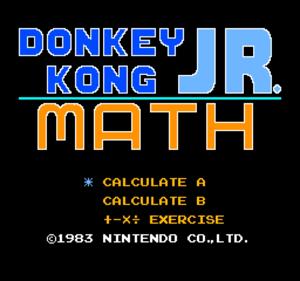
No, I do know a little more than that. Okay. What's interesting is there's two theories right now. Okay. So for what it's worth. So you got two theories. Yeah. Donkey Kong Jr.'s last game was Mario Tennis on the N64. Okay. Oh, that's it. That's his last appearance. Okay. I would have thought that Donkey Kong Jr. Math was his last. Yeah. No, no, no. So he appears in Donkey Kong Jr. Math. He appears in Super Mario Kart, a game that Donkey Kong does not appear in. Okay. Donkey Kong Jr. is in that game, but not Donkey Kong. Donkey Kong Country screws everything up because Donkey Kong Country establishes that Cranky Kong is the original Donkey Kong. Whoa. And that the Donkey Kong in that game is his grandson. Okay. Donkey Kong Jr.'s son.
Right. But then in Donkey Kong Country 2, in the manual, Donkey Kong, Cranky Kong is the narrator of the manual and keeps referring to Donkey Kong in that game as his son, which would make Donkey Kong Jr. the current day Donkey Kong, which would be fine because Donkey Kong Jr. would have evolved into Donkey Kong. Right. And Cranky Kong was the old Donkey Kong. This is so stupid. It all makes sense when you think about it. But here's where things get crazy. What was his last? What was Donkey Kong Jr.'s last game? Mario Tennis on the N64. A game that features Donkey Kong.
But this is the same game that has Mario and Baby Mario in it as well. So I don't think we can take that for canon. And I think I'm going to go ahead and put Donkey Kong Jr. as a 100% lock as the character you play as in Donkey Kong Country. Wow. So the Donkey Kong we know today is Donkey Kong Jr. and the Donkey Kong from the arcade is Cranky Kong. I don't like that idea, but I'll concede it. What would you prefer? Donkey Kong Jr.'s dead? No, I would just prefer... Yes. And who is Cranky Kong? Cranky Kong just... He's... Donkey Kong's dead. But like the... Is he the arcade Donkey Kong? No, no. Donkey Kong is Donkey Kong. Okay, so Donkey Kong has always been Donkey Kong. Everyone... No one ages.
No, but like it's not like... It's not like the Green Lantern where it just... Where it changes all the time. Right, right. Like why would his name be Cranky Kong? Like it's like, oh, you're over a certain age now. You're Cranky Kong. Now you're Cranky. Yeah. Another thing, since we're talking about ages here, how old do you think Mario is in Donkey Kong, the arcade game? And Donkey Kong Jr. for that matter, since they're like direct sequels. Well, I kind of think he's ageless and he's always just been him. If you had to put an age on him. 40. 40, right? Yeah. Miyamoto like laughs about that. He can't believe that we think he's so old. He's like, that guy, he looks like he's in his 20s.
He imagined Mario to just be like this bachelor living in Brooklyn. That's so strange. In his 20s. I'm like, nah man, you know, with the overalls and the mustache and the hat and the fact that he's a plumber, you really didn't set him up to be like any younger than 40. Yeah. Maybe in the maybe if he made this game in the 70s, like that raises concerns, though, about like a man in his 40s kidnapping a giant ape and then being chased after by his like son. Is that that's more concerning?
I just think it's concerning that a 40 year old. Well, it would be I guess it would be a little more concerning if it was a 20 year old doing nothing better to do. Like he's got Pauline, but he's like, no, I gotta take care of this girl right now. I just need to do this. Well, I guess what all we're all we're really saying is that this this entire franchise makes no sense. Yeah, this is this is I'm almost glad that the young country is like the more established thing. Yeah. And that the arcade games are just like we wanted money. So I think like one thing that we need to do now is the essential games list.
All right, we're back for the essential games list. For those of you that don't know, it's basically us just determining if like the game is worthy of like playing today. So we're not talking about like this game originally released in 1982 and released on the NES in 86. That's not what we're concerned about. Was it good then? We've talked about it in length now about like the game and stuff like that. What we're thinking about now is like 2018. OK, are you playing Nung Yung Jr. Or are you going to the movies and watching Infinity War? Wow. You actually took it off of video games. I took it off of video games for a second. But then I thought about it. I was like, why can't you just do both?
Dung Yung Jr. takes five minutes. Yeah. Like it's really silly at this point. But trust me, eventually you're going to wonder about other games and be like, are those essential? And then you come to us for the answer. But you might as well stick around for our thoughts on if Dung Yung Jr. is essential to the NES? Sean. The answer to that question is no.
OK. And Joe chimed in again as well. For those of you that don't know, Joe is is one of our guests on the show. He's he's great. He actually talks. He's very into the games. Yes. OK. Like more so than anyone. He's the guy who's most likely to vote things essential because he just loves old video games. Not that we don't love old video games. I think that they're fun to like look back on. But I think that I can definitely like determine kind of quickly how I feel about like the essentialness of playing this game again. Like sure. Think about people's time.
Backlogs are so big now, guys. This is why we're doing this is because do you really have time to go back and play every NES game? No, leave it to us. Yeah. OK. So here's what Joe has to say. Dung Yung Jr. definitely has improved game mechanics over its predecessor. It offers a little bit more strategy in the way you move and there's more variety in the levels, which keeps it from getting too repetitive. But getting repetitive isn't really a concern anyway, because like Dung Yung, this game is extremely short. In the end, even though it improves over the first game, it still just feels like a decent distraction rather than an essential experience. All right. I'm going to stop you right there, Joe.
You said improvement. I mean, I know that there are new things here, but I wouldn't say it's an improvement. And I know that you if you have nothing to say in response to that, you agree with me. Great. And I also have to beg to differ there. I do not consider Dung Yung Jr. an improvement. I don't know if it's just because Donkey Kong is a classic, but I think Dung Yung is a Dung Yung is better. Yeah.
And if you want my feelings, even though I think it's decided now that it's not essential because majority rules here, I'm also not going to put it as essential. And I think that it's it's not because it's short, because I mean, you know, you look at a game like Kung Fu and that's only five levels, but they're five pretty hard levels. So you're not likely to get to the end. Sure. You're likely to get to the end in a game like Donkey Kong or Dung Yung Jr. because the difficulty only ramps up every time you complete the game. That said, Dung Yung Jr.
isn't essential to me because I think a lot of the mechanics that worked in Dung Yung and made that game so fun are completely scrapped here. They're scrapped here and they're changed for things that while different and should be applauded for going in a different route after making so much money on the first game, it doesn't necessarily make it a better game. It doesn't make it a more unique game. It just makes it a different game. You have a game with Dung Yung and Mario again, but the addition of Dung Yung Jr.
and being able to play as a Dung Yung member is kind of cool, if only for the novelty, not for the essential list. Yeah, this game just just screams like this obviously is the B game.
Yeah. And I think like if you like Dung Yung, you might as well try Dung Yung Jr. and I think what we're going to have to determine here is if you like Dung Yung and Dung Yung Jr., is it worth it to play Dung Yung 3? Yeah. Well, listener, that we will determine in the next episode of Nostalgia. Donkey Kong-stalgia.
A whole month of Dung Yung. I hope that you'll join us. Please listen and subscribe to the podcast wherever you're listening right now. I think that could be iTunes. It could be Google Play. It could be Stitcher. It could be on the website. Great, because the website, NostalgiaCast.com, that's N-E-S-T-A-L-G-I-A, cast.com, there you can find links to the show and the show notes. And lately, I've just been throwing direct links to other websites that have really cool stuff on the games we're talking about.
And we publish episodes every Friday, so why not come for the ride? Next week's episode, Donkey Kong 3, sure to be an interesting one, if only because of how different it is. But we'll talk about that when we get there. I'll leave you with that as a tease. I'm Michael Esposito. You can find me on at Esposito Film on Twitter, and I'll talk to you soon. I'll talk to you soon.