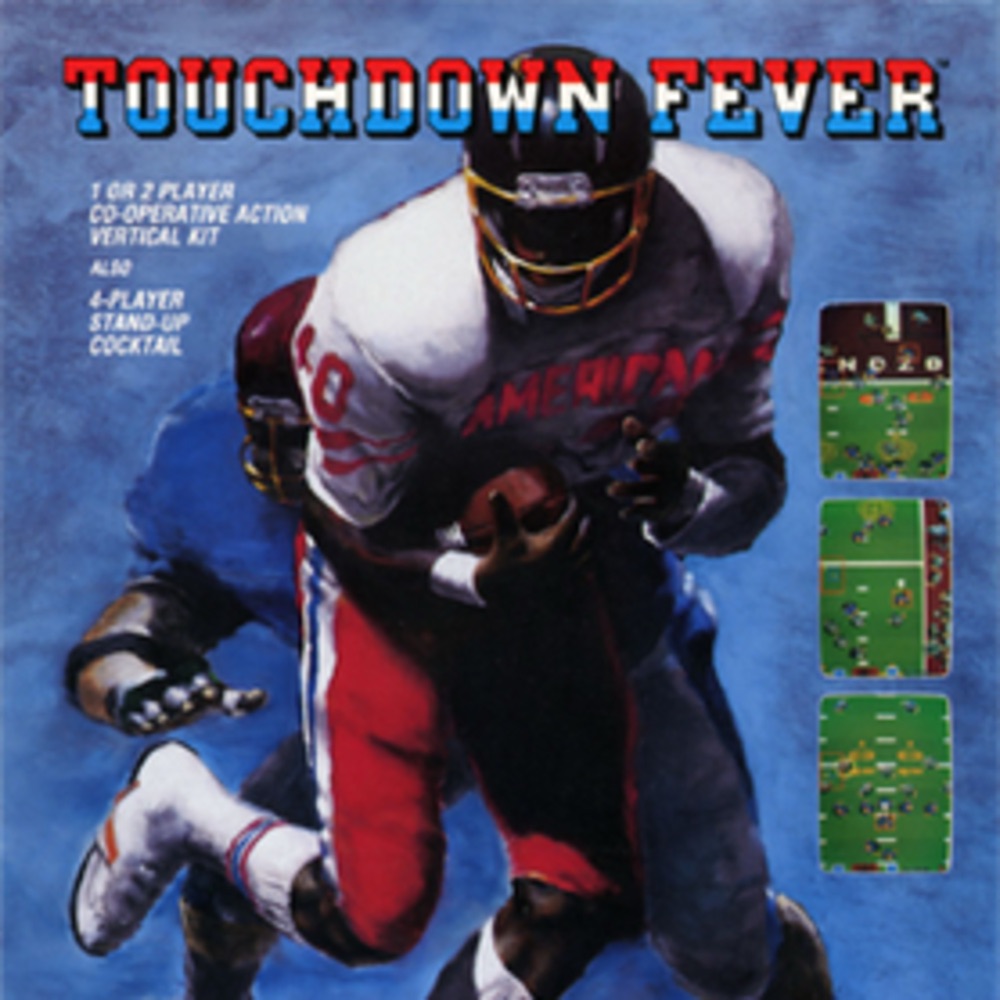
446 · Touchdown Fever
Touchdown Fever is a 1987 American football video game developed and published by SNK for arcades. It was later ported to the Nintendo Entertainment System and was released in Japan by K. Amusement Leasing on November 11, 1988 and in North America by SNK in February 1991. A sequel, Touchdown Fever II, was released in 1988.
Touchdown Fever is a football game that arrived at the party far too late. SNK made it as an arcade game in 1987, it reached the Famicom in 1988, and it came to the NES in February 1991, after we had already played football on this system more than once. The box promises "the muscle, the hustle, the chomp." We never worked out what the chomp is. It made for one of our shortest episodes.
What we noticed
- A very long field. Within about five minutes it was clear this is the first NES football game that makes the field feel long. Each yard is wide enough for two tiny players, so a nice 20-yard pass can still leave you wondering why it is third down. It reminded us of NES Ice Hockey's chibi players.
- Play calling that isn't. You pick short pass, long pass, backs or field goal, but only the field goal does what it says. Pick a long pass and your receivers may just stand at the line. You cannot see routes, and the backs may not touch the ball. Laterals after a forward pass are the one real strategy, and probably the best one.
- No tackle button. You collide and hope. A and B only choose which player you control at the start, and then you are stuck with him even when a teammate has the angle. Computer defenders touch you again and again without bringing you down, so we decided everyone is greased up.
- Odd presentation. The camera does not flip when possession changes, so the away team's offense is on top. There is a halftime show, but Detroit's cheerleaders bring a lion while Pittsburgh gets some tiger. The manual spends most of its pages explaining what fourth down means, which we found endearing.
- An upside. Not having to pick plays was a relief for the host who dislikes football games, and there is a two-point conversion before the NFL had one.
The bottom line
Skip it. Mike, Sean and Joe each voted it off the Essential Games List. Joe liked it more than most football games, mostly because those games are not his thing, but said nothing about it is special. Sean called it among the worst football games, and the worst sports games, we have played. Mike was an easy no. It is better than 10-Yard Fight, which is the only bar it clears, and it landed in a world that already had Tecmo Bowl. It opens with a one-player or two-player choice and nudges you toward a friend, and we suspect we did not give it that fair shot.
Written from our conversation in this episode.
- Opening hook: It's the muscle, the hustle, the chomp.
- Here are the core topics for Touchdown Fever:
- 1. What this actually is: no story, no license, just arcade football
A bare-bones arcade football conversion with no plot, no NFL license. Teams are drawn from real NFL cities of the era like Seattle, Phoenix, Miami, and Dallas, but none of the colors or nicknames are official. - 2. Origins in the arcade, and SNK's back catalog fingerprints
Developed by SNK for arcades in 1987 under the title "Touch Down Fever." It reuses the rotating-joystick concept from Ikari Warriors, even though the NES pad obviously can't rotate, a clear sign of SNK repurposing its own tech rather than building something new. - 3. Three years late to North America
The Famicom port landed in Japan in late 1988, but SNK sat on the North American NES release until February 1991, well after the arcade original had faded, and well after Tecmo Bowl had already redefined what an NES football game could be. - 4. Modes, team selection, and the play-calling system
Single player, two-player head-to-head, or co-op against the CPU, with twelve NFL-market cities split into East and West divisions. Offense picks from five play types before each snap: Long Pass, Short Pass, QB Sneak, Backs, or Punt/Field Goal. Worth noting the 2-point conversion is allowed here, a rule the real NFL wouldn't adopt until 1994. - 5. The field doesn't know its own scale
Yard markers are crammed so close together that both lines end up squeezed into a five or six-yard window on screen. A deep post route can come up short of a first down, and punts that look enormous only cover about 20 yards in real terms. This alone throws off the whole feel of the game. - 6. No tackle button, and defense in general
Stopping a runner just means running into them and nudging until they fall over, closer to bumping cars than playing football. There's also no defensive play selection at all, just picking which of two defenders to control before the snap. - 7. Laterals everywhere, and the part people actually remember fondly
The ball can be lateraled between the A and B players at almost any point, including on kickoffs, a small arcade-era wrinkle that stands out as one of the few genuinely fun details.
I. Setup & Premise
- The pitch: a bare-bones arcade football conversion, no story, no license, just two teams and a scoreboard.
- There is no plot to summarize here. This is a straight sports simulation, not a story game.
- Origins: SNK made this first, and it started life in arcades.
- Developed and published by SNK for arcades in 1987, under the on-screen title "Touch Down Fever." (Wikipedia)
- It ported to the Famicom in Japan in late 1988 as "Touchdown Fever: American Football," and did not reach North America until February 1991, well after the arcade original had faded. (Wikipedia, StrategyWiki)
- The identity problem: an unlicensed NFL knockoff
- Teams are drawn from real NFL cities of the era, like Seattle, Phoenix, Miami, and Dallas, but none of the colors or nicknames are official because there was no NFL license. (Wikipedia)
- Visually and mechanically it also borrows a lot from SNK's own back catalog. It reuses the rotating-joystick concept from Ikari Warriors, even though the NES pad obviously can't rotate. (Wikipedia)
- The simplest way to frame it for listeners
- This is not Tecmo Bowl and it is not John Elway's Quarterback.
- It is a stripped-down, arcade-speed football game that plays more like an old tabletop toy than a simulation, closer in spirit to Irem's 10 Yard Fight than to anything trying to feel like real football. (Wikipedia)
II. What Makes It Stand Out
- It came out three years too late
- The arcade game hit in 1987 and the Japanese Famicom port followed in 1988, but SNK sat on the North American NES release until 1991, by which point Tecmo Bowl had already redefined what an NES football game could be. (Wikipedia, StrategyWiki)
- A rare pre-Neo Geo SNK sports attempt
- SNK had just scored a hit with Baseball Stars on the NES in 1989, and Touchdown Fever reads like an attempt to repeat that success in a different sport, with much rougher results.
- A secret debug mode hiding in the credits
- Buried after the staff roll in Tournament mode is a hidden sound test, unlocked with a specific button sequence on the "Presented by KAC" screen. Nothing changes on screen, but Up and Down cycle music tracks while A and B start and stop them. (The Cutting Room Floor)
- There is also a hidden formation-index display trick on the play-select screen using Select and B on a second controller, the kind of leftover debug tool that never should have made it to the final cartridge. (The Cutting Room Floor)
III. Gameplay Structure
- Modes on offer
- Single player against the CPU, two-player head-to-head, or two human players teaming up against the CPU. (StrategyWiki)
- League match (single game) or full tournament play, with quarter lengths of five, ten, or fifteen real-time minutes.
- Team selection
- Twelve NFL-market cities split into an "East" division (Chicago, Detroit, Miami, New York, Philadelphia, Pittsburgh) and a "West" division (Dallas, Denver, Los Angeles, Phoenix, San Francisco, Seattle). (StrategyWiki)
- Play calling on offense
- Before each snap, the offense picks from five play types: Long Pass, Short Pass, QB Sneak, Backs (a handoff), or Punt/Field Goal. (StrategyWiki)
- Field goals can only be attempted once the line of scrimmage is inside the opponent's 15-yard line, and a made kick always goes through the uprights unless it is blocked. (Wikipedia, StrategyWiki)
- Oddly, the game lets a scoring team attempt a 2-point conversion, a rule the real NFL would not adopt until 1994. (Wikipedia, StrategyWiki)
- Controls in the receiver/running game
- Instead of the arcade's rotary joystick for aiming passes, the NES version simplifies things to an A-button target and a B-button target, so the player just picks which of two teammates gets the ball. (StrategyWiki)
- Once a pass is thrown, control shifts to the receiver, who has to run the throw down before it hits the ground, since an uncaught pass just keeps traveling until it goes out of bounds. (Retro Sports Gamer World)
- Controls on defense
- There is no play selection on defense at all. The player only chooses which of two defenders, A or B, to control before the snap, then reacts once the CPU commits to its own play. (Retro Sports Gamer World)
IV. Unique Gameplay Elements
- Laterals everywhere, including on kickoffs
- The ball can be lateraled between the A and B players at almost any point, a small arcade-era wrinkle that a lot of players clearly remember more fondly than the rest of the game. (Retro Sports Gamer World)
- No tackle button
- Defense has no dedicated tackle command. Stopping a runner just means running into them and nudging until they fall over, which makes defense feel closer to bumping cars than playing football. (Retro Sports Gamer World)
- A field that does not know its own scale
- Yard markers are crammed so close together that both the offensive and defensive lines end up squeezed into a five or six-yard window on screen, which throws off the whole sense of distance. (Retro Sports Gamer World)
- Because of that, a deep post route can still come up short of a first down, and punts that look enormous on screen only cover about 20 yards in real football terms. (Retro Sports Gamer World)
- Interceptions that do not respect open receivers
- The pass defense logic is loose enough that a receiver can be wide open downfield and still lose the ball to a defender standing right in front of the quarterback. (Retro Sports Gamer World)
- The side-to-side camera pan before the snap
- The game pans hard left and right to show the whole field before every play, an idea that shows up in modern Madden-style presurvey cameras, except here the players are so small it mostly just disorients. (Retro Sports Gamer World)
V. Reception & Legacy
- Not well remembered, even by SNK completists
- Retrospective coverage treats it as the weak link in SNK's early sports lineup, calling out broken, repetitive gameplay and design choices that ignore basic tenets of football. (Retro Sports Gamer World)
- Note on sourcing: Hardcore Gaming 101 does not have a dedicated writeup for Touchdown Fever. Its only mention is as one of the lesser SNK arcade titles left off a later compilation. This outline substitutes Retro Sports Gamer World's dedicated retrospective for HG101-style critical depth.
- SNK's football swan song on Nintendo hardware
- After Touchdown Fever, SNK left NES sports behind and moved football to its own Neo Geo hardware instead, a step up in production value it never gave this game. (Retro Sports Gamer World)
VI. Sequels and Spinoffs
- An arcade sequel that never crossed over
- SNK made Touchdown Fever II for arcades in 1988, adding a play-selection screen the NES version's five-play system was likely inspired by, but it never received an NES port of its own. (StrategyWiki, Arcade Museum)
- Comparison games
- 10 Yard Fight: the Irem arcade game Touchdown Fever visually resembles at a glance, and a useful reference for how far the genre had already come by 1987. (Wikipedia)
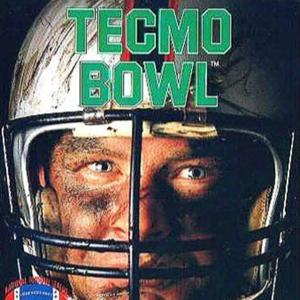
- Tecmo Bowl: the NES football benchmark that had already shipped by the time this game finally reached North America, making the gap in polish obvious. (Retro Sports Gamer World)
- John Elway's Quarterback: a rougher-edged contemporary that still manages faster action and a real single-player structure Touchdown Fever lacks. (Retro Sports Gamer World)
VII. Essential Games List Vote
- Case against Essential
- The field's broken sense of scale undercuts basic football logic, from long completions falling short of the sticks to punts that travel a fraction of what they appear to.
- There is no tackle button, no defensive play calling, and interception logic that ignores open receivers, so the actual on-field decisions are thin.
- It arrived in North America three years after the arcade original and after Tecmo Bowl had already set the bar for NES football, making it feel outdated on release rather than just retroactively.
- A game can be a curious footnote in SNK's history without being something the show needs to send every listener chasing down.
Found automatically from the transcript and checked, but it can miss things or pick the wrong page. Spot a mistake? Tell us.
Games
- Touchdown Fever mentioned at
The episode's game: SNK's 1987 arcade football title, ported to Famicom in 1988 and the NES in February 1991.
- 10-Yard Fight mentioned at
Irem's 1985 football game, the bar Touchdown Fever is compared against.
- Tecmo Bowl mentioned at
The 1987 arcade football hit that SNK had to compete with, praised for adding strategy.
- Super Tecmo Bowl mentioned at
The next football game the hosts look forward to covering.
- John Elway's Quarterback mentioned at
An earlier NES football game that Mike says Touchdown Fever's scale looks nothing like.
- Ice Hockey mentioned at
The early NES hockey game Joe says Touchdown Fever reminds him of, with its chibi-style players.
- Blades of Steel mentioned at
Joe's first guess for the hockey game he was thinking of before correcting himself.
- NFL Blitz mentioned at
The arcade game the hosts play at the Long Island Retro Game Fest, which Joe says doesn't interest him.
- Madden NFL mentioned at
Joe's example of the kind of football game with play-picking he doesn't enjoy.
Hardware
- Family Computer (Famicom) mentioned at
Japan's version of the NES, which got Touchdown Fever American Football in 1988.
Companies
- SNK mentioned at
Developer and publisher of Touchdown Fever, which arrived too late to compete with Tecmo Bowl.
- Irem mentioned at
Made 10-Yard Fight, the earlier football game the hosts compare this one to.
- Tecmo mentioned at
Publisher of Tecmo Bowl, whose rosters and play-calling set the standard Touchdown Fever ignores.
People
- Josh Allen mentioned at
The Bills quarterback Sean had a prop bet on.
- Patrick Mahomes mentioned at
Mentioned as the Chiefs quarterback in the failed attempt to end the episode on a positive.
- Travis Kelce mentioned at
Sean finds the Kelce and Taylor Swift coverage insufferable.
- Taylor Swift mentioned at
Paired with Travis Kelce in the closing banter.
Teams and leagues
- National Football League mentioned at
The league Touchdown Fever lacks a license for, so it uses generic city teams.
- Buffalo Bills mentioned at
Mike and Sean's team, undefeated when the episode was recorded.
- Houston Texans mentioned at
The Bills' opponent in their first game, won 28 to 17.
- Detroit Lions mentioned at
The Bills played them on Thursday night; Sean also played as Detroit and saw the lion mascot.
- Arizona Cardinals mentioned at
Beat the Texans 31-5 four years ago, which closes the door on the Scorigami joke.
Terms and events
- Scorigami mentioned at
The idea of a final score that has never happened in NFL history; Mike notes 31-5 has happened before.
- Two-point conversion mentioned at
A rule Touchdown Fever includes before the NFL adopted it.
- Lateral pass mentioned at
The odd mechanic of tossing the ball sideways after a forward pass, which the game leans on.
Articles, videos and sites
- NEStalgia Essential Games List mentioned at
Where each host's verdict on the episode's game is collected; Touchdown Fever was a no.
Other
- Chain Chomp mentioned at
Joe's joke when the box's tagline mentions "the chomp": the Mario enemy, not a football term.
Auto-generated transcript. Each paragraph starts with its timestamp. Speakers are not identified.
Touchdown Fever! It's the muscle, the hustle, the chomp.
And welcome to NEStalgia, a chronological exploration of every NES game released in North America. I'm Mike. I'm Sean. And I'm Joe. Guys, it really is the muscle, the hustle, and the chomp of the NFL. It's that time of the year again.
Obviously, recording this in real time, the Buffalo Bills remain undefeated. Don't you put that evil on us. Don't make that happen. Don't make it. Yeah, don't let them be undefeated. Let them lose a game or two. I just, you know, I think you actually made them lose. If we lost last week. Probably in the new stadium. No way. I've been hearing some shaky things about the new stadium recently. Yeah, they've got some obstructed views. They've got some... Don't worry. The obstructed views will only be sold for concerts. Yeah, yeah. They say that.
Yeah, that's reassuring. And then what's going on with the wind tunnels? What about the wind tunnels? I heard that they're pretty extreme. Huh. That sounds cool. That sounds sick. Yeah, I like wind tunnels. Yeah, that sounds awesome. Right. That's like a perk.
Yeah, yeah. It's a Buffalo living simulator. Yeah. They call us the Windy City. Yeah. I did. I know that they don't call you guys that, but I did notice when I was in Buffalo for my four years in college, it was always the windiest right before I got back to my dorm room. Yeah, that's kind of a common weather thing for... It was like right before I had to get to any particular door that was going to bring me to warmth, it got significantly windier. I think it's just literally that the campus is a wind tunnel in itself. We're getting off track here. I don't think we're getting off track, actually, because I was just about to ask you.
September 13th was the Bills' first game. It was not a home game, so they didn't play at the new stadium. They played against the Texans. Sean, do you remember the score of that game? The score of the Texans game? Yeah. Do you remember? I mean, I know it was like eight days ago. Okay. Yeah, I can do this. Do you want me to predict the previous game before... No, I just want you to tell me what the score was. Yeah, not predict, just remember. Yeah, just tell me what it was. Because it already happened. It was 28 to 17 Bills.
Right. And now, you had a prop bet on it for Josh Allen over under two touchdowns. Do you remember? If I won that? Yeah. Yes, I definitely won that. Especially if the score was 28, yeah. Yes, you did. Now, here's the other thing. What else do you want me to predict? Well, I think looking at the schedule here, okay, touchdown fever, I know that this one's hard to do because we don't record the episodes live. But yesterday was the Bills-Lions Thursday night game. Cool. What do you think the score was of that one? I'm pretty sure that's going to be closer. Probably more like... No, you're setting me up to make a fool of myself, Mike. The Bills are not guaranteed to be good this year. We're probably not undefeated as this episode airs. Everything sucks.
It was 31 to 5. There was one field goal and a safety that we scored. Nice. So that's a scoreigami. At least we can root for something. Yeah, exactly. I would like to see, actually, 31 to 5 a scoreigami. Meanwhile, you guys maybe talk about the game? Yeah. Well, I don't want to gloss over the hustle, the bustle, the muscle, the chomp, or whatever that is. Is that a football thing? Oh, yeah. What is that?
It's not. I have no idea what the fuck they're talking about. I was like, as soon as you said, oh, yeah, I was like, oh, my God, I sound so stupid. I don't know about the chomp. Yeah, yeah. Last week, you didn't know about missiles. He doesn't know about the chomp. I don't know about the chomp. I'm like, you said yes, I was like, shit, I sound like such a bleep. I don't know about the chomp in football. Can you imagine, like, pretending to be an American man and not knowing about the chomp?
The chain chomp. What are they talking about then? What is that? I have no idea. Why is that written on the back of the box? I googled it, and all I got was it's the famous marketing tagline of Touchdown Fever.
The thing I will say about, like, my first impressions of this game, just going by the instruction manual, is they expect that you have never heard of American football. The manual is mostly teaching you about the sport of football, like the rules of the sport, and has very little information about how they sort of video gamify it. It's like a brief introduction to the control scheme and sort of explaining the info screens that happen between plays, and then the rest of it is just, like, very base level, what does 4th down mean? Which I found very endearing.
I just wanted to, you know, close the door on Scorigami and just say that four years ago, the Cardinals beat the Texans 31-5. Oh, wow. Shit. Yeah, it has happened, and pretty recently, too.
You know, Sean, thank you for bringing us back to the game. I appreciate everything that you said, and I don't disagree or... Or was particularly listening. Yeah, I don't want to correct anything you were saying. I just wanted to point out that in addition to everything that you were saying about the game, the first thing that I took away from this game after playing it for maybe, like, not even five minutes was that I... This is the first game that maybe made a football field feel long.
Oh, but it feels, like, longer than it should. Right, longer than it should, no doubt. Like, it feels like the players are incredibly tiny, because I was so surprised that, like, some of my plays, which felt like, you know, nice long passes that, like... 20-yard chunk play here. Right, right, exactly. And then all of a sudden I see, like, third down. I'm like, what the hell? I've been getting first down every time. Like, what are they talking about?
It's just dramatically different scale than Tecmo or John Elway or anything else we've played on this system. So, and I'm sorry that John Elway was my second reference for an NES football game, but, like, you know what I mean. All the other ones are so zoomed out by comparison that I'm just not sure why the players aren't bigger here. The only thing that I can, like, possibly say is that you're playing as, like, toddlers.
Because each yard is, like, you could fit two people between each yard mark here. So I think that's the only thing it could be. It's like you're playing football for ants. Yeah. Yeah, and they do look, they're kind of got the, like, chibi look to them, too. Sort of reminds me a little bit of, um, and what is the, not Blades of Steel, the other early hockey game we played? It's just like NES hockey.
Yeah. Yeah, ice hockey. You got, like, a three different style player, whatever. This game overall did that, did what that game did for me for football. Where, like, this feels a little more, like, arcade-y than some of the other games. And just, like, yeah, you're smaller. Yes, it does feel like you're, you're going, you're, you're, the, the field feels way longer than it should.
But it also just, it just feels, like, a little more accessible and, I don't know, easy to, like, read football NES game, if that makes sense. And they obviously, they did not get the NFL license here. They, they're just, like, you know, giving you random, um, uh, cities to play as, which happened to also coincide with real NFL team locations. But you're not promised to be playing as, uh, you know, the Jets when you play as New York. Uh, you're just playing as, uh, you know, blue team.
And, uh, you can tell that the reason that they did that was not because, um, they couldn't afford the license. It's because they're not using NFL, uh, they're not using the NFL rulebook because every player is allowed to grease themselves before they, uh, get on the field.
Because it's, have you ever noticed how many computer players can touch you before they successfully tackle you? Like, so many times in this game did I think I was, like, oh, that plays over. And then they just don't successfully tackle me. It's, like, the only thing I can come to the conclusion of is that we're all greased up. Yeah, there's a few, like, weird little, like, weird little things that, like, I guess make the game more playable but don't really make sense if you look at it. That being one of the other ones that, like, when you have the ball, I guess the weight of the ball slows you down. Because you are always slower than anyone chasing you.
Yeah, it's, it's... Well, it is hard to run while holding a ball. It's also an automatic interception if you throw the ball over somebody. Um, I know that there are some instances... Well, these people are infinitely tall. Yeah, I know there's some instances where, like, the game decides that you did throw the ball relatively high and it'll just, like, sort of go over them. But it does not, it's not very good at, uh, showing that. And I think the biggest gripe that I have with this game, or, like, the most confusing thing about it, is that you're ostensibly choosing a play before each snap.
It says, like, short pass, long pass, uh, backs, which I guess just means a run play, um, field goal. Now, if you choose field goal, you will line up for a field goal. But everything else is just, like, a random play. Like, there is no... Like, the... Did you notice this? That, like, where... Yes, no, yeah, you're just making the decision between a short and long pass, a QB sneak, and a regular running play. Like, I have chosen long pass, and then both of my receivers just sort of hang out at the line of scrimmage, and I don't understand what that's about. Um, it... And then they're always lined up in random places. There's not any real way to, like, plan this out.
Um... Oh, like, there's no route to see ahead of time. Yeah, you have no idea what your player's gonna do. Yeah, exactly. And it'll be counterintuitive like that. And there's, like, it says backs, but sometimes your backs won't even be involved in the play. Um, and you're still passing it. Now, one thing that they kind of did to offset this is that you can lateral the ball after a forward pass.
Um, and I get that that is useful, but it is... It's a very strange mechanic to have in there when everything else is kind of, uh, is kind of paired back. Yeah, and also, you know, this whole game seems to be designed around a system where you could just, like, the strategy is just laterals, right? Just constantly just keep throwing laterals to one another, and that's more effective than any particular forward progress.
Yeah. Well, the one thing, another note on just the fact that this isn't the NFL, uh, fun fact, that is, um... Uh, they have the two-point conversion, and the NFL didn't really have that, and I think until, like, the next year. So, that's a cute thing. But then you get the halftime show, and then there's obviously some correlation, because I played as Detroit.
Um, the halftime show showed, you know, my cheerleaders come out with the mascot of a lion. Um, but I was playing against Pittsburgh, and I think it was just, like, some tiger that came out.
So, I'm not really sure what that was about. Yes, yes, yes. The, the... But Miami gets a dolphin. Miami does get a dolphin. Yeah, and Denver had some kind of horse-looking thing. Yes. I thought it was a cow at first, but... I thought it was a hippo at first, and then I realized, oh, it's Denver, so... Uh, you know, we were talking about the greased-up players, and that's true of both the... Like, I want to just say that, like, I did have... The computer did send, like, nine guys against me, and they all successfully missed me.
But that can happen to you as well, because there is no tackle button. Yeah, you just sort of get in the way. You just collide and hope that they fall over. It's funny, I didn't realize there was no tackle button, because I always just hit the button. You think you're tackling, right, right. You're probably hitting those buttons. Yeah, and sometimes it would work. We are all the little brother with the unplugged controller.
Right. A and B are only used to select either the A or B player that it shows you at the start of the formation. From there, you're just that person. Which is really infuriating when, like, you have another player that has kind of an angle where you can make a tackle, but you can't switch to him.
And I hate to say it, but I mean, like, that's the game. Like, that's what we're seeing. So I guess now we need to start talking about, like, the presentation part, which we covered, that the field's enormous. But even, and we covered the halftime show. So I guess, like, you know, I guess we could talk maybe that the teams are always just blue versus pink.
Or that the way that the score is presented. You can be blue versus gray. Oh, you can be. Okay, sorry. I thought it was always blue versus pink. Yeah, there's some different colors. There's some gray teams. Yeah. One of the most befuddling decisions is they don't flip the perspective when a team, when, like, you know, the away team takes possession of the ball. It will just now have the offense on top, which is insane to me. I know that there's no actual rule against that, but I feel like there should be. I don't like any, even, like, 10-yard fight. I don't even know if that had that.
And then there's sort of a, like, they kind of have this in place to, like, make you think that maybe there are some more spread out formations in this game. But before each snap, the camera will pan left and right. But the entire team is going to be visible anyway. So it's kind of unnecessary. And when you're defense, you don't get to pick a formation. Nope. Right? Nope. You just get what you're dealt and you pick whichever player you want to pursue with. I always say less choice is better anyway.
Yeah, maybe in a mobile game. No, and you're saying, I'm teasing. Joking aside, I, like, me as someone who does not care for football video games, American football video games just don't do it for me. You guys have probably noticed every time, other than this year, when we've got a Long Island Retro Game Fest. And there's always a point when we go to that, what is it, like, some Madden arcade game and, like, the three of us play. A Blitz. And, like, I just, like, I'm sure you can read it on me. I'm just like, all right, I don't care about this at all.
I don't know what I'm doing. I hate picking plays. I hate, like, looking through that stuff. And honestly, while I was playing this, I was like, you know what? I like this. This is better than the other games we play because I don't got to think about anything. They're just going to do some shit and I got to adapt to it. Like, that's for me.
I'm not saying that's a good choice. I'm just saying for someone who doesn't like that stuff, I was, like, relieved it wasn't here. Yeah. So, yeah, I guess there is a perspective where this is all, these are all not complaints. So, look, this was a arcade game made by SNK and they did make the NES port, too. But it was an arcade game made in 1987 using the same name, Touchdown Fever. It was then ported to the Famicom in 1988, a year later, as Touchdown Fever American Football. So, they do make that distinction over there. And then it finally reaches the NES in February of 1991, where it's probably, like, you know, too late.
We've seen a lot. Like, it's just too late to compete with the rest of the football games. But let's take it back to 87 for a moment with SNK. How does this compete with, like, Irem's 10-yard fight that we saw in 1985? It is better than 10-yard fight. I will say that wholeheartedly. But that's the only bar that it clears for me. Yeah. I do miss the galloping sounds.
Yeah. And, of course, worth remembering that, you know, like, even comparing it to 10-yard fight is generous because in 1987, when SNK released Touchdown Fever, Tecmo released in 1987 in arcades, Tecmo Bowl. So, you know, it was just never really a good time for SNK.
They came too late to the party because if they would have came earlier, they could have competed against 10-yard fight gracefully. But they instead had to compete with Tecmo Bowl, which just, you know, not only makes football fun, but makes it fun with strategy, too, which this game completely ignores. I suppose the one thing that you could read into about this game, though, is that it understands, first and foremost, that this game is going to be best played as an experience with a friend, family member, whatever, because the first choice is one player versus two player. Yeah, I didn't notice that. Yeah, it is not versing a computer.
It is, please play this game with a friend so that you can both experience the fun and frustrations of Touchdown Fever. And I've got a fever. Damn it, honey. The only prescription is more essential games list.
We are coming real close to our shortest episode yet. So, Joe, please save us with a long essential games list. I have so much to say. And it starts with this sentence. No, I'm not going to do that. All right. I did think that this game was a little more for me than other football games. But I think that that is because it's just not really my thing. This was a little more accessible. I could just kind of jump in and play. I do think that this might be... We might have been doing the game a little bit of a disservice by, I'm assuming, none of us played with a second player.
And I think that might be something that makes it a little more fun because it's like, well, you both have the same disadvantages. You're both working with the same thing. You can't control all the players, whereas the computer can control itself the whole time. It's like, I can't switch to this player that's running towards a tackle or whatever.
Kind of annoying against the computer. I'm sure it would still be annoying in two-player, but at least it's like... Everything's better in two-player. Everything's better when you're having fun with a friend. But overall, there's nothing special about this. So I'm going to say this is not essential, even though I personally liked it better than a lot of other games. I think that's just because it's not my cup of tea. Sean? Yeah, I for one do not have touchdown fever. So didn't need this prescription, Mike.
But yeah, I've said my piece. I think this is among the worst football games that we've played. It's also among the worst sports games, I think, in general. But I guess it has its moments. There's some things that are fun about it, I guess, if you're just looking for a sloppy time.
But yeah, I guess if you appreciate the deeper aspects of it, then you're not going to have a great time. But if you're not, and you'd like more things taken care of, then yeah, go for it. But yeah, not essential. No. And I could see how this could be a frustrating episode if you had this game growing up as a child and were anxiously awaiting the nostalgia crew for their take slash teardown of this game. And we only wound up talking about it for 25 minutes. But you have to keep in mind that we're doing this 430 something episodes in.
And we have experienced a lot of the catalog. And had this came out in 1987, like it did in the arcade, we probably would have had a longer episode because we wouldn't have talked about so many of the things that we've already talked about when it comes to these kinds of games. When you've already experienced so much of the library, it becomes a lot easier to just like notice the few things that are different about this particular thing, dissect them immediately and move on.
We're getting much better with our own essential games lists in our head because we know what we like and don't like. And I just kind of knew like right away when I got into the game and just saw how the, you know, like how the computer was behaving and how, you know, like the limited inputs I had for my team.
I was just like, I played games where like, you know, there are rosters and you can change team members and build teams and, you know, and call specific plays and guess against what the computer is doing. It's like when all that's already been accomplished in football games, it's hard to go backwards. And so it's just, it's hard to think of anything positive to say here when it's such a step back.
And so I don't like think this game would rank incredibly low in terms of like a worst of all time NES games list. So runtime doesn't always match that, but there's just very little to say about this game as a result. So it's obviously a no for me, but I, you know, I look forward to our next football game, which hopefully is super tech mobile. That'd be nice. Yeah. And by the time we record super tech mobile, the bills will have won a super bowl. So that's exciting. You can't say that. Yeah. That's pretty illegal.
I know. I can't believe I just jinxed the bills super bowl, uh, all in, all in the same episode. Um, we can't end it here, right? No, we can't end it there. We have to like say something good. You gotta have something for, for good luck. Um, yeah. Just like how, um, you know, Patrick Mahomes had a very healthy season this year.
I cannot, I cannot do that. Um, let's just say that, um, I, I find the, uh, Travis Kelsey and Taylor Swift stuff insufferable. Um, and, uh, I'm glad that at least they didn't get divorced this year. At least they didn't get divorced this year. That's correct. We can't end it there. I'm going to keep doing that until we get to 30 minutes. Right. Actually, I think that was the best way to end it because of the essential games list. Ha ha ha. Ha! Ha!!