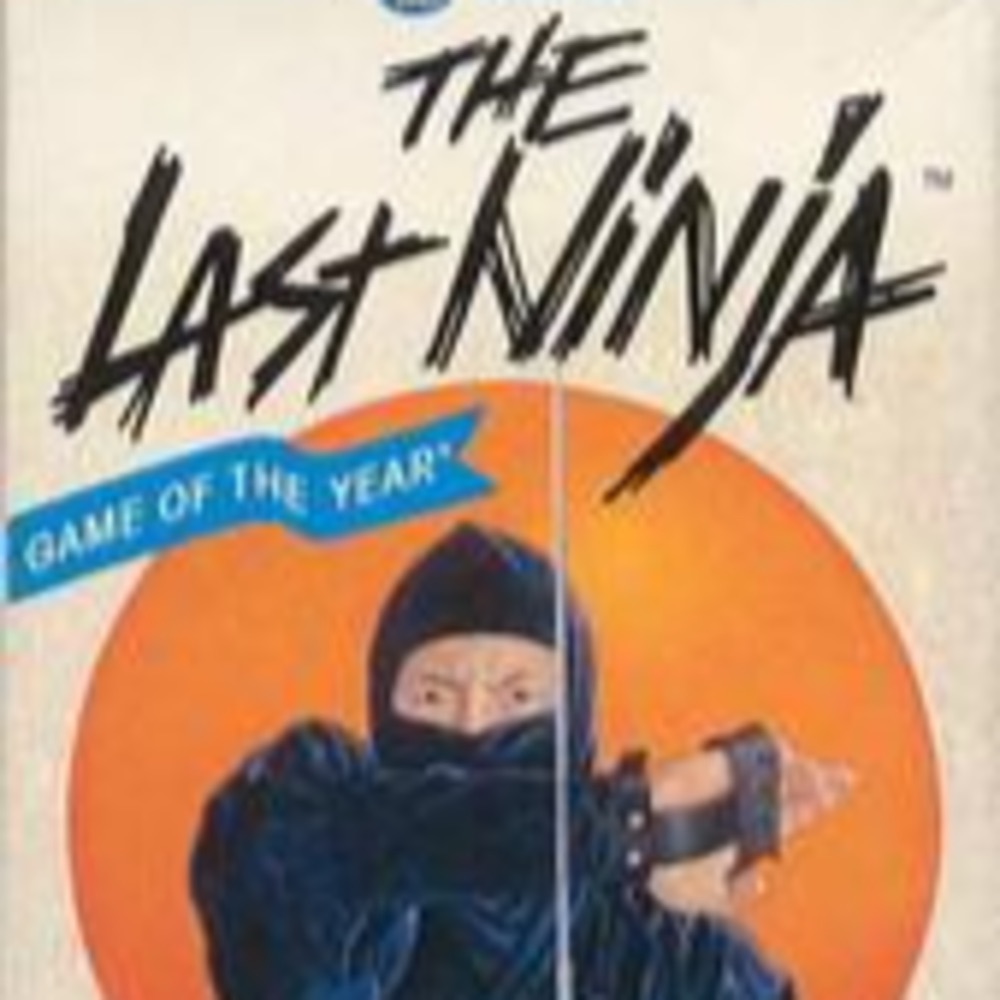
439 · The Last Ninja
Mike, Sean and Joe took on a ninja loose in Central Park in broad daylight. The game never says why he is there, and it barely says anything else. It turns out this is really The Last Ninja 2 from the Commodore 64, made by Beam Software and published by Jaleco, so there will be no Last Ninja 2 or 3 on the NES. We enjoyed talking about it far more than playing it.
Where it loses us
- You can't start without help. We were stuck in the first room until we learned the square we stood on was an outlined trapdoor, and that the wall button we punched had changed that same room. The manual wasn't enough, so we leaned on a guide and a longplay.
- Two jobs, one clumsy interface. It plays like a point and click adventure bolted onto an action game. You cycle what you're using with Select and B, and what you're holding with Select and A. After a few deaths nobody could tell whether picking up an egg muffin had wiped out the key.
- You never feel like a ninja. The isometric view turns every punch into a fussy shuffle of an inch to the left. Enemies with unlimited HP can only be incapacitated, so you avoid them, and we wished the game had leaned into stealth.
- Water. The boat puzzle needs a stick, a leap of faith across screens, and a jump timed to the moving boat. It's a clever idea and you will drown many times first. Ninjas can't swim, which explains why only one is left.
What made us laugh
- The tone. Looking back, a lot of it seemed like a joke: high scores from Bert and Ernie, Barney and Fred, and Stan and Oliver, then "Hello Marco and Rex," plus a manual hint reading "Greater love hath no man than this, that he lay down his extra hamburger for a friend."
- Absurd solutions. A crocodile blocking the sewer exit gets a Molotov cocktail. A giant fan blows you away unless you hug the wall.
- The ending. A mansion with a pentagram, a safe, a summoned ninja ghost and an evil Shogun, and you win by squatting on five candles.
- Jaleco's questionnaire. The back of the manual asks your name, address, age, how many brothers and sisters you have, and whether you own "the gun."
The bottom line
Skip it. We all voted it off the Essential Games List. Weird games usually win us over, but this one didn't: the controls and item handling are a wall, and a perfect run is only about 21 minutes, though nobody will get anywhere near that. It was our tenth game with "ninja" in the title. If you want to understand the series, we'd point you to the Commodore 64 originals instead.
Written from our conversation in this episode.
- Battle your way to a showdown with the evil shogun (Note for Claude: This is a tagline/sentence from the back of the box that works as intro for the show)
I. Setup & Premise
- The pitch: the last surviving ninja versus an evil shogun
- You play as Armakuni, the last surviving member of the Brotherhood of the White Ninja.
- The evil Shogun Kunitoki has slaughtered the brotherhood, taken over the Ninja Palace of Lin Fen, and stolen the sacred scrolls containing ancient ninja secrets.
- The NES version has an identity problem right away
- Despite being called The Last Ninja, the NES game is really a port/adaptation of Last Ninja 2, which originally came from the Commodore 64.
- That means the NES player is technically getting a sequel under the first game’s title.
- Does it matter?
- Developed by Beam Software, published by Jaleco
- The simplest way to frame it for listeners
- This is not Ninja Gaiden.
- It is not a fast action-platformer.
- It is an isometric action-adventure game about fighting enemies, solving puzzles, and trying to make your ninja stand in exactly the right spot.
II. What Makes It Stand Out
- The isometric presentation is the star
- The goal is to make the world feel like a series of 3D spaces, with rooms, courtyards, rivers, doors, traps, and hidden interactable spots.
- It is more adventure game than action game
- Yes, you fight enemies with punches, kicks, swords, staffs, nunchaku, and shuriken.
- But the real game is often about figuring out what object you need, where to use it, and how to position yourself so the game understands what you are trying to do.
- That makes it feel closer to a computer adventure game than a typical NES action game.
- It has a slow, deliberate pace
- NES players expecting quick ninja action probably got something much stiffer and more methodical.
- The game is about reading the environment, not blazing through it.
- The NES version is not just a simple port
- Reported changes from the Commodore 64 version include simplified graphics, harder enemies, new layouts, missing or simplified areas, and easier item collection.
- High Score Board
- The high score board starts with famous duos: Bert and Ernie, Barney and Fred, Stan Laurel and Oliver Hardy. Then it turns into‘HELLO MARKO AND REX.’ Whoever Marko and Rex are, they got immortalized right under Laurel and Hardy on one of the strangest scoreboards in the NES library.”
III. Gameplay Structure
- Screen-by-screen exploration
- You exit through the sides of the screen or through doors to move into another room or outdoor area.
- Some areas allow backtracking, which matters because items often need to be carried to very specific places. (Take on the NES Library)
- Basic controls
- D-pad: move in the isometric space.
- A while standing still: punch or attack with the selected weapon.
- B while standing still: kick, use an item, or pick up an item.
- A while moving: jump.
- Select + A: change items.
- Select + B: change weapons.
- Start: pause. (GameFAQs)
- Combat loop
- Enemies appear on many screens and can block your path.
- You can fight them, but fighting everyone is not always the smartest choice.
- Because of the slow movement and stiff spacing, the game often rewards avoiding enemies or slipping past them more than trying to win every duel.
- Item and puzzle loop
- You collect objects like keys, key cards, maps, food, bottles, meat, and code numbers.
- Some items have obvious uses, like keys opening doors.
- Others are more in depth, like needing altered food to deal with an animal blocking your path. (GameFAQs)
IV. Unique Gameplay Elements
- The fixed-distance jump
- Jumping is not free and fluid.
- It locks you into a fixed motion, so you need to line it up before committing.
- This makes traps and water crossings feel tense, but not always in a good way.
- Item pickup precision
- Picking up items requires standing close and pressing B.
- The problem is that “close” is not always obvious in an isometric space.
- Combat has more options than it first appears
- You can fight bare-handed or use weapons.
- Weapons include things like staffs, swords, shuriken, nunchaku, and magic
- The map item is genuinely interesting
- The map can flash clues for traps, unlock points, or items when entering a room.
- But the flash is brief, so it is helpful without being generous.
- A game where the manual/walkthrough mindset matters
- A player can get stuck because they missed a small object, failed to use an item in the exact spot, or did not understand what a screen was asking.
VI. Sequels and Spinoffs
- The NES game sits inside a larger Last Ninja series
- The main computer-game trilogy is:
- The Last Ninja
- Last Ninja 2
- Last Ninja 3
- The main computer-game trilogy is:
- No true NES follow-up
- There was no Last Ninja 2 or Last Ninja 3 released as separate NES follow-ups in North America.
- For NES-only players, this was basically their one strange brush with the series.
- Comparison games
- Solstice: useful comparison for isometric exploration and puzzle-like screen layouts.
- Prince of Persia: not isometric, but similar in the sense that deliberate animation and exact positioning matter.
VII. Essential Games List Vote
- Case against Essential
- The controls are a major barrier.
- The pacing is slow.
- The item interaction can be frustratingly precise.
- The NES version is probably not the best way to understand why people loved The Last Ninja series.
- A game can be historically interesting without being something every NES player needs to experience.
Auto-generated transcript. Each paragraph starts with its timestamp. Speakers are not identified.
The Last Ninja, battle your way to a showdown with the evil Shogun.
And welcome to NEStalgia, a chronological exploration of every NES game released in North America. I'm Mike. I'm Sean. And I'm Joe. And today we are playing the definitive experience of what would happen if the last ninja showed up in Central Park. You say, like, what would happen if the last ninja would show up in Central Park? Like, as if the last ninja is somebody we should know already. Who was the last ninja? No, the last ninja is, it's like something that will become known to us. We, there are, there are currently many ninjas. We don't know who's going to be the last. This is the last ninja who apparently is like a 40 year old kind of pudgy dude that just lives in New York City.
Or, or got teleported there. Like, it's unclear how this game starts because it just throws you right into it. And you're like on this, you're on this box when, or like square when you start the game.
And I thought that was like, oh, did he teleport here or something? Like, is that what, is that what's going on? Is that why a ninja is in New York City of all places? In broad daylight. Right. Is that why the UI has his face and a really crude drawing of the Statue of Liberty on it? Like, is, is that what's going on here? But, all right, I guess I'll find out what's going on. First off, hard to figure out what this game is without the manual. Like, you can't just, this is not one where you can just be like, oh, I'll load up the ROM and start playing it. It's like, you will not be able to start playing this game.
So, I've. No, sure, you can. Yeah, it's not illegal. Like, like it is to be an, it is illegal to juggle milk bottles and throw them at ninjas in Central Park. That is a known illegal thing. Here, though, the problem is, is that if you do something like that, you might have an experience similar to mine where you leave that room and get to the next room and get into a fist fight with somebody who has unlimited HP. Like, you can't actually kill them. You can just only incapacitate them. But maybe that's because that's like the ninja code or something. And then there's this button on a wall.
And, of course, you want to punch that button. Like, it's just, it's natural. So, I did the, I did the puzzle solving thing and I punched the button and it closed in and I could not for the life of me figure out what to do next. Because for some reason, my peanut sized brain couldn't think to go back to the other, only other room I'd ever been in in this game so far and be like, oh, I wonder if anything's different in there. I didn't do that.
I never thought to do that for the 10 minutes that I was like then online and everything. And I was like, what is this game even? I was reading the manual. And eventually I just watched a long play and said, oh, that room with the square that I thought was where you teleported from is actually outlined for a trap door. Yeah. And that's how you start the game. So, that's when you realized that you are playing basically a point and click adventure game with extra steps.
And, again, like I think the craziest part about this game just is the whole scenario. Like you just are, you just are this ninja in modern day New York City. There are no other ninjas. There's no, there's no like league of ninjas. You're just the ninja. Well, you're the last one. Why would there be a league? Well, I mean, I guess you're right. You're right. That is in the title. But it's still like inexplicable that you are a ninja. Yeah, right, right.
And it's all just these kind of like goofy situations, like puzzles that you have to solve. And, yeah, but it's more so because for a game that has so, like there is fighting. Like you do, like Mike was saying, you do incapacitate a guy. You can also just try and avoid them. So, there is some like press this button to attack. But they made two attack buttons.
And then you, and this is why you can't really get too far in this game without looking at a manual. Is because you immediately have to start like pressing button combinations just to like get stuff out of your inventory. And it's just very strange. Yeah, I mean, I don't even think a manual is enough for me. I need a guide. Because I needed like this. It's just the point and click adventure-ness of it. And my brain cannot separate that from like all the shit I've got to do with this ninja at the time. So, like I'm not, I'm just focusing on like getting this ninja to like move where I wanted to move and to attack.
So, then when I like get to the places, I'm like, I don't know. I wasn't paying attention to what's on the, you know, where the button is or whatever. So, I needed a guide to even get anywhere in this. But like, luckily, I will say that you mentioned that you could try to avoid people. You don't even have to try that hard.
They don't really, you know, they don't really bother you if you don't bother them for the most part. I guess it depends on how lucky you get with like wherever they spawn or something. Because they will block you. And then you look like an idiot or at least I look like an idiot just jumping in place trying to get past these guys. Oh, yeah, yeah. You can get like cornered. Yeah. For sure. Yeah. So, but like if you just like don't engage with them from the very beginning, a lot of them are just like standing there. Some of them do come at you.
But even when you are in a fight, what drove me crazy is like there's just nothing about these punches and kicks or anything about the way you're playing this game that makes you feel like a ninja. Like all the way back in like Kung Fu, you felt like cool when you were doing your kicks. Like this is just like it feels like I'm just standing there like, all right, like I got to position myself like right here so I can throw the punch right there. Okay. And now he's going to hit me a couple of times. Oh, I got to move over like one inch so I can kick. And like it's just like it feels like it doesn't feel good. It feels like I'm playing as myself. Like if I dressed up in a costume.
And that's largely because of the isometric viewpoint, which we haven't brought up yet. But this game is another isometric game. And like that's what's making this so much weirder to navigate because I don't disagree with the point and click like analogy.
But because this isn't a game where like you use a mouse and like pick up objects and have like clear commands because you're also like in a in an actual action game at the same time. Any kind of like combination of items or puzzle solving on top of being the character at the same time creates a very frustrating experience. Most of the times for actually solving the puzzles because like there's puzzles in games that are just basically like try to find the key so that you can open the door. And sometimes the key is just on the ground. Other times it's like a combination or something like this game has stuff like that. But then it also has like, OK, jump on this boat.
Yeah, exactly. Don't even jump on this boat. How do you get the boat to move first? Well, you have to jump over this area of water that leads to another another screen. So you have to know that there's going to be water there in the first place. You have to jump from the other screen to then make a leap of faith to the next screen over so that you're in the jumping animations that you land in the little island and then take your stick, which you hopefully acquire because if you don't have the stick, you can't do this.
And then nudge the boat and then the boat starts moving and then you go back to screens to where the boat is going to line up to line up your jump to land on the boat as it's sailing across. It's like, I mean, damn, pretty cool puzzle. Like it is involved, but like it's really hard to pull off. You will die trying to jump on the first boat many, many times before you get to that second. Like, why can't ninjas swim? I mean, it's a well-known fact that. Yeah. Ninjas can't swim. Right. That's why there's only one left.
Yeah, they all drowned. Since the floods. Yeah. Joe, you mentioned that you don't feel like a ninja in this game. And it is true. Like, I agree with Sean that, or maybe both of you said this, that like you can't avoid the enemies. You should avoid the enemies because they can't be knocked out. So you're going to keep going back to these screens anyway, and you do have a health bar and such. So you might as well avoid conflict when possible. So I guess in a way, the game is forcing you to be non-violent or maybe a little stealthy, but it should have went more in on the stealth.
Wait, it should have went in on the stealth. You're a ninja. Like, what are you doing just walking around in broad daylight in Central Park and everybody's just like, yeah, this guy here again.
Well, and, you know, I don't want to rule out the fact that, like, the gameplay being, like, you not feeling like a ninja might have been, like, tongue in cheek. You know, it might have been, like, yeah, you're the last ninja, and, like, look at this guy. He's an idiot. He's walking around in broad daylight. He looks like he's in, like, a Halloween costume.
But, like, I don't think it's that crazy. I mean, the opening, like, intro screen made me think, oh, this is going to be a silly game, and it's, like, intended to be a comedy. Now, I didn't really get that while playing it, but, like, when I'm looking back right now at the game, I'm like, it really is. It's like the little, like, bamboo font and the music with, like, and the Fred and Wilma or whatever are the, like, high scores. Yeah, wait, wait, we got to talk about the high scores for a second because it is funny that it is Bert and Ernie as first and second place. Then Barney and Fred. So, we have Sesame Street and the Flintstones. Then it's Stan and Oliver, which is Stan Laurel and Oliver Hardy, two old-style comedians.
Yes. And then it just turns into Hello Marco and Rex. Rex, like, well, who the hell are they? Whoever Marco and Rex are just got immortalized next to some pretty important names. I'm trying to think it's their cats.
Hello, our cats. Yeah. I think that there's definitely, that definitely leads me to believe that some of this is supposed to be funny. But a lot of this, like, I just, I can't see that they did this on purpose. Like, when you pick up an item, did anybody else just think he was just sort of, like, squatting on it and, like, picking it up with his butt?
Am I the only one that immediately jumped to this? No, no, not at all. Okay. Just making sure. I think the game gets silly like that all the time, though. Like, there's that, there's a crocodile blocking the exit out of the sewers.
And naturally, what would you do? You would set the crocodile on fire. Yes. You just throw a Molotov cocktail at it and the next thing you know, it's on fire and you're out of that room. Much like how ninjas can't swim, we do know that, like, the moral enemy of any crocodile is a Molotov cocktail. Right, or just fire in general.
I've always said that, like, one of the scariest days of my life was when I was at Universal Theme Park and I was on the Jaws ride. And it was scary enough having, you know, a mechanical Jaws shark coming after you on the boat. But then at one point, the river that you're on, on the boat cruise, it lights on fire. And I found out that you can have fire in water. And I was like, oh my God, like, we are so, like, this is possible?
Like, all of our worst fears are being realized if you could have fire on top of water. But that's when, that's only when the crocodiles harness that power. Like, usually they don't have that. Look it up, people. Fire on water. Scary stuff. All right, so the hook of this game, you know, whether it's the tone or the ridiculousness or being a ninja, the real game is about figuring out what object you need, where to use it, and how to position yourself so that the game understands that you're trying to use it.
Because so much of this is, like, contextual. And I do think, like, if it was a, even followed more of the point and click commands and had, like, a, when you're near, let's say you're near a chest, right? I don't even think there are chests in this game. But if there was, and you were able to then, like, navigate to a submenu for use and then key.
Like, that would be better than having to cycle through this menu of just, your UI says you're using and you're holding. And using is, like, what you're using to attack and you're holding is the item that you're trying to use to solve the puzzle. It's just all a very, like, clunky experience. And when, and this is something I never truly understood, like, you always kind of default to using a ninja kicking.
And there's always, like, a number next to that. What does that mean? Do you know how many kicks you have left? Yeah, I thought that that was just, like, they ran out of real estate on this UI because of their giant ninja head in Statue of Liberty. So they just, like, had the using thing, but then, like, when you're done selecting it, it switches back to, like, oh, and this is how many lives you have. Okay. I thought it was lives. But I don't know. And, yeah, this is so strange.
And then I started to think that, like, do you lose the item you were holding if you pick up another one? Or is it just, like, you've got to start cycling through it again? Because I ended up, like, just dying so many times I could never really keep track of what my inventory ever was.
But I remember, like, I picked up a key, and I needed to use that key to open up a gate. But then I tried as hard as I could to find that key, and I accidentally picked up, like, an egg muffin since. And I'm like, did I overwrite my key? You're not thinking of the right button inputs, Sean. It's not simply enough to use select to cycle through them. You have to press select and the A button to cycle through what you're holding. It's so crazy.
Because to cycle through what you're using, it's select and the B button. These are just normal things that everybody's come to understand in video games. We always cycle through our inventories with the select and B button and vice versa, with the A button. It's tough. It's very tough. I also don't like some of the, like, holding and then, like, just showing the picture of, like, the world's worst cheeseburger.
What is that? That actually looks like two pancakes with, like, some jam stuffed between them. That doesn't look like a cheeseburger. It's a New York-style cheeseburger, Mike. Or it's actually, sorry, it's just a hamburger, according to the manual. And this is where things get weird. It has this thing about clues about objects, right? And it tells you, like, it's not telling you exactly what they're for or whatever. But for hamburger, it just has in quotes, as if, like, somebody, like, your mentor said this to you.
Greater love hath no man than this, that he lay down his extra hamburger for a friend. Okay, no, this is all definitely on purpose now. Right. And so hamburgers, you use them to get an extra life. I see, yes. So, you know, you go through all this. I feel like we've touched on how you interact with the world.
This all leads us to learn that it's all Satanists, right? Is that what was going on? Well, you get into... There is some cult thing going on. Yeah, you get into this mansion, and then you just see a pentagram on the ground. And you have to... You do something with a safe. I guess you picked up a combination at some point. I didn't get this far.
Oh, I actually didn't get this far either. Now I'm seeing it. Yeah, the pentagram even, like, comes to life and shit. Like, oh, it's... Yeah, that's pretty spooky. You unlock the safe. That summons a, I guess, ninja ghost. I guess the second last warrior. Sorry, second last ninja. And then while he kind of just attacks you, you have to go and squat on all of the candles. And then once you've squatted on all five candles, you get a little, like... You get a little, like, rainbow light show. And then I guess you win the game. That's how you win. You have to put out the candles.
Isn't that what he's doing by sitting on them? I think that might be it. Yeah, he's putting them out. Or is he lighting them? I can't tell. Yeah, having the pentagram... I think he's lighting them. Oh, he's... No, I think he's putting them out. Okay. One way or the other. I'm watching right now. They're not lit. And he squats down and now they're lit. But he has to... Doesn't he have to put them out first to... Okay, yeah. I see it now. I'm watching the same video. Never mind.
He did take them out first, though, I think. Oh, okay. Now you guys mentioned the laser light show, but now that I've seen it, that looks more like a very unsettling, colorful, liquid squirting show. Well, sure. But I'm trying to keep it G-rated. It's like a weird... Just like four little fountain blobs of water.
Having the evil shogun just show up, though, at the end of the game in this basement with the pentagram and shit and the seance thing. It's very funny. It's like House of the Devil. Yeah. Where it's like it's just... Yeah, you know, the whole game was just like, yeah, you're just babysitting in Central Park or whatever. And then it's like, oh, no, actually, like, Satan has returned to the Earth. We got to take care of this. I was going to say something, and that was that... Oh, yes. The Last Ninja.
This is a, like, Commodore 64 franchise. Franchise. I didn't know that those existed, but yes. It's a series of games on the Commodore 64, and this one got ported to the NES, but it is actually not The Last Ninja. This is The Last Ninja 2. Oh, wow. It's kind of like Final Fantasy. Right. I think he's still the same Last Ninja, so he remains like he hasn't found any new ninjas, but The Last Ninja 2 is actually The Last Ninja on the NES. So... And there will be no Last Ninja 2 or Last Ninja 3 in future NES episodes. So were there more Last Ninjas on Commodore? Yeah, there was three total. Wow. The lastest ninja. Yeah. Wow. We really are The Last Ninja. Yeah. Wow.
Wow. you know another funny thing i think i think actually now i am coming around to this game just being a comedy is that there is that one part uh with the giant fan and if you don't like hug the wall right next to the giant fan you will just blow away and die and i think that that is like that's that's another subtle nod at like that the game is actually supposed to just be like
a good romp yeah i think it not being particularly fun has like helped rob a little bit of that like i think now looking at all this stuff and not playing it i'm like oh yeah like what a fun energy this game has but i didn't experience that i mean you know also i didn't get anywhere near as far as like the levels that some of the levels we're talking about but uh yeah i think that like
there's just this dissonance between the like tone of what's going on in the gameplay you keep saying you didn't get this far but it's 21 minutes long the game and i didn't get that far i would not get anywhere near that far it's clearly not 21 minutes long that's for somebody who knows exactly what to do on every single screen these games are much longer because it's going to take you forever to figure out what to do with the stuff you're holding yeah like how mike didn't know to go backwards after i didn't even think to go backwards and you know we didn't even talk about how like that first room that you enter it's not even like a room or whatever but like with the curtain and
everything it just felt very like twin peaks coded to me like you're like entering a world that that isn't right like everything here is a little cool just before twin peaks actually yeah right david lynch definitely played the last time lines are lining up and if you know if you want to look for like another isometric exploration game that has puzzles on you know consistently throughout maybe not these kinds of puzzles we keep talking about this game all the time now but joe this is another chance to talk about solstice i know i mean so far maybe the best isometric
experience i've had and then not isometric but i i guess like i it was something i felt more early on not like as i continued to play the game but there is this there is this like deliberate animation to everything you do like you have to commit to every kind of action you take in this game like when you make a jump you have to watch this whole jump animation that reminded me of like prince of persia now prince of persia is a game that does it great uh you know and it's it's fun to uh to learn uh you know how far the arc of your jump can get you and and what to do in that game it's not so much
fun here in an open space well what was the most recent game that you know this is another time that you guys can make fun of my terrible memory uh we had another game very recently that had these kind of canned animations that really killed the mood all the time um yeah i remember talking about prince of persia recently it wasn't conan right i don't well maybe it was conan it might have been conan yeah uh this this has more conan vibes than than prince of persia vibes this game is so conan coded oh god stop it with the coding you're 30 you're 34 years old mike
uh that's release date of this episode accurate
uh okay um any uh before before we move on to the final segment i just want to any other guesses for why uh the ui needed to have the ninja himself and the statue of liberty on it and the time that just counts upwards the entire game yeah the upwards coming clock i guess i guess you compare with your friends oh yeah i didn't huh i think it's just useful to like know how much time like you know you've wasted you're wasting of your life yeah it should actually be counting down it's like yeah you're yeah this is how much time you're like it should have like an infinite clock it should have like 99 99 99 and start counting down and they just like really scare the player
uh there's also like that power meter thing on the ui uh yeah i didn't feel you didn't need i didn't really want to get into this but like there is something like it could just be a meter but instead they made it a spiral and so now it's like a different way of communicating yeah it's more ninja like yeah uh and also just been like a shuriken with like you know each different uh spike coming off as you use your power it also is very strange like just the way they arranged it like your enemy's power is on the left and you think maybe yeah that you're actually getting your ass beat but you might be beating their ass and uh then when they go down and it slowly counts back up it gets very like
i don't know it's a very weird way to get all this it's definitely stupid but as i was as i was playing it i was like surprised that like okay like the utility is there and it's not as hard to read as i thought it was going to be but all they had to do a spiral yeah but i but like it does have like
you know if you think of like a spiral you've got kind of like the inner like inherently you create like an inner spiral and it's sort i guess it's not even that but it's just like there's a filled in part of the spiral that first is like your first bar of health yeah and then the actual outline of the spiral itself is the second bar of health which like i guess yeah that's good utility to give yourself more health for the real estate you could have done that with straight lines also
especially when you're i guess it's memorable you've definitely ruined a lot of like like they could have saved so much space just by getting again rid of mike's pet uh uh face and statue of liberty um but now you're just you're really committing to not being efficient with your ui by having your power bars curl up like this and take up square footage it's it's silly it's all very silly
the game was developed by beam software and published by jaleco and uh at the end of the manual jaleco actually has a little uh questionnaire that you can uh fill out in the manual and then mail to them to help jaleco invent new games that you'll like and uh it it then proceeds to ask so many questions that are uh you know just privacy uh just giving it out for free in the mail but
your name your age whether you're male or female address city state zip code how did you get this game whether you bought it or got it as a gift that's important and will be noted uh how many games you own for your nintendo they are calling it the nintendo uh how long have you owned your nintendo does your nintendo have any other accessories and you can check the gun the power glove the gun
what the hell not the zapper like do you own the gun you own a gun because we're very interested in knowing yeah check like the top shelf of your parents closet uh yeah and try the trigger too while you're at it see if it's uh loaded or not it's getting dark don't do that kids so please for all our underage listeners i'll take it out joe this is all this is all very quaint because you
know that you give this information out every time you like uh you you anytime i use anytime i log in on anything and say sign in with google i just assume this is what they're sending them whether i own a game boy or not like i'm sure google's telling them but here's how you're gonna help them invent the new game forget all the personal information they ask what kind of games do you like to play on your nintendo and i thought this was interesting because
we have role playing as a as a genre so like they are familiar with uh the same kinds of terms that we still use today like role playing um adventure sports arcade but they've they have some other genres in here like movie hits uh that so that used to be its own thing like it was a movie hits game uh and not racing games but driving games that's fine i i can understand the difference but then they have war games as its own genre war games is that like tactics that's gotta be like nobunaga stuff
yeah right yeah um and then how often do you play your nintendo do you play alone or with friends uh you can only check one box i guess like like you're only allowed to play this thing one or the other uh how do you learn about new games and then uh all sorts of like you know what what movie did you last see what magazines do you read do you have any brothers do you have any sisters how old
gosh they are building a complete picture with uh with this information jaleco they were some they were some sheisty guys i guess well that's how you help jaleco invent new games on the nintendo and uh i would like you guys to help me uh invent new games for the essential games list
joe i will say this game is essential i don't know why i had to botch it at the last second you know what it works because this game you know when i booted up this game i was like i i mentioned this earlier i i liked the energy that i felt like i was about to experience from this game like a fun this is gonna be goofy it's gonna be like not taking itself too seriously and i and i guess we got that but like it it wasn't fun we got the not taking itself too seriously but like it it was just
frustrating to play it didn't really you know you didn't feel cool playing it which like maybe that wasn't what they're going for but it didn't even feel like easy to play it felt like i don't know it needed to be they needed to like lock it onto a grid or something so you can you know so you you had like too much control over where you go and the hit boxes or like select boxes were way too small so you had to really finick with all that and then it was just i don't know it runs into the kind of point and click adventure problem that a lot of point and click games have where there's not
enough context to make you feel like you're salt you're satisfyingly solving a puzzle in a way that's enjoyable it's just kind of like i don't know i don't want to say trial and error but it's i guess sort of is um so i don't know i think overall this is definitely essential which is not essential sean yeah this is this is a bizarre game and i think this one's actually going to stick with me
um just how just just with how like pathetic you are as an ninja like i it it surprises me it surprises me that you that they can make you feel this pathetic as a ninja i think i'm done with ninja games for a while guys i don't know how many more we got you might not have a choice that we have so many ninja games that we've played recently and i feel like this is a culmination of of like just how silly this this this this whole like cultural event was um but yeah not essential uh you feel like a dork playing this game you are a dork for playing this game uh don't do it again this is our 10th
ninja game with ninja in the title so there might be even more but at least 10 where ninja shows up in the actual title of the game uh for those keeping score that was ninja kid kid nicky radical ninja ninja gaiden teenage mutant ninja turtles ninja gaiden 2 little ninja brothers ninja crusaders shadow of the ninja tmnt2 and now the last ninja um and hopefully this will be my last vote on the last ninja
it is not essential um but it was fun to talk about i i enjoy kind of episodes like this uh but this is not a game that's like worth checking out because it's weird or something like that the controls are just such a major barrier to even uh the accessibility of this game it's pretty it's pretty slow pacing game uh like there's if you want to try and figure out what to do it's going to take a while for very little progress in the game so i don't think like it's necessarily fun to solve these
puzzles the item interaction is like frustratingly precise and on top of all that the little like fact that this is actually last ninja 2 like i i just feel like if you did want to find out about the last ninja the nes version is probably not the best way to understand why they made three of these like how this became a series to begin with like go check it out finally all you people have a reason to go look at the commodore 64 uh and download its whole rom set or something because now you can play the last ninja over there so uh obviously like always a game can be um interesting or have some
kind of historical context uh without being something that every nes player needs to experience and i don't even think this one has anything like necessarily inherently interesting about it it's just a very weird game and i usually like weird games i didn't like this one at all so i think that reinforces uh the non-essential vote we will have to play a ninja game again though and you know this okay we have to play ninja gaiden 3 oh okay that's fine yeah that's fine right yeah yeah how many how many games with
gaiden in it have we had now that's funny but it can't be it has to just be the three about like charles barkley shut up and jam gaiden yeah i mean that i can't wait till we get to that we should do that for the bites um you guys don't know what bites are that's uh our patreon.com slash nostalgia show uh for uh five dollars a month you get a uh monthly extra episode of nostalgia where we do something that's not part of the main library usually like a famicom game but it could also be
what we we just did like the castlevania game boy games that's uh yeah that was fun that was in may and i didn't yeah you didn't do it but you're not here an episode without me join the patron or listen to like 20 of the episodes you might have been there with us in the june episode uh where we did the second episode of snestalgia that's right we do snestalgia on this little thing uh that we call nostalgia bites and uh the second episode was pilot wings so joe maybe you were on that i don't know we didn't record it yet maybe i was we'll find out you