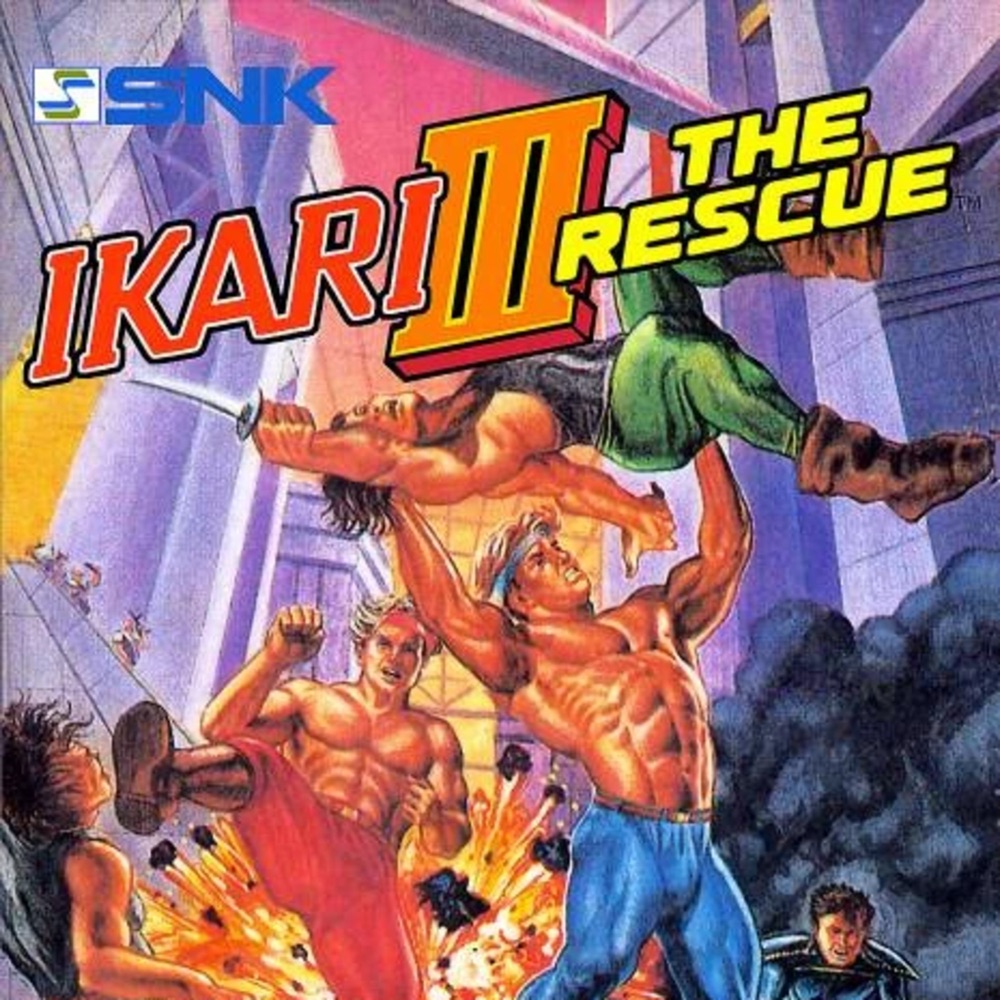
437 · Ikari III: The Rescue
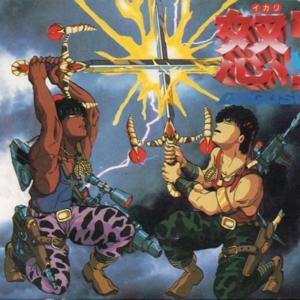
Ikari III: The Rescue, simply known as Ikari III (怒III) in Japan, is a 1989 beat 'em up video game developed and published by SNK for arcades. It was ported to the Nintendo Entertainment System, MS-DOS and Commodore 64. It is the third and final installment of the Ikari Warriors series after Ikari Warriors and Victory Road. The NES version was shown at the 1991 CES.
The first Ikari Warriors was top-down run and gun with vehicles. The second went to space with RPG touches. The third drops "Warriors" from the title, comes back to Earth and takes away the guns. Mike and Sean were on this one, and we spent a good stretch of it just laughing at what is on screen.
Fists, feet and goofballs
- Everyone kicks. You and the computer soldiers all lean on the spinning jump kick, so fights turn into jump kicks countering jump kicks, like a mosh pit of people doing hardcore dancing. Spamming it also keeps you from being stun-locked by a crowd. It doesn't always work.
- A fair fight for the army. The last hope of the free world has no gun, so the enemy soldiers have none either. We wondered whether the aliens from game two took everyone's guns in a peace deal. The one real shooting section is an underwater shmup stage.
- Guns exist, barely. The first boss fight hands you one, and we asked whether you had just spent the last 20 rounds in the world on a tank. Pickups include a machine gun with 10 rounds, a grenade and, per the manual, a rock. Oil drums wipe out every enemy on screen.
- The plot, such as it is. It's the end of the 20th century and a recession spawns an organization called Crime Ghost. Its leader Faust has kidnapped the president's daughter Elise and wants the president to resign. We found that a light demand. Paul and Vince go in, and the story may be the most interesting part of the game.
- The little girl. For the last third a six-year-old follows you around. She can't be hurt, so it is not an escort mission, but soldiers doing jump kicks while a small child trails you is one of the weirdest NES images we've seen.
- The bosses are the standout, including a cyborg ninja who keeps zapping around.
Worth knowing
- A long play ends in about 22 minutes, and the game is barely four stages.
- In the arcade version you are Ralph and Clark, who live on in King of Fighters and Metal Slug. That version adds a skull that chases you, and getting caught sends you back to the start of the level.
- There is no Ikari 4. SNK moved to fighting games.
The bottom line
Skip it. Sean voted it off the Essential Games List first, calling it a goofball game for goofballs: funny moments, not enough to carry it. Mike agreed, for similar reasons: top-down beat-em-up combat has to feel great, and this stays samey and thin. The reinvention is a better topic for the show than a game, and Mike called it his least favorite of the trilogies so far. Both votes were no, so it is a clear Skip it.
Written from our conversation in this episode.
- IT IS THE END OF THE 20th CENTURY
- Drop the “Warriors” its cleaner
I. Setup & Premise
- The pitch: the Ikari Warriors become hand-to-hand rescue commandos
- The president’s daughter, Elise, has been kidnapped by a secret criminal organization called Crime Ghost.
- Crime Ghost’s leader, Faust, threatens to execute her unless the president resigns.
- The president calls in Paul and Vince, the Ikari Warriors, to infiltrate the enemy hideout, rescue Elise, and destroy Crime Ghost. (Internet Archive)
- Developed and published by SNK
- It is the third NES entry after Ikari Warriors and Victory Road.
- The simplest way to frame it for listeners
- The first Ikari Warriors is basically a top-down military shooter.
- Victory Road turns that into a bizarre sci-fi sequel.
- Ikari III yanks the series back to Earth, but instead of doubling down on guns and tanks, it becomes a weird top-down martial arts rescue mission.
- It is less “Rambo with a machine gun” and more “Rambo forgot most of his weapons and decided to roundhouse kick a terrorist organization.”
II. What Makes It Stand Out
- It is a huge mechanical pivot for the series
- The main action is no longer built around constant gunfire.
- You spend most of the game punching, kicking, jump kicking, and using occasional weapons or items.
- That makes it feel closer to a top-down beat ’em up than a traditional run-and-gun shooter.
- It supports two-player simultaneous action
- Like the earlier Ikari games, the co-op angle is a major part of the appeal.
- The premise is hilariously action-movie generic
- There is a global recession.
- A secret vice organization is infiltrating every country.
- The president’s daughter is kidnapped.
- The villain gives a resignation ultimatum.
- Two muscle-bound commandos are the only answer.
- It is extremely late-80s action nonsense, and honestly that is part of the charm.
III. Gameplay Structure
- Top-down scrolling combat
- Unlike the first Ikari Warriors, you are not relying on tanks or vehicles. This is mostly a body-to-body brawl with occasional weapons.
- Basic controls
- The D-pad moves the hero.
- A Button: roundhouse kick.
- B Button: uses picked-up items.
- A + B: jump kick.
- A + B + D-pad: roundhouse kick while jump kicking.
- Start pauses, and Select can show score and remaining lives. (Internet Archive)
- Combat loop
- Walk into enemy groups.
- Use punches, kicks, and jump kicks to clear space.
- Grab items when they appear.
- Use limited weapons carefully.
- Push forward before the game overwhelms you with bodies.
- Weapons and items
- Machine gun: only 10 bullets, so it is a limited-use power tool rather than your default attack.
- Grenade: strong destructive power, but also limited.
- Diamond: bonus points.
- Oil Drum: wipes out all enemies on screen.
- Rock?: can be thrown at enemies.
- Limited weapon pickups
- The machine gun having only 10 bullets
- The game is not letting you retreat into the comfort zone of the older Ikari formula.
V. Arcade Game
- Arcade Version / Differences From the NES Version
- The arcade version came first, and it is the harsher version of the idea
- The arcade Ikari III: The Rescue was released by SNK in 1989 and later reissued through Arcade Archives.
- The story is noticeably different
- In the arcade version, Ralf and Clark are rescuing a presidential candidate’s son from a terrorist base.
- In the NES version, the plot is rewritten around Paul and Vince rescuing the president’s daughter Elise from Crime Ghost, led by Faust.
- The arcade controls are the biggest mechanical difference
- The arcade cabinet used an 8-way rotary joystick with a 12-position rotary switch and three buttons: punch, kick, and jump.
- The arcade version has a nasty pursuit / timer system
- One of the arcade version’s defining frustrations is the “main terrorist forces are catching up” pressure.
- A distance-style timer, shown as a distance to a skull. If it reaches zero, you are captured and sent back to the beginning of the level.
- The NES version removes that pressure, which makes it a lot less punishing and a lot more reasonable to actually play through.
VI. Sequels and Spinoffs
- No Ikari IV
- Ikari III is effectively the last main entry in the original Ikari Warriors line.
- There was no NES follow-up and no direct fourth game continuing this specific format.
- Ralf and Clark continue beyond Ikari
- Even though the NES manual calls the heroes Paul and Vince, the broader SNK identity of the Ikari Warriors becomes strongly tied to Ralf Jones and Clark Still.
- Those characters later become much more famous through SNK’s larger universe, especially The King of Fighters and Metal Slug appearances.
- So the Ikari brand does not disappear, but it stops being its own mainline action series.
- Related comparison games
- Guerrilla War: probably the cleanest NES comparison if you want an SNK-made top-down action game that feels more traditional and satisfying.
- P.O.W.: Prisoners of War: useful comparison for SNK’s interest in martial-arts/military brawling.
VII. Essential Games List Vote
- Case for Essential
- It is one of the most interesting late-series pivots on the NES.
- Case against Essential
- but the punching and kicking need to feel great for this design to work, and they do not get there.
- It lacks the iconic status of the first game and the bizarre novelty of Victory Road.
- Recommended vote
- Not Essential.
- The reinvention is more interesting as a topic than as a game you would tell every NES fan they need to play.
Auto-generated transcript. Each paragraph starts with its timestamp. Speakers are not identified.
Ikari 3, The Rescue. It is the end of the 20th century.
And welcome to NEStalgia, a chronological exploration of every NES game released in North America. I'm Mike. And I'm Sean. Sean, drop the Warriors. It's cleaner that way. Okay. What happened to our Ikari guys? Um, well, there's still more than one though. Yeah, but like, they used to be the Ikari Warriors. Now it's just Ikari. You know what? I didn't even really clock that.
I see now that it says Ikari 3, The Rescue. Um, but you're still, you know, you're still your shirtless, like, uh, non, non, uh, copyright material Rambo. It's just so funny that you say you're still your shirtless, non copyrightable Rambo, but like, yet they just came back from outer space. Remember the second game? I very barely remember the second game. This is like, this is just, we've had some issues, right? With sequels just completely changing the kind of game you get.
And, uh, we've talked about that at length on this podcast. We're not going to get into it here. But this is a trilogy that wants nothing to do with each other. Like, the first Ikari Warriors was just like some good old fashioned top down run and gun stuff with some vehicles along the way. Then they went to space for Ikari Warriors 2. Remember being a bit more RPG like. They totally jumped the shark there. And now with Ikari 3, we're back on Earth. So it looks like, oh, okay, 2 was just a mistake.
And, uh, we're going to correct the wrongs and go back to the, uh, the foundation that the original set. Except for, where the hell are their guns? Yeah, this kind of feels like, I mean, I'm off the top of my head, I'm having trouble coming up with an example right now. But when a, like an IP feels like, oh, we got to go back to our roots, but like even more rooted than the original game might have been. Like, do you have an example of something like this?
Of something going back to its roots? But like, even, like even more rooted than its roots are. Right. Yeah, I guess that's like Breath of the Wild. Yeah. Okay, yeah. Like, let's do, it's like this. This is the Breath of the Wild of Ikari Warriors. There you go. Wow, they would love to have that on the back of their box for the, uh, for the anthology collection. No guns. And you know what? It also gets rid of the, the one complaint that I remember I had from when we originally recorded was that like, you always have to shoot in the direction you're walking.
Um, so they just took the gun away. Yeah, they said that's not working anymore for Sean. What if we just made it so that you can't shoot a gun at all and you just go around punching and kicking and everybody looks like they're just doing Fred Astaire tap dancing. Uh, because everybody, you and the computers are all like, you know what this game's all about? The jump kick.
The spinning jump kick. It is so fucking funny watching jump kicks getting countered by jump kicks and you're just, it's sort of like, uh, watching like a, like a mosh pit of people that are like doing that hardcore dance where you just sort of punch at each other. And it's just complete chaos and people get hit and they, but they, they look, they get hit, but they also look goofy doing it.
And that's what this game is like. Yeah. The only thing funnier is when you like have too many enemies and one starts punching you and then you just kind of get like stun locked into like being punched by everybody. And there's like, how the hell do I get out of this? Like everybody's just ragging on me and it never happens the other way. You're not able to like successfully punch like seven people at the same time. You may not be able to do that, but you can like, like mess with the Z axis a little bit and sort of like just spam your jump kick, which kind of protects you from getting stun locked. That's true. And also allows you to sort of intersect big groups of guys.
Um, but it's not, it's not a hundred percent. It doesn't always work. And what's funnier too, is like, you know, we always joke about these one man army things, right? Where, uh, it's just one guy who's just been told like, Hey, we, we can't send anybody else. It's just you. You're our last hope. Go save the world. And usually all they have is a gun, right? This time you don't even have a gun. And the army is like, okay, so we have to make this a fair fight for them because they're all using their fists too. It's like, where are their guns? What happened? Is this like, did we make a peace deal at the end of the car warriors too in space where the aliens like took away all of our guns?
I just, sorry. I'm watching a play through while we talk and I just watched a whole squadron of otherwise normal looking soldiers just sort of do a choreographed dance of kicks towards you. Yeah. You put a little Moses supposes behind that and it looks like it's synced to the music.
Okay. Um, yeah. Okay. So, I mean, you mentioned something about what, what could even be happening in this game. Do you know what's going on in the story? Like I, Oh yeah, it has cut scenes, but I'd have no idea what's happening in them. I feel like there's some hieroglyphics going on in the beginning where it's given you like sort of a visual representation of the story, but I could not parse it.
Well, as I mentioned, Sean, uh, as the back of the box for the game at the start of the episode, uh, it is the end of the 20th century and a worldwide economic recession has wreaked havoc with the nation and the planet. So this thing's trying to like predict the.com bubble a little early, uh, and the, all this, um, anarchy and, uh, recession has created a new organization called crime ghost. Well, now that's fucking cool. Right. Like anonymous.
Yeah, I guess. Yeah. Right. It's like the V for vendetta guys. Like they're the crime ghost. Okay. And crime ghost leader Faust has now, uh, kidnapped the president's daughter.
Uh, whose name is Elise and he has threatened to execute her unless the president resigns. So far I'm on the side of the crime ghost here. Like we, we, we have an economic recession and, uh, you know, all this stuff is going on and all he wants is the president to resign. I know we don't give in to terrorist demands. This seems like a light one. Like just give up. It's not saying like, and I'll take your place. Yeah. He just wants like the vice president to be president or something, I guess, if that's how we understand it. This sounds very Kojima.
Yeah, it does. It really does. Because here's the funny thing too. It's not like if he resigns, they won't just have an election, right? Like they're going to have another election. It's not like, they're not going to be like, Oh, well he resigned. So I guess, uh, Faust, like you're in charge now, right? It's not like how things work. He just, he's just calling for, uh, he's just calling for there to be a, a trial, like a, a, sort of an impeachment. So how much of the plot of Akari three, the rescue is lifted onto resident evil four?
Well, I was, one of the reasons I mentioned metal gear solid was because, uh, there, there's like a fight with a cyborg ninja that just kept like sort of zipping, zapping around. And I'm like, is this metal gear solid? Like, and he, and he, you can't hit him except for very, you know, this fight I'm talking about. Yeah, no, I know. It's the, the, the, the boss fights are the standout moment of this game because they, it's, believe it or not, even the very first boss fight gives you a gun. It's like, holy shit. They have those. They manifest a gun.
Did it only have 20 rounds left? Like you fired the last 20 rounds left on the, in the world at a tank. That was your master plan. Like shouldn't we be saving these for Faust? And now Faust is the guy that took, okay. He's, he's the one that wants there to be an impeachment. Yes. Yeah. Or just resign, you know, let the vice president run things for a little bit. Maybe the vice president's compromised. Maybe the vice president is Faust. Maybe that's his. Whoa. So the president calls in Paul and Vince, the Akari warriors, as they're known, uh, to infiltrate the enemy hideout. Find the dealers. Um, and, uh, that's a 21 jump street reference. Find the dealers. Infiltrate the supply. Right.
Uh, and you know, I, I think like in, in terms of what we got here as a game, that story might be the most interesting part because we could talk about like the levels and shit, but like at the end of the day, it is just a, a fisticuffs of top down scrolling combat.
Uh, over and over again, where you just walk into enemy groups, try to punch and kick eventually just jump kick to clear enough space, grab pickups as they appear, use your limited weapons carefully, and just keep pushing forward. The name of the game is just to keep pushing forward because they're just going to continue to throw enemies at you until you get to these bosses. bosses. And sometimes even the bosses are like, you just run up to them and you just keep punching them in the face too. And they get kind of like stunned.
It's a weird, it's just a weird way to like build to the trilogy. And we saw with double dragon three that they couldn't necessarily land it either. And they did like this weird thing where they regressed from the second one. I don't even know if this one's like regressing so much as it's just like, it hasn't, it hasn't interest. It hasn't brought in anything new except for maybe scuba diving. Like now there's, now there's like a shmup level where you finally have a gun, but you're, you're underwater.
And so is everybody else. And it's just like, how many, like, I don't, I don't know that it's not, there's not a lot to talk about here in the way that I want to talk about a podcast where I don't just like break down the elements of a game. But I talk about what's interesting, I'm running out of interesting things. Sure. At the 10 minute mark. Well, I mean, what I'm going to, I'm just going to give a little bit of my two cents here as to what it seems that they're doing.
And like, at least it is interesting that the Ikari guys have been playing around with the genre a bit. Like it's almost like they've been keeping the same like mode of play. Like every time it's top down, it's mostly going to be vertical scroll. But in a second game, they kind of add like RPG mechanics or at least action RPG mechanics. And in this one, it's like, they're trying to be, it's like, they're trying to do a double dragon, like beat them up. Whereas before it was not, it was never that.
But it kind of shows that in these sort of set pieces where you have areas where you can just sort of run past people. And then you end up getting to that point where like, you know, you have to beat the guys on screen in order to move forward. So it's really just a vertically scrolling beat them up. And for me, it's like the most interesting, or maybe the most fun, not interesting, but the most fun part of this entire series was in the first game when you would eventually just like get one of those pink tanks. Yeah. And you could just enter it. And then now you're doing everything in a tank and you feel so strong. That should have been like the natural evolution. Not to like reduce you to your hands and fists, but hands and fists, hands and feet.
Indeed, they, they, they just, they, they went the wrong direction and sci-fi was definitely a choice. But to go to just being like a, like, I just feel like it could have been, it didn't have to be Akari 3. It could have been a completely different thing where it's all like, you know, like a Kung Fu flick or something like that. But instead they rope in Akari 3 to this. And I'm not sure what SNK was going for here. And it's the same game in the arcade, by the way. It's not like, you know, I think we saw this in Double Dragon 3 where they were like different kinds of games.
This is, the arcade game is basically the same game, except for that instead of, who did I say? You're, you're Paul and Vince in. Yeah, who knows what these guys' names are. Yeah. In the arcade, you're Ralph and Clark. And that matters because Ralph and Clark, even though the Akari series is dead, they survive through the King of Fighters franchise. They show up in the King of Fighters and in Metal Slug. So, you know, they still get used over at SNK. Well, let's get back to your Resident Evil 4 comparison because I definitely stepped on you there to talk about the ninja boss.
But another item of note in this game is that the whole last third is played getting followed around by a little girl. I wasn't expecting the president's daughter to be so young. I don't know why, but I was expecting someone that you could like romance. Yeah, well, yeah, that would get you in big trouble.
But thankfully, as opposed to the last time we had what, I mean, what could be called like an escort mission. This isn't really an escort mission. She can't be killed. She can't be hit. She's not the baby stroller in The Untouchables, thankfully. She just sort of hangs out. And I think in terms of just like weirdest images in NES games, a bunch of uniformed military soldiers doing jump kicks over and over while you jump kick them while being followed around by a six-year-old girl is among them. Yeah, I mean, Capcom totally stole the whole idea for Pragmata from this game. Lots of Capcom. Little girl who can't be hurt.
Capcom stole so many game ideas from one game. It's insane. More like Snickcom. Right? And is it surprising that there's no Ikari 4? I was going to ask. I would have thought maybe they went back to their roots of their roots and got like super gunny again. But they stopped here. There's no more. Yeah, you would think that like certainly in like 2009 would have been a great time for like Xbox Live Arcade to get Ikari 4, you know, and just call it or maybe just call it Warriors 4, right? Last time they dropped Warriors, so this time they drop Ikari. And it's just Warriors 4. It's just 4. Yeah, and there's two new players that we've never heard of before. And you could do four-player co-op because it's the fourth game.
But that didn't happen, so. Didn't happen. And, you know, keep in mind, SNK makes other kinds of games, or not other kinds of games, but other franchises in the, these aren't even franchises, the other ones. But I'm talking about Guerrilla War and Prisoners of War. Those are two SNK games that do the same kind of thing with the, you know, run and gun military brawling stuff. And they didn't feel the need to like be like, oh, wait, those are Ikari games too. Like they're, Ikari likes. But this game being like the final statement, it's just such a weak statement. This game, a long play of it ends in 22 minutes. It's like, it's barely even four stages.
Yeah, maybe like what happened was this game just sort of put too much of a bad taste in people's mouths. And maybe Prisoners of War, whatever the other war. These could be games we already played for all I know. I don't remember. They are, yeah. We did play both of them.
Well, that's okay. Then that's to say, I retract that and say that's why they switched to fighting games exclusively. Because they were done with the one kind of game they could think of before that. And just checking, both Guerrilla War and Prisoners of War were in 1989. So it has been a while. You're forgiven for forgetting. Yeah. To say 1989 is also to say like 2019. So whatever. Yeah, it's 2021, but who's counting?
Yeah. What else was I going to say? Oh, here's the interesting thing about that arcade version though. And I think we talked about this in the first Akari Warriors. But it had the, you know, the joystick has the rotary style where it has like the more directions to it than just the way the D-pad does. Oh, I thought you meant like a rotary phone.
Oh, no, no, no. Just like, I don't know. I think it's either, it's either eight or 12 directions. But the point being that like in the first game, that mattered a lot because of the way that you could shoot your weapon. Right? Like you could take the joystick and point it in those specific ways. So this way you were kind of like free pointing your weapon around as you were walking. Yeah. In this one, that doesn't matter so much. But what does matter is that the arcade version has this, the way that they're framing it is that like the terrorist forces are catching up to you. But it's basically just like a timer. And there's the, yeah, well, basically it's like, it's a, it's a distance style timer.
And it's like a skull getting closer. And if it reaches, if the skull reaches you, you're captured and sent back to the beginning of the level. So. Interesting. The game could have been worse. There could have been something where you had to like also rush to finish the levels. I mean, maybe that would have been, no, it wouldn't. The game's short enough as it is. Like, it's like, would you have to run? No, it would have forced you to like, it would force you to like get some mastery in order to move forward. But I feel like we would have reviewed that much worse.
So, yeah, you're right. That would be bad. And for anybody who heard no guns and forgot that I already mentioned the boss fight, I do also know that there is a machine gun that you can pick up. And weird choice to call it a machine gun because it only has 10 rounds. I don't know who's stocking these machine guns with just 10 bullets, but sure. And there's also a grenade that you can get. These are all just pickups, though. They're not things that you have ready at your disposal.
And there's also like a, what is it, is it like a rock? There's like a rock that could be thrown at enemies? I mean, I think it's a grenade. Okay. So, no, but I counted the grenade already. Oh, you did say grenade. I thought there was like something else.
I only remember the grenade and the gun, but it could be rocks as well. The manual says there's a rock, yeah. The manual does corroborate that it is a rock. Wow. And there's also those oil drums that if you attack those, they wipe out all the enemies on screen. So, that's kind of cool. I guess I just saw that as like an interactive piece on the level. Yeah, yeah. That's not like a pickup. You can't summon that at will. Although, it would be really cool to summon oil drums. Yeah. You wouldn't be working a day in your life if you could summon oil drums.
Not in this economy. They think their economy is bad in this game? Sheesh, brother. Come here. Don't make me summon the oil drum. Right. It's like, well, you know, and think about it. It's 2026 and, you know, we don't have a, where's Crime Ghost when you need him?
I'll tell you what everybody needs right now, though. The Essential Games List.
Sean. Mike. Oh. Your vote. Yeah, yeah, yeah. No, no, no. Yeah. This is a weird one. It's so scattershot from, like, you know, it's SNK. We have positive thoughts about SNK.
But it's, I just never really liked this series. And I didn't go back to the Ikari Warriors 2 episode to make sure that isn't a complete lie. But I'm pretty sure I've never liked Ikari Warriors really that much. Even though I always kind of gave it a lot. Even though I always kind of gave it credit for at least being, like, cool, like, in an 80s way. Like, just punch kicks. Kick punches. But, yeah. Yeah. I think it's got very funny, like, moments. Like, you could do a lot of weird, funny things to make this an enjoyable playthrough like that. But I didn't, I don't know. There's not enough here to call it anything more than just, like, this is a goofball game for goofballs.
Not essential. Yeah. Thank you. I needed that. Yeah, yeah, yeah. It is, it is a very interesting pivot for the series. For the second time, keep in mind. It kind of, it lacks the bizarre novelty of the second game, which was also just called Victory Road in some circles. I think we added the Ikari Warriors 2 to that because it helped frame everything. But that's, that's, that game was bizarre. This game isn't that. The first game, I don't want to say, like, iconic, but, like, it is well remembered and was early. So, it had that going for it. It was more, we were more forgiving.
So, that one's, like, fresh in my mind. I think, like, for this game to make any kind of statement, the punching and kicking need to feel great for a game to just be entirely based around that. In the same way that, like, beat-em-ups are, right? And so, this is, like, a top-down beat-em-up. But they, they just don't get there. The combat does not get there. It feels, it feels too samey the entire time. The limited pickups and boss fights that you have don't make enough of a statement.
It, it's, I think the reinvention is more interesting as a topic for this podcast than it is in execution. And so, it's not essential. Poor Vince Akari. And, and here's the thing. I agree with you, Sean. I think out of all the trilogies we've seen so far, this is, like, my least favorite trilogy. Like, I don't think I, I don't think I want to, like, revisit any of these three or, you know, I understand why there isn't a fourth.
It really didn't, didn't have much to say. Now, who knows? Maybe Adventure Island 3 will just be a caveman again eating a bunch of fruit. And that'll be like, sure, at least there, at least we, at least we had some fun along the way. Is that coming up soon? No, we just did the second one. Well, yeah, but, you know, nothing makes sense in the NES. Yeah, what's soon to you? Like, 30 episodes. No, that's not happening. But here's a couple of other threes that are going to happen, if you're interested. Absolutely. Okay, Ninja Gaiden 3 is this year. Yep. What do you think the subtitle would be for Ninja Gaiden 3? Um, the sequel. Nice. Not the ancient ship of doom.
That was my, gonna be my second guess. All right, now here's the crazy thing. Okay. Ninja Gaiden 3, episode 481. So we've got some time. Okay, you're looking at, that's next year. Okay. The following episode after Ninja Gaiden 3 is Adventures of Lolo 3. Get out of town. Man. The episode after that is Bases Loaded 3.
Wow. This is gonna be. What are the odds? I don't know. This is gonna be a tough, that's gonna be a tough month. I'm gonna have to like. That's crazy. Go back. Three threes in a row. Yeah. There's too many, too many sequels. Like, you don't really. People talk about how like sequels are like a, sort of like, something that's just new in the last 30 years that like, oh, nobody has good ideas anymore. Man, we were doing this 40 years ago. Oh, man.