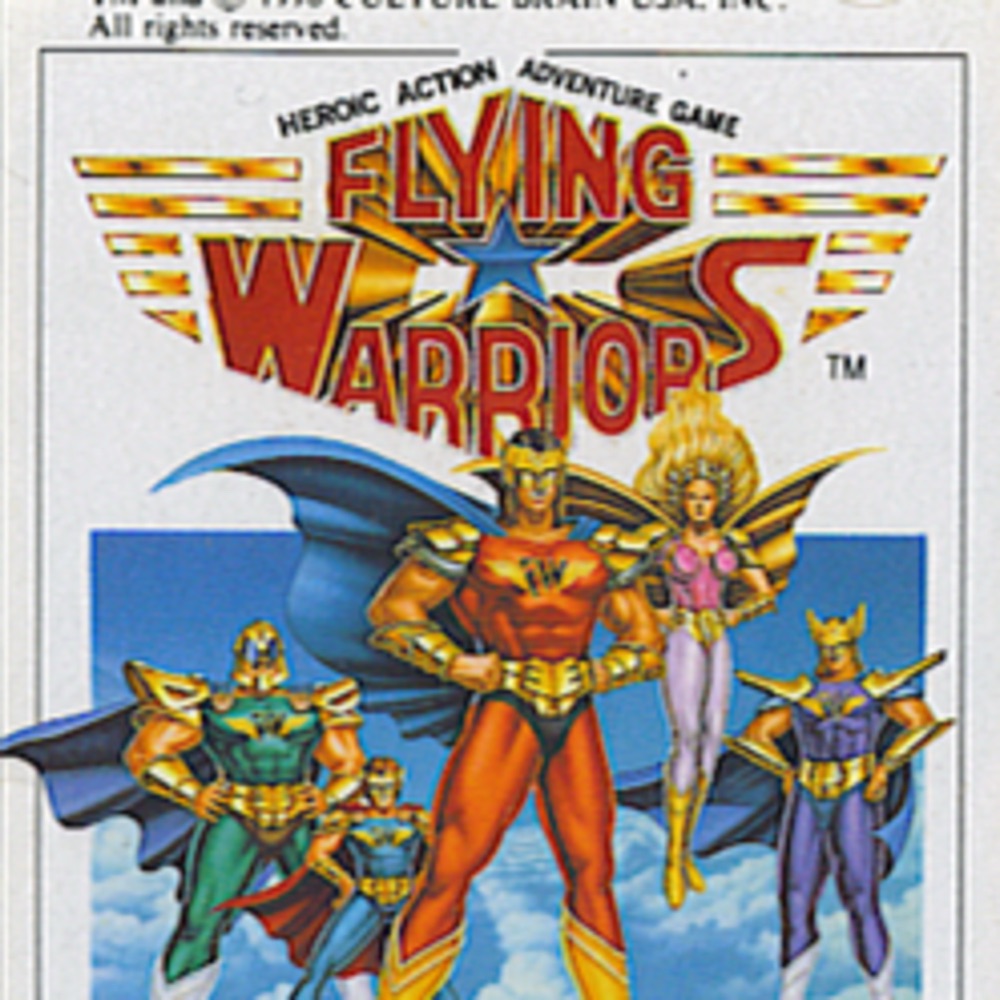
435 · Flying Warriors
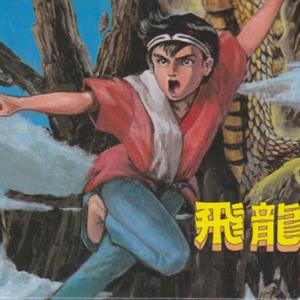
Flying Warriors is a 1991 action video game in the Hiryū no Ken series. It was developed and published by Culture Brain for the NES.
We assumed a game called Flying Warriors would be a shmup. Instead it is a huge Culture Brain adventure that was hard even to outline: side-scrolling action, exploration, one-on-one fighting, turn-based boss fights and experience points on one cartridge. It is two Famicom games fused into a single North American release, which explains a lot. Mike and Sean were on this one. We did not reach the end, and we left it off the Essential Games List, but we liked how big it swings.
A game that is several games
- The tutorial lies by omission. A polished intro with a Superman-style theme, then a clear fighting lesson with red diamonds marking weak spots. Then stage one is a side-scroller where none of that matters, and the one-on-one fighting returns for bosses 45 minutes later.
- Go left. Run right in stage one and an angel (per the manual) asks for a robe sitting at the far left. The 38-page manual describes items that may not matter for hours, and it told us we would have to backtrack.
- Journey mode is the bulk of it: platforming, hidden items, falling rocks, tiny platforms and a conga line of enemies, plus a KO gauge you save for bosses. In China the NPCs start talking and we thought of Castlevania II.
Where it works, where it doesn't
- The fighting mode. Weak points flash on you and your opponent, so you know when to block and when to attack, and mashing does not work. It looked more cinematic than fighters we usually muddle through, though on the easier setting it is just two buttons.
- Grid-like movement. Sprites move as blocks, the purple flying dragons are hard to hit, and some enemies always connect because the hit boxes do not line up.
- The cast. Rick Stalker, Mary Lynn, Hayato Go, Greg Cummings and Jimmy Cutler Jr., a psychic soldier from an ancient shadow cult who looks like a regular kid. You swap them in, but they barely play differently, and you only see their superhero forms in boss battles.
- The writing. "The blood of justice flows through me." One character announces "I'm the famous Latron." The opening prophecy about a red star is never built on.
Worth knowing
The Fist of the Flying Dragon is the finisher once your KO gauge hits 100. Talking orbs give hints for each stage. A manga-style comic ran for 12 issues in GamePro.
The bottom line
Play it, but not as an essential. We both voted no on the Essential Games List. Sean called it uneven and half-baked, a weird attempt at something really big: interesting, not especially enjoyable. Mike's no came early, from the controls and the feeling of being swarmed while powerless, the same complaint as Double Dragon III the week before. Everything is here, from fighting game to cyborg labs, but it is not polished enough to be cohesive. It has cult classic energy for anyone who grew up with it, though nobody on our Discord ever said they were looking forward to it.
Written from our conversation in this episode.
- Enjoy Twice as much with our ultimate action game
I. Setup & Premise
- The pitch: Long ago, Demonyx of the Dark Dimension led his Soldiers of the Dark Dimension in a war to conquer the Light Dimension. He was sealed away inside the Mandara Talisman by the hero Dragonlord — but not before prophesying that he would return when the Red Evil Star rises.
- Five warriors were sent to Earth to prepare for that day. One of them is Rick Stalker, a young martial artist.
- The Red Star has appeared. Rick must find his four teammates, fight his way through a world torn between Light and Dark, compete in martial arts tournaments in his civilian form, and transform into a costumed superhero to battle Demonyx's forces on a cosmic level.
- Developed and published by Culture Brain.
- The Japanese source material is two separate Famicom games from the Hiryuu no Ken franchise: Hiryu no Ken II: Dragon no Tsubasa and Hiryu no Ken III: 5 Nin no Ryuu Senshi. Culture Brain blended gameplay and graphical elements from both, fused them into a single North American release.
II. What Makes It Stand Out
- One of the weirdest genre mashups on the NES
- Side-scrolling action game
- One-on-one fighting game
- RPG-style boss battles
- Tournament arc anime energy
- Feels like:
- Saturday morning kung fu movie
- Sentai/superhero transformation show
- Fist of the North Star mixed with Double Dragon
- The game is simultaneously:
- Extremely cheesy
- Surprisingly ambitious
- The opening of this game has extreme polish in a way that probably sets the rest of the game up for failure. Awesome theme feels like Superman, intro cinematic, Tutorial, NES controller on-screen, clear explanation of fighting mechanics…then you’re thrown into a side-scrolling action platformer where that doesn’t matter so much and enemies are everywhere.
III. Gameplay Structure
- A. Side-Scrolling Action Stages
- But its not a stage based side-scrolling action platformer. You don’t just go right, in fact you should go left because going all the way to the right at the start of the game tells you that you need a robe which is to the left. I don’t think I even thought I could go left.
- Platforming-heavy exploration
- Environmental hazards:
- Falling rocks
- Tiny platforms
- Waterfalls
- Spider-spitting plants
- Stone idols
- Frequent hidden items and backtracking
- KO Gauge Mechanics
- One of the most important systems in the entire game
- Acts like:
- A super meter
- A magic meter
- A momentum system
- Filled by defeating enemies during side-scrolling stages
- Encourages aggressive play instead of avoiding enemies
- Why the KO Gauge Matters
- At 100%, Rick gains access to:
- Flying Saucer projectile
- Hiryu-no-ken super attack
- Turns regular encounters into “resource building”
- Creates a gameplay loop:
- Fight enemies
- Build meter
- Save supers for Dark Dimension fights
- KO Gauge in Dark Dimension Battles
- Gauge becomes even more important during boss fights
- Successful blocks help build meter
- Creates a rhythm:
- Defend
- Fill meter
- Unleash supers
- Makes fights feel more tactical than standard button-mashing
- Risk vs. Reward
- Do you:
- Spend the gauge immediately?
- Save it for a better opening?
- Discussion Points
- Surprisingly advanced mechanic for an NES action game
- Feels ahead of its time compared to:
- Beat ‘em ups
- Platformers
- Early console fighters
- Without the KO Gauge system, Flying Warriors probably becomes forgettable
- B. Dark Dimension Battles
- Game shifts into a one-on-one fighter
- Basic mechanics:
- Block high/low
- Punches and kicks
- Throws
- Special moves
- Mystic Spells
- Fire Burst
- Fire Tornado
- Fire Storm
- Meteor Shower
- C. RPG-Style Boss Encounters
- Turn-based-ish command battles
- Use:
- Spells
- Barriers
- Magic Water healing
- Character switching
- Feels completely different from the rest of the game
- Narga and Demonyx fights become endurance battles
IV. Standard vs. Master Controls
- Strongly recommend Standard mode, you won’t know master mode without the manual
- Master mode:
- More traditional fighting-game inputs
- Standard mode simplifies the controls
- Discussion:
- Was Flying Warriors trying to be accessible before that was common?
V. The “Tournament Arc” Energy
- Feels very anime
- Every opponent has Different martial arts style
VI. Characters & Team Building
- Rick Stalker
- Generic but earnest hero
- Hayato Go
- Cool sunglasses martial artist
- Mary Lynn
- Flying Warrior teammate
- Very late-80s “don’t underestimate me” energy
- Greg Cummings
- Aggressive American brawler
- Jimmy Cutler Jr.
- Psychic soldier from an ancient shadow cult
- Just looks like a regular ass kid
- Discussion Points
- Entire cast feels like:
- Anime stereotypes
- Action figure lineup
- Arcade fighting roster prototypes
X. The Lab & Sci-Fi Shift
- Game starts as an adventure in China and Hong Kong and suddenly becomes:
- Secret lab
- Elevators
- Gargoyles
- Laser wolves
- Cyborg vibes
XI. Moonlight Warriors & Final Dungeon
- Introduction of the Moonlight Warriors
- Jimmy joins the team officially
- Abandoned subway station leading to underworld portal
- Final gauntlet:
- Thanatos
- Lunatos
- Seiros
- Zakros
- Demonyx final battle
XIII. Translation & Writing Weirdness
- Incredible awkward dialogue throughout
- Strange quotes
- Odd phrasing
- Unintentionally hilarious moments
- Examples:
- “Any enemy of peace is an enemy of mine!”
- “The blood of justice flows through me!”
III. Pop Culture, Legacy & Connections
- The GamePro comic: Culture Brain funded a manga-style promotional comic strip that ran for twelve issues in GamePro magazine. The strip adapted the game's story in multi-page illustrated installments and sold the superhero angle hard.
XVIII. Legacy / Final Thoughts
- One of the most “NES-ass NES games”
- Feels like developers crammed:
- Fighting games
- RPGs
- Platformers
- Anime
- Martial arts movies
- Tokusatsu heroes
- Fantasy
- Sci-fi
- Wrestling into one cartridge
- Not polished, but unforgettable
- Cult classic energy
- Tease next episode
Auto-generated transcript. Each paragraph starts with its timestamp. Speakers are not identified.
Flying Warriors, enjoy twice as much with our ultimate action game.
And welcome to NEStalgia, a chronological exploration of every NES game released in North America. I'm Mike. And I'm Rick Stalker.
Okay, I don't know if you should be using a name like that in 2020. What do you mean? It's nothing but cool. There's nothing it can be misconstrued as. I'm Rick Stalker. Rick Stalker, I couldn't figure out if there was a play there, but it was weird that there was a girl named Mary Lynn, like Maryland.
Like the state? Yeah, like the state. And then like, but who's Greg Cummings then? Like what's the play on words there? Greg Cummings, Greg Cummings. I'm trying to say it fast. Nothing's coming to me. There it is right there. Ah, okay. What state is Rick Stalker? I'm glad we're starting. Sorry, I need to know.
What's that? Is Rick Stalker, does that sound like a state? Rick Stalker, Rick Stalker, Rick Stalker, more like a country. Hmm, okay. You know, like, oh, I go to Rick Stalker Stein. Hmm. That's a country. I guess it's Lichtenstein. Got it. Let's go. Yeah, yeah, yeah.
Exactly. And, you know, here's the tough thing, okay? I think we've already shown that we can talk about just about anything. But Flying Warriors is giving, it was giving me a lot of trouble just outlining it because I was seeing a way where like I just am not clear about what this game is because there's so, it's throwing so much at you. And not in the way that like, the most recent example I could think of, The Untouchables, the game based on the movie, like where that was doing like, yeah, this level is doing a different type of game. Because that's like easier to digest.
This is like all over the place. Because you could say it's a side-scrolling action game, but that describes it as like maybe more like a platformer or more like a just move to the right and these are individual stages. But there's actually like exploration in each of those levels where you have to like find shit to then do other shit in the level.
But that's just one part of the game. Then there's like one-on-one fighting like Street Fighter 2, which hasn't come out yet. It's like literally doing that a couple weeks before. Street Fighter 2 is like imminent. It's like February. They're both coming out in February of 91. But this game has that. Then it like for the boss battle switches to RPG mechanics where you have to like put commands in and fight the bosses through turn-based battle.
I just, I think like it's a lot of genres mashed up. And no matter which way I talk about this game, the first feeling that I had was just like a game that's called Flying Warriors should be like a very straightforward shmup. And instead I got like a gigantic game when I turned this on. I was like, I'm not prepared for this. Yeah, this is one of those games that I opened up the manual first.
And I, yeah, I was not prepared. I kind of just stared at it for a while. Like I was reading through it. Already the translation isn't great, which kind of just compounds everything that they're telling you, making it seem. Bad in the game too. It's a bad translation in the game. I don't think the dialogue is impressive. It just makes it all sound like even more like kind of, it seems, it reads like you're opening up a manual for a device you've never used before. Like as if I'm trying to use an NES and this is the first time I've ever played a video game. And it's like, if you like action, select expert.
This standard operation is good for people who are not as skilled or are beginners. You can also use artificial intelligence to let you play skillfully. I'm like, what is happening in this game where an AI is involved already? And yeah, there's just a lot going on.
Totally didn't understand what kind of game I was playing until I turned it on. It's also a manual that is 38 pages long. And I am not including like the legal pages with, you know, the compliance with the FCC and all that stuff. Like this is just a massive one, but not even in like the, we've seen with some of the RPGs where they'll, you know, give you a walkthrough of the first dungeon or what to do to start the game and everything like that. This one just gets so into everything that you could pop.
Yeah, exactly. Like the, the, the systems and the mechanics of it all that it reminded me of, uh, I, before I played, uh, Metal Gear Solid 2, uh, the, uh, is that the, that's not the Twin Snakes. That's the GameCube one. What's the Sons of Liberty? Yes. Yeah.
Uh, before I played that, I, I, I had the manual, so I open it up and I'm reading it and I'm looking at all this cool shit, but I just kind of like, I'm just passing. I'm not like saying like, I'm going to remember this for the game. I'm just reading it. And there were things at the end of that manual that didn't happen until like 90% into the game. Like there were just like things that all of a sudden I was like, oh yeah, you do acquire this a piece of equipment. And I do remember that from the manual. It was like, that's what's happening.
That's what's happening in this Flying Warriors manual. It's like things that might not come up in the game for a very long time. Uh, and it is a, it is a long game. It's even long by like the YouTube long play standards of like, when you look at these games and someone plays it perfectly and it's like, yep, that was 33 minutes. It's like, obviously it's not going to take a human 33 minutes. If it's your first time playing, it's going to take you hours to figure that shit out. But for two hours and 55 minutes of perfect gameplay, that's got to be like, what, like 20 hours of real life?
I mean, maybe I, I, I would say I played this game for a solid hour and a half. Uh, and then I, I think I, I didn't even see like modes of this game. And I'm sure in the long play, you'll get there in 20 minutes. So, or less, who knows what the, what the time dilation is there. And the opening of this game has extreme polish in a way that probably sets the rest of the game up for failure because, uh, you know, let's just start with the intro. It has this awesome theme, feels kind of like the Superman, uh, theme song. This intro cinematic where it gives you all, you know, starring Rick Stalker and all these other people and great graphics.
You get into the actual game and there's this tutorial with an NES controller on the screen with a clear explanation of the fighting mechanics and showing you like these red diamonds where this is like, this is that person's weak spot. And when this thing appears on screen, you should press these buttons. And it's like, wow, this is, this is a heavy level of detail to get into the game. And I was making me think like, wow, it's teaching me everything. And then I'm going to go in and I'm going to do these things. But right after you do this tutorial, you're thrown into the side scrolling action platformer part of the game where none of that shit matters. And the enemies are everywhere.
And, you know, you're in a side scrolling game. So you're going to think this to go to the right. But if you go all the way to the right in, as far as you can in the first stage, you just get greeted by a woman who's looking for a robe that happens to be all the way to the left. I didn't even think to turn left. It didn't look like there was anything behind me. I guess what made me understand that I would have to actually explore this map, which, again, everything else about sort of the grammar of the game that you're looking at makes you think that this is a just go right and punch dudes game. But the manual, it like, like, why would there be an item that lets you go back somewhere if you didn't need to go, like, if you didn't need to backtrack?
And there's item descriptions about the angel's robe. Apparently, that's an angel. It's not just a woman, Mike. That's an angel. I did know. I did get there. I don't know why she's so cold and why an angel needs some mere mortal to help her. But, yeah, I guess, like. You think angels can go to the depths of hell? Isn't that, like, where the cave is? I mean, isn't that. No, it's just a cave. It's just a cave. Okay. But, like, I don't know if angels can go in caves. I've never seen an angel in a cave. But I did realize pretty quickly, and that was actually pretty straightforward. I was able to just sort of stumble into, like, the key moments of that quest. So, surprisingly, I didn't get stuck there.
But, yeah, it's weird. And when you were playing, when you were going through that tutorial, did you select master or normal difficulty or whatever that's called? I am not crazy enough to select master on any NES game. If I'm given the choice, I want to play on the easiest difficulty to see as much as I can to talk about it on the podcast. But I do know the difference.
But please, Sean, it sounds like you did press master. No, I did not. But I thought it was really funny how that tutorial goes when you do just play the easier version. And it's basically, you've got all these pages, again, of how to fight in this game. And it's about, like, you know, if you want to punch towards their head, towards their chest, towards their feet, or if you want to kick, yada, yada.
How do you block high and low? If you play the difficulty of the game that Mike and I played, it's literally just two buttons, and they keep telling you how to block things the same way over and over. However, it's pretty comical when you look at it that way, that you kind of just kneecapped all of the complexity of the game. But I do have to say that I'm glad that they put it in there, because I feel like this would be a huge source of frustration otherwise. Yeah, it's true. And even beyond just, like, the differences of punch and kick and stuff like that,
there are, like, you know, fighting game style button combinations that you have to do with some of the more, like, special skills in the game. And so there's no, like, there's no quarter swing or whatever, whatever that is on the D-pad, where you do, like, a half quarter or whatever.
Right. There's none of that. But it still is impressive that we're getting, like, this close. It's almost like, you know, because this is Culture Brain, who is the developer of this game. So it's not like they're, like, cheating with Capcom on the homework or whatever.
They just happen to be, like, this close to a Eureka moment. And instead, they just made a, like, incredibly long action-adventure game with a lot of different moving parts. And they probably could have just made the fighting game, which is, like, what I thought I was being thrown into. I thought I was being thrown into something where I would have a lot more one-on-one encounters. And so it was very strange when, like, enemies are just spawning from thin air in front of you. Yeah, like, it, exactly.
You've been shown this whole system for one-on-one fighting. And apparently that's reserved for bosses after you beat them with, like, the normal control scheme. And then when you actually get into the level proper, like, it's just that thing that we thought that we left behind in, like, in the 80s, which was just infinitely spawning enemies running straight at you. Some of them actually don't run straight at you and will always hit you because of your hurt boxes and their hit boxes just don't line up.
And it's weird. It's a weird sort of jumping into hot water when you're in the cold water. And I feel like it wouldn't have killed them to have the tutorial explain a little bit of that, too. Like, if you're going to go through the trouble or, like, tutorialize these things as they're about to happen. So first explain, like, the action part of the game. And then, like, when the time comes for a one-on-one fight, that's the moment to, like, learn that. Not, okay, and then don't forget this 45 minutes later.
And if you start the game and happen to pause, you'll notice that there are a ton of different menus you can access as well. So this is a game where you're going to be acquiring a lot of things and eventually gaining new abilities. And it does communicate to you when you finish the tutorial that you've gained experience points. So this is also something where you level up. So it has RPG mechanics even in the side-scrolling stages.
There's an energy meter and there's also a KO gauge. And the KO gauge is a huge thing. It's really important to understand how this works because once you build it up to 100%, you gain access to attacks that are way more useful, specifically for the boss fights. The kind of thing that you don't want to just use your super attack on, like, some random enemy. You want to save it for the boss fight so this way you can take care of it a lot quicker. Because another thing that's interesting is that I think the game looks good, like, sprite-wise and everything.
I don't think the movement is good. I think there's something jank about the way that the enemies move as if their sprite is all, like, one big square. And they can't, like, they don't have, like, they don't have any kind of positioning to them. They just, like, move as a block. And you move as a block, too. Like, even if you, you know, like, it sounds hard to describe here.
You mean more grid? Like, you're locked to a grid? Like, you're locked into a grid, right? And so everything just feels a little bit off when you're fighting enemies, like flying enemies, like those purple flying dragons in the first stage. They're really hard to hit. Yeah. And I think that it also feels different going from, I guess, like, I guess we'll just call it journey mode.
Just the typical moment-to-moment gameplay of going through these levels where it feels a little bit more fluid. But then when you get into the actual fighting game mode, that's when it feels a lot more like you're locked to a grid. And not only that, but it also feels like nothing happens unless you act. And maybe that was just the easy mode. But it was like the enemy will wait for you to block to attack.
And so it felt a lot more like in lockstep, almost like a Crypt of the Necrodancer sort of thing. I don't know. Oh, sure. Yeah. And you called it journey mode because the manual does as well. It's how to play journey mode. And that is, I think, what I would think is the whole game. But we'll describe it as this action platformer part. And it really is a heavy emphasis on both action and platforming and exploration because there's a lot of platforming to do. There's a lot of objects, you know, backtracking and or just stumbling into them. Things you have to find in the stages.
Frequent enemies. And then also a lot of different environmental hazards, too. Falling rocks. Tiny platforms that require like some, not like frame perfect jumps, but some pretty well-timed jumps.
You know, all sorts, all sorts of different things. So there's a lot going on in the exploration here of these, of these action segments. And that is where the bulk of the game is. So I guess I ask you, Sean, is, if that's the bulk of the game, is that the, is that the most enjoyable part of the game?
I think it's the, I don't know about the most enjoyable, but it's at least the most comfortable part of the game. Where like at least it's always, it's not a new mode. Like this fighting game sequence is almost like, it's very unique so far in how they do it. Um, so I guess I feel most comfortable in, in this action platformer mode, but then they even switch that up where you go from like the first level where it's just that whole thing.
Like it's the conga line of enemies that you're just attacking anything that moves aside from the lady that needs her coat, but she's not moving actually. Um, and, but then like you go to China and you go through another sort of tutorial for the fighting mode and then it lets you back out into the action platformer mode and you see people moving around. You're like, all right, I got to fight them. And then you're actually talking to them now. Like now we're getting like Castlevania two stuff going on now.
Yeah. There's NPCs. Like I didn't sign up for this, but it's the same thing with like how you're reminded that there's experience because you gain, uh, a lot of experience for fighting, um, the bosses and such, but there's all these enemies on screen and it just kind of becomes, uh, you know, something that helps build up your, um, your KO gauge and all that. But I'm going to call it KO meter going forward. KO gauge sounds like an attack that you do, you know, KO gauge. Like, no, no, no. KO gauge is your, uh, sassy partner.
There you go. Right. Exactly. Um, and so when you get into the one-on-one fighter parts, the, uh, I think they're described as the dark dimension battles, uh, which sounds awesome. We haven't really described the plot at all of the game. It's completely worthless. Exactly. I could throw a bunch of names at you. Um, the, the main bad, his name is demonics, which is pretty fucking cool. And apparently the dark dimension is opposed, as opposed to the light dimension. Um, so I guess just the whole world is the light dimension, uh, because, you know, there's, you go to China.
So Kingdom Hearts just ripped off Flying Warriors. I, I got, you're talking to the wrong audience here. I don't really get that. It's all, it's all, I know, I know. I actually got a comment about that, uh, pretty recently of like, please keep, uh, your, uh, your children games out of my podcast. Children games? Kingdom Hearts is a pretty childish game. I mean, so are these.
Yeah, yeah, sure. Flying Warriors is actually very serious though, Sean. And it's like a mixture of a, uh, a Kung Fu movie and a Super Sentai, uh, that's the Power Rangers, uh, in America. Uh, there's that element to it. And then there's also like the, uh, apparently this is based on a Japanese, uh, a couple different Japanese games that Culture Brain had made. They fused a bunch of them together. So that's also why there's like a lot of different elements going on here. They fused the games together? Yeah, they didn't. This is, this is a, this is a single North American release, but it took two different Famicom games.
And they took the elements from both, created a whole new story for us. And that's how we get this game. And I feel like it's kind of crazy. And it would be like, if Nintendo was like, you know, hey, we have Super Mario Brothers and we have Super Mario Kart and neither one came to America yet. What if we just make it so that like, when you complete, uh, stage one, one, you go over to a kart racer and then you come to stage one, two. You know, it's like, they're basically just giving you a remix of two different games that they made. That's so weird. Wow. That just makes a lot more sense now.
All right, good. I'm glad you're following. And I think to our audience, I mean, you probably know why I said Super Sentai, but to our audience, that would be a little strange. But this, this is, there is like a superhero component to this whole thing too, where like each one of these, uh, characters in the game, you do gain party members, by the way. Uh, they all have like a superhero transformation thing that they do that you never, like you never get to play in that mode in the side scrolling action part. But you do get to do that when you do the, uh, turn-based boss battles.
That's when they turn into their superhero counterparts. Yeah, you would have completely forgotten about, so the first thing you see when you put up the game is these superheroes flying around. And then you get thrown into this kind of, like, I don't know, more ninja game. And you're playing in that ninja world for long enough to completely forget about the superheroes. Until, like, they tell you, I mean, it's not, I feel like you at least see, you do at least see the superhero version in the fights. Like, you can transform in just the one-on-one fights, but you don't really think any, you don't really do anything with it.
You're still fighting as your guy, but you... But they do have some cool animations sometimes where they fly by and attack the boss. Sure. Yeah, sure. And your team, led by Rick Stalker. Rick Stalker, yeah. Rick Stalker. Right. I mean, come on. Badass.
In truth, though, he's probably just, like, the most generic of the bunch. Yeah. Right? I mean, Mary. Mary Lynn. Well, she, you know, she's got that whole, like, you know, you don't underestimate me. Oh, okay. Yeah. You know, she even says something to that effect, right? I mean, it's poorly translated. Translated. But she is saying, like, don't judge a book by its cover, essentially. Which is very unique. Yep. Very. Yeah. Of course.
Hayato Go. I hope I'm saying that right. He's the guy with the sunglasses. The martial artist. I mean, never wearing sunglasses. Did not get far enough. Sunglasses make you cool, though, right? Sunglasses do make you cool. And I don't think we've played a game yet where sunglasses being cool, like, was really fully explored. So, you're right. Oh. And then Greg Cummings, he's the, so weird. He's the aggressive American. And he's got, like, the fist, the brawler thing. Isn't Rick American? Well, Rick is Chinese, I thought. Rick Stalker? Well, maybe. Sorry.
He's training in China. Okay. So, that makes him Chinese. I get it. No, yeah, yeah. I guess I'm saying, like, he's, yeah. I made a, there's some egg on my head right now. But you know what I meant, right? It's like, this is like our, Greg is our American guy. And Rick is more like our cool guy. No, Rick's a weeb. Oh, I see. He's like, you know, he watched, like, one Bruce Lee movie. And he was like, I gotta go to China.
And then there's Jimmy Cutler Jr. Who looks like just some, he just looks like some regular ass kid. He might be the future, like, from the perspective of this game, the future quarterback of the Chicago Bears. Slash Denver Broncos slash Miami Dolphins. He's also a psychic soldier from an ancient shadow cult. It's like, that doesn't match what I'm seeing on screen at all. I mean, so could Jay Cutler, to be honest. Right, right. Haven't we all done a little psycho soldiering?
So the entire cast has this stereotype thing. And, you know, the superhero thing makes them ripe for action figures. The Culture Brain probably should have tried to get a line of action figure toys for the Flying Warriors to play with. And I suppose, you know, with the fighting game element, that this is also, like, a decent arcade roster. As far as, like, they all have, like, different fighting styles.
Yeah, colors. Yeah, sure. But, like, theoretically, we have a, you know, we have a brawler. We have a martial artist. We have a kung fu guy. That is true. We have a psycho soldier. Psycho soldier. That sounds like something Kojima will do. Yeah. Right? Yeah. My name is Psycho Soldier. And you acquire all these guys, and you are able to, like, sub out with them and such. But, yeah, it's not a huge gameplay difference. It's not like all of a sudden there's new attacks or anything like that. That's a missed opportunity.
But that is true. True. But I still think that, you know, they've got... It feels like that's what they were trying to do. This game is so big that... And now that you say... Like, I was going to mention this before, but you've kind of ruined that by telling the truth about the history of this game just being two games smashed together. But this feels like somebody's idea of a magnum opus with just everything. Like, mystical spells, getting on a plane to China, a fighting element, NPCs that you talk to, experience points.
But doesn't a magnum opus have to have, like, something to say? Like, what are they saying? That's why I said this is somebody's idea of war. Because it is just so goddamn big and so complex on paper that maybe they did have aspirations of merchandising. But, you know, like everything else, it's kind of half-cooked. And, like, if you want to merchandise, the designs have to be a bit more interesting than what we have here.
But I don't know. I'm just rambling now. No, I think you're right, though. There is something about that where it is weird that you don't play in their superhero costumes. Because that would be probably a much more exciting thing to a younger audience than what we get. I do want to talk about the fighting game portion of it, the battle mode. Because even though we said that that's what the tutorial teaches you and everything, and that it is kind of watered down in the standard mode, the mode we both played.
It is just, like, a really cool idea of, like, visual on-screen cues to help, like, to help the player make something more cinematic happening than just, like, jumping around the opponent and punching them. And then jumping, you know, and hoping you don't get hit and stuff and creating, like, this wobbly experience where instead there are these weak points that show up both on you and on the enemy.
So that you know, like, when you should be defending versus when you should be attacking. And it could come out to be a very cool, like, choreographed moment in the fight. Yeah, I mean, and it also kind of protects against button mashing because you have to do it the way they're telling you to. And I don't really know how a game that is, it's still, this is still kind of simple so that you can't really have telegraphing. Because the only other way, if you didn't have that feedback, you really wouldn't know how to fight. Or, you know what I mean? So, yeah, they're giving you these targets. And to somebody just sort of watching you play, it probably does look a lot cooler than it feels. And, yeah, it's kind of choreographed that way. I'm not sure. Is it, though?
That's a good question. I don't know what's our day. I certainly didn't get far enough in the game to do enough of these. But I did like this element of the game the most. Because it did, it, I actually think not being able to button spam. Because, like, think about it. Great fighting game players, even though they might look like they're button spamming, are doing something very impressive.
You know, with different inputs and knowing what the other player is doing. And reading the screen, but also, like, doing all those motions. The average player can't have that experience. I certainly can't in fighting games. But, like, because of these little on-screen cues, it did create a more cinematic fight for me than I would be used to. Even in, like, modern fighting games where I am basically just trying to figure out the thing that I can do the most to deal the most amount of damage. And blocking is always, like, second in my mind. Which is what makes me such a bad person at fighting games. I am also very bad at fighting games. And I think, yeah, there's something fundamental that I'm just not getting.
Because, yeah, blocking is hard for me, too, man. Right. There are some things that I think we have to, like, at least mention. Just to prove that we got through portions of the game or saw things in the game. And that one of those things is the orb that you, orbs that you pick up. Those orbs have, they have powers. But they also have, yeah, you can talk to them. That's, like, the most important thing. Because they give you, like, hints on what to do in the stage. So this way, you don't just go to, like, get to the end of the stage and find out you don't have this thing. Or that you didn't do this other thing.
And, you know, the more orbs you obtain, the more information you get. So that's kind of cool. And then there was also the command mode that they call it in the manual. But what we're going to describe is the RPG turn-based version of the game.
And there's a lot of things you can do there. It's not just, like, well, whatever your level is, just press the attack button or the defend button. Like, there are things you can do there. And if your KO gauge, which I said I would call the KO meter, does get to 100, you can use the Hirio no Ken attack. Which I think is the name of those games that they merge together. And so that translates to the Fist of the Flying Dragon. That sounds like a pretty awesome special attack. If I was going to have a finisher, I would want it to be the Fist of the Flying Dragon. Yeah, so I actually didn't even get to a part of the game where you could, where you interacted with this mode at all. So you're going to be our only source here.
Well, I guess my source is to say that it plays just like how you would imagine these RPG battles to go down. And there's no, like, there's nothing tricky about it. But you could certainly screw it up. So it's not, like, super deep, I imagine. Is it just sort of like a rock, paper, scissors thing? It's not even necessarily a rock, paper, scissors thing. But you do need to worry about managing, like, you have to have enough of those magic waters to be able to recover your health. And that's just true in general. Like, you just need those magic waters throughout the game.
Because you never want to go into a boss fight with, like, six health. You're going, you're going to die. They will take shots at you. So you do need to have, like, a, you know, an ability to manage. But you also have to know when to use the barrier, which creates a shield that defends you from the attacks. So you just can't constantly be like, you know, oh, this new mystic spells thing. I'm just going to spam these. Like, you do have to play somewhat carefully.
But it's certainly the easiest mode out of the, you know, compared to the rest of the game. Because the rest of the game is all happening in real time. And requires, you know, great movement. And using the right attacks. Because there are many different attacks you can do. It's not just, oh, but, you know, we joke about so many of these beat-em-up games just having punch, kick, and jump kick. This game has way more than that. And it's up to you to use them effectively. Did you get to the world championship? I didn't. But that's kind of cool that, like, there's this whole anime-like arc in the middle of the game. It's so weird. Like, I thought you were fighting a demon.
Yeah, but, you know, just, like, think about it. What anime doesn't, like, stop from the main plot for a minute and have Goku try to get his driver's license? I guess that is, yeah. I would only know the Dragon Ball one. Yeah. Well, a very infamous episode. But there is actually, you know, we didn't have this growing up. But now with the internet, there are great resources online for, like, just tell me the episodes I need to watch. And, like, you can get through so much anime so much quicker if you just find out what episodes are the filler.
Series that have, like, 150 episodes. It's suddenly, like, yeah, just watch these 30. And you've watched the anime. And it's, like, it's kind of telling about the show itself. I think it would be more interesting to just watch episodes like getting a driver's license.
Yeah. Yeah, I mean, it's just, like, good slice of life shit. Yeah. Yeah, I'm here for that. If you have another show, show them for show them for show them for show them for show them for show them for show them for show them for show them for show them for show them for show them for show them for show them for show them for show them for show them for show them for show them for show them for show them for show them for show them for show them for show them for show them for show them for show them for show them for show them for show them for show them for show them for show them for show them for show them for show them for show them for show them for show them for show them for show them for show them for show them for show them for show them for show them for show them for show them for show them for show them for show them for show them for show them for show them for show them for show them for show them for show them for show them for show them for show them for show them for show them for show them for show them for show them for show them for show them for show them for show them for show them
Thank you. We talked about the bad translation. I don't even know if these are bad things. I just thought these were like funny quotes. The blood of justice flows through me. I mean, like, you know, I'd accept that in an 80s action movie. Here it just doesn't come off the same. There was one that while I'm watching footage of the world tournament, when there is speech between characters, they will say the name of the character. So, you know, who's talking. And there's this one that says Latron. I'm the famous Latron.
And I've never heard of Latron. You're kind of undercutting your fame by announcing your name that way. And that was funny to me. Yeah. That reminds me of that thing in Final Fantasy XII where you keep telling everybody. Don't believe Vondor's lies. Yes. But also that you're so and so from Dalmascus or whatever. Yes. Yeah. It's kind of funny that I've seen that video so many times and I don't know the person's name. So I guess maybe that's why they had to put his name.
But that's why you have to put the name beforehand, Sean, because people like me will forget. I'm the famous Latron. Yep. And what else? Oh, there was another good quote. An enemy of peace is an enemy of mine. Great. That's pretty good. Yeah. I mean, like, I'd put that on my graduation yearbook.
Quote. Uh, Culture Brain never got around to the toys, but they did fund a, um, not a manga, but like a manga style comic strip. So it was like done with, you know, it wasn't like you had to read left to right or anything. Oh, okay. Um, or right to left. That's how they do it in the mangas. Uh, but instead it was just like in that style of art and it ran for 12 issues in GamePro magazine. So, uh, I'm not saying GamePro is like the definitive video game magazine at the time or whatever, but like 12 issues is a pretty good buy. It wasn't just like some one-off like, hey, it's a special treat for this upcoming game. We're going to do, uh, we're going to include this comic. It was like, we're going to stretch this out over the course of a year.
Like Marmaduke. Sure. And the reason why we didn't get into the story is probably just because not only is it nonsensical if you, if you aren't invested in it or whatever, but also because that's not like, I didn't feel like the game was, I was, when I was playing it that I was accomplishing much of anything. Yeah. I mean, it starts out with a pretty, uh, elaborate cut scene, like about, uh, like about this demon guy and this, uh, I guess he was defeated before and there's going to be five warriors. So says the, so says the prophecy. And then there's like a red, there's a dark star or a red star. And then it's actually just a red planet.
I never really get into the planet thing, but that sort of lays the groundwork and they build nothing on top of it. Yeah. It's kind of like if, um, you know, if in final fantasy seven, you first found out about like Sephiroth and the ultimate threat and everything, and that there's a meteor and all that stuff. And then, and then you just proceeded to not do anything towards it for 20 hours. You just, you just bread chocobo. Right. Yeah. It's like, okay. Um, I thought we had a big problem because the red star appeared. The red star being the thing in flying warriors. That's like the, the omen. And it's always an omen that the episode is ending when we get to the essential games list.
Sean. Yes. Um, yeah, like I think I really do appreciate the, uh, the scope of the game. It seems like whoever pushed these two together really wanted these two original Japanese titles together really did want to make something grand. Um, they, they're, it's very uneven. Like I think that a lot of the presentation does work in some aspects. A lot of it does not. Um, it's, it's kind of half baked when it comes to, uh, the actual moment to moment gameplay, even though there are some cool ideas here. Uh, I, I could never really get, get my head around it. So it's not, it wasn't a great experience for me, but there's nothing that this isn't a terrible game. It's just a very uneven.
Weird attempt at something really big. So not essential, not, not particularly enjoyable, but like still interesting. Interesting. Yeah, definitely interesting. It's, I mean, it is, it's also like extremely cheesy. Like I don't, I don't buy any of these characters or any of this story and stuff like that, but it's, you know, it's surprisingly ambitious. I think I said at the beginning that I was just expecting like something really basic from a title like flying warriors. And we got a, we got a pretty epic game here.
If you're down for it, if you, if any of this sounded like something you want to sign up for, you've got quite the adventure ahead of you. They, they, they crammed in fighting games, RPGs, platformers, anime, martial arts. Uh, there's even like some sci-fi stuff going on at the end. You're in like labs and there's cyborgs and shit like that.
I mean, it's all, it's all happening. It's all here. It's just not polished. So it's like, it's weird. Cause it's kind of unforgettable. Like I'll, I'll, I'll remember a lot of this because I had to do so much research to even just to like break it down, but it's just not. Not polished enough to create a, uh, a cohesive experience. It has like some cult classic energy behind it. The kind of thing that like, if you played it growing up and especially if you beat it,
you would still like not only be fond of it, but you'd be looking for people to talk, uh, to it about, uh, just being like, Hey, did you play this game too? If not, you should play this game. Like I could definitely see this one being one that gets passed around, but it's kind of funny that it's never come up even on our discord.
No one has ever mentioned like, Hey, are you looking forward to flying warriors? So I think that means that nobody was looking forward to it. Um, and so I will just round that out with a no. Uh, and it was a no kind of early on too. Like it was a no from the, from like, even just the controls in the side of the action parts of the game. I was just like, not really down for this. I don't like this. I don't like when enemies barrage you and you feel powerless.
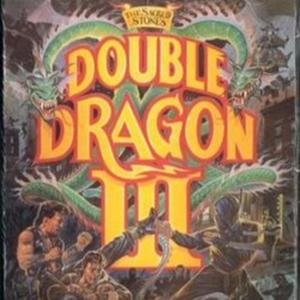
That was kind of a huge problem also with, uh, double dragon three, which we just had. So it was like fresh in my mind. And then as I learned more about the game, it didn't make me like appreciate those additional systems. It was like, shit, I have more to learn about. Like I have more things I have to figure out and I'm not figuring out this. So still a no, but, uh, what do we got next week? How about that? How about a little throw?
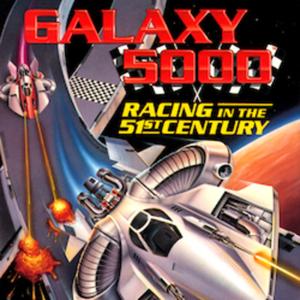
It's called throw? No. Uh, it's cool. It's, it's worse. It's called galaxy 5,000. Hey, and the 5,000. What's that? Isn't that a band galaxy 5,000? That sounds awesome. I don't know. Um, wonder what kind of music they make galaxy 5,000 though. Sean is not like they didn't throw a 5,000 on as like some cool number 5,000 refers to the year that the game takes place in galaxy 5,000 racing in the 51st century. Okay. So galaxy 500 is a band.
Okay. Maybe they were influenced. I was not that wrong. Yeah. Maybe they were. Well, who came first? The band. Ah, shoot. So they, maybe this was just like, they wanted to call it galaxy 500. It's like, it's based off of a, uh, dream pop band from 1987. Yeah. It's kind of like how, um, you know, the band was called Maroon and then they found out that they had to change to something else. So they called themselves Maroon 5. And blink 182. Right. They were just blink. Yeah. And then they were like, all right, fine. 182. Absolutely.
Absolutely.