301 · Snake's Revenge
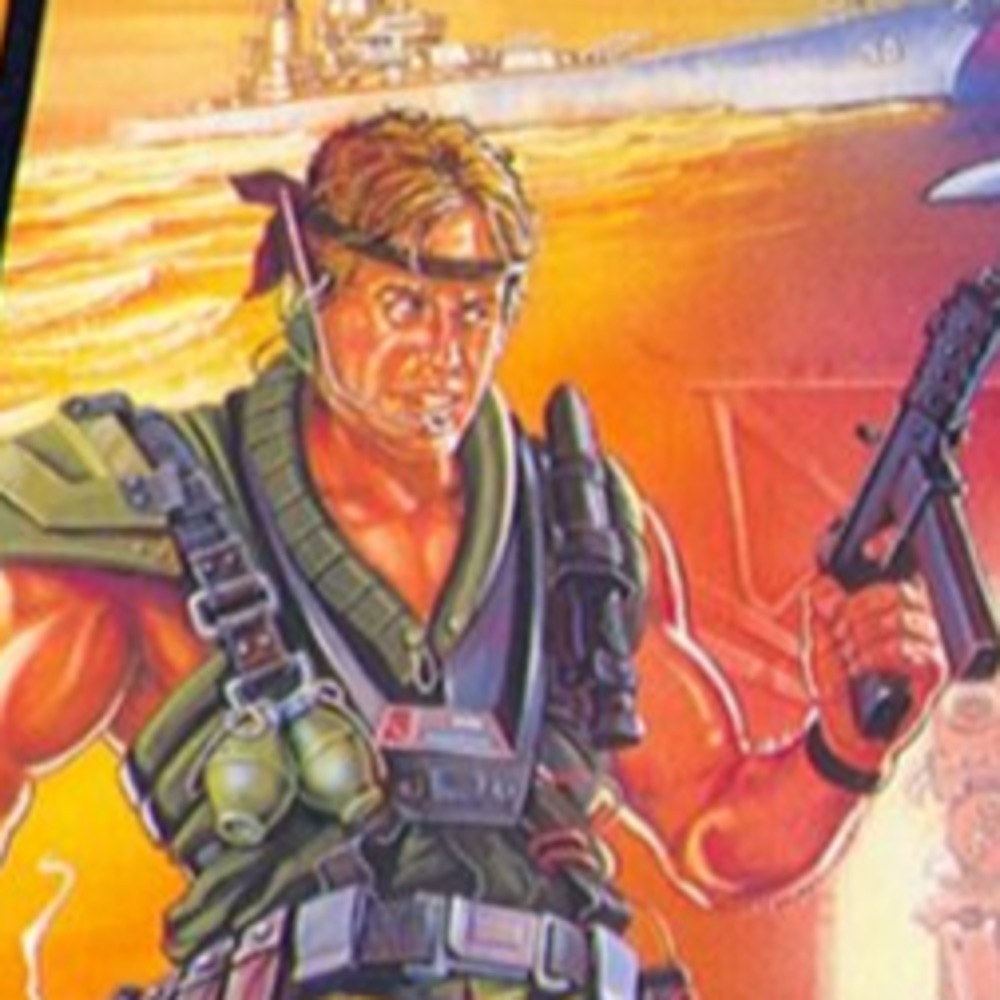
Snake's Revenge is a licensed but non-canon sequel to the original Metal Gear for the NES. Three years has passed since the Outer Heaven incident. FOX-HOUND has gained intelligence that an unknown terrorist group has seized a remote facility containing mass-produced Metal Gear tanks, as well as a new Metal Gear prototype which was under development. The newly-promoted Lt. Solid Snake is called back into action to infiltrate the terrorists' base with the help of two FOX-HOUND rookies, former marine Nick Myer and navy intelligence agent John Turner.
Snake's Revenge is a Metal Gear sequel with no Metal Gear on the box, and Kojima had nothing to do with it. Konami made it for the Western market while his own Metal Gear 2: Solid Snake was in development for the MSX2. We found a game with real ideas that kept getting in its own way.
What works
- The world feels larger. Instead of one stretch of identical green bases, you get a jungle, a shipyard, two campsites and a train that is actually shaped like a train. The levels read as places.
- A side-scrolling mode. Going prone, ducking under a sight line to knife a guard, and swimming up behind a guard with an oxygen tank are stealth ideas that survive the switch to Contra-style action.
- Alarms that follow you. In the first game the alarm cut out when you changed screens. Here guards stay alerted across rooms, and we agreed that is an improvement.
- A cinematic finish. After a cyborg Big Boss, you steer remote missiles through a shaft into Metal Gear and hit the blinking spot.
What doesn't
- Key cards. There are eight, each opens only its own doors, and nothing labels which door wants which. We compared it to trying every key on a ring. A color code would have fixed it. A new card also has to be selected by hand, and that cost us about an hour.
- Enemies that ignore your work. Leave a room by a different door and the guards designed to miss you spot you at once. We argued over whether clearing a building should be permanent, but we agreed the stealth and the punishment never find a balance.
- The first boss. Five soldiers in a flying V converge on you, and getting past them took exploits. One trick from a guide worked about one try in four, and we argued at length over whether it is a puzzle or just unfair.
- A bad start. There are two doors at the front of the base, and the scene you need only triggers if you enter lower, behind a bush. We wandered around there for a long time.
- Menu overload. Weapons and the truth gas live in a menu, so we barely used them. The truth gas mostly gave us lore, though interrogating guards raises your rank, which raises health and ammo.
Beyond the game
Kojima's verdict has bounced around: faithful in one interview, "crappy" at GDC in 2009, and then not bad in a later one. The real Metal Gear 2 changed the transceiver and let enemies patrol across screens, and Metal Gear Solid later borrowed its carrier pigeon puzzle.
The bottom line
Skip it. We all voted no. Mike preferred the plainer navigation of the first game to the side-scrolling additions. Sean said it lacked the weight of the original. Joe doubted that this style of stealth works on the NES at all, since the sight lines never made him feel sneaky. Nobody called it bad, but there wasn't enough going for it.
Written from our conversation in this episode.
- The following commands may be ignored by cowards, traitors, and enemy spies
- NES Longplay
- Manual
- Without the involvement of series creator Hideo Kojima, who went on to develop a separate sequel for the MSX2 titled Metal Gear 2: Solid Snake
- a sequel produced specifically for the Western market.
- When interviewed by Steven Kent in 1999, Kojima stated that he enjoyed Snake's Revenge and that he thought it was "faithful to the Metal Gear concept".[4] While Kojima once jokingly stated that Snake's Revenge was "somewhat of a crappy game" during the 2009 Game Developers Conference,[5][6] he later stated in an interview with Nintendo Power that he doesn't consider it to be a "bad game".
- Is it a noticeable improvement over the first Metal Gear?
- Still have to select the right key card
- Snake's maximum health and carrying capacity are determined by his rank, with the highest level being six stars
- The player will also encounter enemy officers in certain rooms who can be interrogated by applying truth gas unto them. Successful interrogations are counted alongside rescued hostages for promotions.
- Instead of dialing frequency numbers, Snake now has a set list of three contacts (John, Nick, and Jennifer) that he can communicate with and a radar that is activated whenever it detects a tracking signal transmitting from a nearby area. Unlike in the original Metal Gear, the transceiver cannot be used when the player enters alert mode.
- Side-scrolling action
- Really lackluster
- Ending
- Snake confronts the enemy's commander, who reveals himself to be a cybernetically enhanced Big Boss, having survived his previous encounter with Snake. Snake defeats Big Boss and rescues Jennifer, who shows him to the storage facility where Metal Gear 2 is located. Snake destroys the weapon before its launch countdown is completed.
- Sequels and Spinoffs
- Metal Gear 2: Solid Snake
- Instead of remaining stationed in one screen like in the first game, enemy soldiers can now patrol different screens across a single map.
- The transceiver has also been greatly revamped from the first game as well, with conversations now being context-sensitive rather than being simply area-oriented. The transceiver screen now displays the faces of Snake and the radio contact he's currently communicating with.
- a number of puzzles must be fulfilled to complete the game, such as luring a carrier pigeon with a specific kind of ration, chasing after a female spy to the ladies' lavatory, and deciphering secret tap codes to gain new frequency numbers.
- Metal Gear 2: Solid Snake
- EGL
- The first Metal Gear wasn’t perfect, and this did add new features, but I feel like I prefer the simplicity of the stealth and navigation in MG over Snake’s Revenge
- Next week - Snoopy
- NEStalgia Byte - Honoo no Doukyuuji: Dodge Danpei
- (HOE-NO NO MICHI-KOJI DODGE DEN-PIE)
Auto-generated transcript. Each paragraph starts with its timestamp. Speakers are not identified.
Snake's Revenge. The following commands may be ignored by cowards, traitors, and enemy spies.
And welcome to NEStalgia, a chronological exploration of every NES game released in North America. I'm Mike. I'm Sean. And I'm Joe. Guys, you may be noticing that I didn't say Metal Gear at the top, and that is because the box omits that. This is clearly a sequel to Metal Gear, but it's not called Metal Gear 2 Snake's Revenge. It's just Snake's Revenge. Yeah, I learned pretty close to, you know, just starting the game that this is not the game that I thought it was. And I knew this game existed just from being a fan of the Metal Gear series in general, but I guess I'm not that big of a fan. Because I could have swore that we were playing, like, the canonical second game, and I was very disappointed.
So this is, so the other NES games are canon, and this is not. What do you mean by other NES games? So there's just Metal Gear, and then Snake's Revenge on the NES. Oh, yeah. Whereas the... When you referenced, you thought this was another game, I thought maybe there was an NES. So, yeah, there's another Kojima sequel to Metal Gear called Metal Gear 2 Solid Snake. And I thought that this was just a different name for the same game, and it's not that. But Metal Gear 2 Solid Snake is not on the NES?
It is not. It was made just for the MSX 2. And as Sean mentioned, Hideo Kojima is not involved with this port, Snake's Revenge, at all. The NES version of Metal Gear is a little different than the MSX version of Metal Gear. So I guess, like, if you actually had a canon, the Metal Gear MSX version would be the one to play, not necessarily the NES version. But that said, at least Kojima was involved in that one. For this Snake's Revenge, he was not involved at all. In fact, it was being developed, like, almost simultaneously with Metal Gear 2 Solid Snake. So that's kind of funny.
But, you know, it's Konami. They own the game, so they don't have to keep bringing the same person to make them. It's like, did Miyamoto make every single Mario game? No, but he probably saw them, at least. And that's what's the difference here. Kojima did not really get even a chance to say, well, maybe I wouldn't make it a side-scrolling game. Like, focus on the self. Yeah, at that point, like, he wasn't Kojima. Kojima. He was just some guy named Kojima that made the first one. And, like, he wasn't this titan that should have a hand creatively and everything. Yeah, he was just like some guy in the payroll.
Absolutely, Sean. He also made Antarctic Adventure, which you'll remember we played on a Bytes episode. And we were all like, what? Why are we doing this? Like, there's nothing special about this game. And it was because Kojima made it. It was his first game. So from penguins to stealth games to no involvement whatsoever. This sequel was produced specifically for the Western market. And if anybody's wondering what Kojima's thoughts are on the game, it's a little bit of like a ping pong.
First, he's like, yeah, it's fine. It's faithful to the whole Metal Gear concept. Then, like, in 2009 at GDC, he was like, this is a crappy game. And then in another interview with Nintendo Power back when they were still around but after the 2009 GDC, he said that he doesn't consider it to be a bad game. So it went from it's good, it's bad. It's not bad, but it's not good. Now, this last interview, was this pre or post Konami blow up? Uh, pre. Okay. So we need another interview with him now. Exactly. He probably would have been working on 5 at the time.
But wasn't he not involved in one of them? Before? Wasn't 5 the one after the blow up? It released after, but... Oh, okay. Isn't like Metal Gear Online the one he's not involved in? I think so. But I know that Metal Gear 5 came out after every time. Everything happened, but he still, like, very much was the developer of the game. Which is the one where you, like, attach people to balloons and shoot them into the air? That is 5. Okay. Right, well, that sounds like a Kojima game to me. He made a whole game where you just walk around.
And attach people to balloons. My, um, my... Maybe you answered this already, but just to clarify, so is Metal Gear 1 canon still? With the Metal Gear Solid stuff on the PlayStation 1 and beyond? Yeah. Okay. I wasn't sure if, like, all the NES games happened and then they were like, okay, now we're gonna make the... You know, they, like, rebooted it on the PlayStation 1 or whatever.
No, no. In fact, what's really cool, and, um, you know, we should probably do, like, a Metal Gear Solid bonus episode at some time, because I just played it and it's one of Sean's favorite games. Um, what's cool is that they have, like, you can get a bunch of codecs before you ever even jump into the game of listening about the events of Metal Gear 1 and 2. But specifically the adventures on the MSX. That said, they weren't that different between the NES and MSX for the first Metal Gear. And, uh, in, I forgot if it's, like, Substance or Subsistence, one of those, like, re-release games, um, I think they have both, like, all of the 8-bit, um, Metal Gear's playable. I think even both, like, Snake's Revenge and Solid Snake.
Um, so it's, it's kind of funny. Uh, so they kind of treat them all as, as one big happy family. Anyway. So, all this talk about Metal Gear as a franchise and everything, now we have to remember that, uh, we don't have to judge this based on, uh, future games. Like, don't worry about Metal Gear Solid or Metal Gear Solid 5 with balloons or whatever Kojima winds up doing after Death Stranding, which is apparently just Death Stranding 2.
Uh, forget all that for a second. And let's just talk about Snake's Revenge as a follow-up to the Metal Gear we played on the NES. Is it a noticeable improvement over the first Metal Gear? Were there things that you guys saw in your gameplay that was like, well, I'm happy they added this, or, you know, oh, they really, uh, made the stealth, like, more intuitive or complex or something?
I don't fully remember, like, a lot of specifics about Metal Gear, other than the fact that I found it interesting and I enjoyed it and, and it, and I remember it being, like, not perfect.
But this one, I did feel, from what I remember, I felt much more frustrated in this one more often. So, like, again, so, like, I don't have, like, specifics, but, like, based on what I was, maybe my expectations were high because I remembered liking the original, but I remember finding this one more frustrating for, for various reasons.
I think, uh, I remember, like, one of the key differences, and, again, my, my memory of the first one is fuzzy, but I, I feel like we, we harped a bit about, like, if you change screens, then, like, your, like, the alarm stops. Like, is that, was that a thing, like, if you were to trip an alarm and then you went to a new screen, would the alarm still be going in Metal Gear? I believe you're correct. So, it wouldn't, right? It wouldn't, yeah, it was like, oh, it was a glitch out, essentially.
So, the fact that this had that continuity, I thought was an improvement, at least in, like, oh, I'm a spy, and, like, I don't just have to walk over, uh, 15 feet and everyone forgets about me. It's like, no, you gotta, like, clear out the room. Yeah, and then, once you've killed three people, they're like, oh, I guess there was probably no danger ever. Well, you just killed everyone, you killed everyone that heard you, is how I, like, headcanoned. Yeah, but what about the alarm that was going off in the whole building?
Like, the alarm is for us, it's, it's an alarm in your head. I get it. Well, what's, what's weird is, is you can track the alarm across multiple screens, but they still couldn't get the idea that, like, enemies you killed on the screen before are dead. Well, yeah, I mean, that's, I think that's also a balance thing, because it's, they're very easy to kill. Yeah, you spend a lot of time running through, back and forth through different things, so I feel like, pretty quickly, just the whole building would be empty.
Yeah, so I get that. I think what they could have done as a trade-off, though, is, because this is gonna be one of the things I complain about, so I'm just gonna spend a little more time on it.
One of the things they could have done as a trade-off is, like, after X amount of screens, enemies come back, because it's, it's not necessarily designed in a way, because it happens many times in the game, where you will enter the screen, and it will have had the enemies designed in a way that they will not immediately see you, and so you'll be able to be like, okay, well, what's the stealth route here? Like, do I go behind these barrels and then punch this guy, or, you know, do I have the silencer so I don't have to worry about being as stealthy? And that's all fine.
And then you're gonna go through the door that you needed the key card for, or whatever, and you go through that door, and you get that new item, and then you come out of that door, and the enemies were never designed as if you were gonna come out of two different entrances, and so they spot you right away, and it's like, well, this is dumb.
Like, now I don't even get the chance to be stealthy. That seems to be how everything works, like, because even if you were to enter a room that has pickups in it, and then walk back out, and then walk back into that room, the pickups are there. So you can, like, sort of cheese that, and I guess the trade-off is that the enemies get to kind of cheese you. Um, and it sounds, it feels like, you know, it was a design oversight, and less, less a bug.
Yeah, you know, I actually, the more I'm sitting with what I just said, like, in defense of that, the more I'm not sure I agree with it anymore, because I don't think it necessarily would be such a bad thing that you clear out the whole building. Because, like, you did that. You earned that. Maybe you gotta make the enemies a little harder to sneak past for that to work, so then it feels, like, a little more weighty. But, like, you know, you think of a modern game, and it might be silly to, like, compare it, but, like, you know, you think, not even modern, you know, like, you think of, like, Dishonored 2.
Which is what, that's, like, six years old now, or if not more. But, still, like, you think of something like that, where it's like, yeah, you kill everybody in this building, and then they're all dead, they don't come back. That doesn't ruin my experience, it actually makes it, like, okay, like, I've earned now the ability to walk a little more freely, because I've stealthily took out enough people.
You know, and I think that you can design that properly here. Because, yeah, what you said, Mike, actually does strike me as a big problem, even if it's not, like, oh, I walked back out of this room I had to go into and immediately was caught, which, that's a problem in itself. But also, it's like, I just put a lot of, like, energy into being as stealthy as possible. It's like, okay, now I just gotta, like, do it again. Like, exactly the same. Like, it just doesn't, it starts to lose its, uh... I don't know if it's a problem. I can understand not liking it.
But I don't think that that's, like, the wrong way to go about it. It's a stealth game. You're supposed to just not be seen. I think, in a way, it's sort of disincentivizing you of trying to, like, go and just kill everybody. Because it's really all for naught. So just try not to be seen. It'll be a lot less of a headache in the end.
I don't know. Yeah, I mean, I wasn't also saying that, like, it's the wrong way to go about it. I guess I was just saying that I don't think what I said initially about clearing everybody out is wrong either. You know, I think that that could totally work. I think I'm just looking for more harmony between the be stealthy and punishment for getting caught. Because it is actually, you know, tough in a game where you don't have that much health.
And, yeah, you can cheese the rations. But if you're not near them, then you'd have to backtrack back to them if you run out. But it is punishing to be caught and to have, like, multiple enemies following you as the alarm is triggered. And so you're rewarded for being stealthy. Like, this is the kind of game that you theoretically don't ever want to be caught in.
And that's impossible in this version just because certain pickups require certain entrances that just weren't designed around. And so you will be seen. And so it doesn't feel as cool because it's like, oh, this would have been a great game if it could be completed 100% pacifist. But because it relies so much on the stealth, I was surprised to see that there are some situations you just can't avoid. I guess I don't remember any that were, like, I was auto-spotted while getting out of a room or anything. But I'll take your word for it.
Yeah, I remember that happening, like, once or twice, but, like, very rare. Right. It's mostly on those, like, when you actually enter a room, not necessarily from screen to screen, which is what makes me think that they designed them from entering from a different hallway than from entering the rooms. Because the rooms are purposefully being guarded, right? Like, the enemy focus, attention is there. So they should have just made it so that if you're coming out of said room, that the enemies are now looking in the hallways first or something.
But the actual biggest change in terms of gameplay is this side-scrolling addition. In the first game, you were ever only playing top-down stealth gameplay. And in this one, they've kind of added a whole new mode, essentially, where you're snake in, like, the same way that Link was side-scrolling in The Adventures of Link. It's like, oh, I didn't think Zelda games ever looked this kind of way. It's like, oh, I didn't think Metal Gear games ever functioned in this way. It's not that it's terrible or anything. It's just a little bit different from... It makes the game almost like Contra and less like Metal Gear.
Yeah, I am... You know, and the people that I was watching after playing through it myself, I got a lot of Russian attack comparisons, which I guess I can kind of feel. I remember a bit of Russian attack and the vibe that that had. I see that you can finally go prone, which is a Metal Gear staple.
Laying down and then moving that way, that's always fun, sort of shimmying on your belly. Like, who doesn't do that when you're playing Metal Gear? And, you know, there's the underwater sections, which seem kind of frustrating and terrible. But those are the kinds of things that I saw in the side-scrolling. It is strange because it's side-scrolling, but I still feel the DNA of it being a stealth game. It doesn't feel like it's really...
Like, it's very, like, fun to move specifically. It doesn't feel like there's a lot of great, like, motion physics. But there is opportunity in this side-scroller to, like, duck under someone's line of view and take them out with a knife. Or, like, yeah, like, sneak through the water and come up behind someone and shoot with a silencer or whatever. Like, so, like, that is just interesting. Because usually when you think side-scroller, you think it is, like, physics or, like, action-based. And this is still... Seems to be trying to... Either it's trying to keep some stealth or it did a bad job of being an action game. But, like, I felt like it was... It had, like, stealth DNA.
Yeah, it's very procedural in the sense of, like, you only see enough information to think about your upcoming tasks. So whether it's another soldier or it's the water or it's platforms, it's, like, you're being very methodical about your next steps and using the appropriate equipment. Like, you might change between the gun and the knife or, you know, like, making sure you have the oxygen tank for the water. So I like that. And then, Sean, I liked your Russian Attack mention because that's a Konami game. So who knows? Like, maybe there was a little bit of the same team working on this. Yeah, like, how that worked? Let's do that. We don't need this Hideo guy.
Also, in terms of equipment, you know, we mentioned the oxygen tank for water, and that's in the side-scrolling sections. But there's also just a lot of new equipment. And I think the most interesting one, the one to note, and I'm sure is always noted when talking about this game... Key card one, key card two, key card three. Well, you know, that's actually... Thank you for reminding me about that because I can talk about that for a second. That was something I expected to be an improvement over the first Metal Gear and am disappointed to find out that they didn't fix that.
What a pain in the butt that the key card for key card one opens up doors beyond the moment that you collect key card two. But key card two isn't key card one plus two. It only opens doors that are key card two. So you have to know which card to use. Of course, that would be great if the doors were labeled for them. So instead, you just go up to a door and it doesn't open when you have key card two. So you're like, all right, I guess I'll try key card one, which doesn't sound like too big of a deal, right? What's Mike complaining about? You got to just move through the menus and everything. There's eight of them.
Eight key cards that you got to get through. And you got to be like, all right, wait, is it this one? Because key cards three, four, five, six, they're all still showing up. It is the video game equivalent of going, of that classic sight gag of somebody going through each key on a key ring one by one. And all they needed to do was color code them. Put something next to the door on the actual field of play that was colored the same as the key card in your inventory. And it would have been fine. But no, they just didn't do that. And it made it goofy.
Yeah, and I do think that even if they did do that, the going to the menu to get the key card every time does feel like it doesn't add anything to my gameplay. You know, I get it. Like, that's what you'd have to do. You'd have to pick up the key card and put it in the door every time. But like, I thought when I was in that first building and I got key card one,
apparently picking up key card one auto selects it. So maybe that was the only gadget I had or whatever, a piece of equipment or whatever it is that I had. So it was just automatically selected. So ever since I picked up key card one, those doors would just open when I walked into them. So I was like, oh, that's cool. I don't need to use key card one. In my head, it was just like, I have it. Now all these doors will open to me. Then I got key card two
and no doors were opening. So I was like, these must be key card three or four doors. So I was just like, we spent like still another hour running around trying to figure out what to do until suddenly it dawned on me. I don't even remember how, that I had to select key card two in order to get those things. So maybe that's just me being stupid. I mean, that's definitely just me being stupid, but also like, yeah, it's an issue. I don't think I would have much of, I'd have as much of a problem of like going and selecting it.
If it was more clearly communicated to you, what door was for what? Because I think you would naturally see like, oh, this is a different color or this is, oh, there's a different symbol here. It doesn't have to be a color.
But no, I think the whole having to select it in addition to there not being any information given is the problem. And then to get back onto my original thought of the piece of equipment that probably is the most interesting addition to Snake's gadgetry is the truth gas, which you can actually use on specific enemies to then interrogate them and get information on things and not have to fight them instead.
And then that kind of counts, just like how rescuing hostages is optional. Doing these interrogations counts towards your rank promotions. And of course, the ranks were in Metal Gear 1. The way that works is that as your rank goes up from one star, two star, I think all the way up to six stars, it increases your maximum health and how much ammo you can carry. That is true.
True, but what'd you think of the truth gas? Did you, oh wait, was I using the truth gas on you there? Is that why you said that is true? Ha ha ha ha. No, what did you think of the truth gas? Did you ever actually wind up using it or did you not find it? I don't think things were hard to find in this game because there's a natural curiosity of just like, there's a door, I should go in there. There's not many hidden secrets in that regard. I didn't end up actually using it. It was just something... I think there's like, I have to bring it back to the newer games because the UI in that game made it so everything was just sort of at your fingertips and so you would naturally just try things out.
But with everything being on this other menu, like it wasn't just with the truth gas. Like there were entire like weapon varieties that I didn't use because there's just so many of them. You have to go to a menu to go use them. So I guess I'm also using the Joe complaint here of I'll go to the menu and go use it. But yeah, it was less... It did take you out of it. I will agree there. Specifically now with other equipment.
Yeah, as far as the truth gas, I used it maybe early on. I used it a couple times with like those like non-hostages in a room that like when you talk to them with all the truth gas, they're like, I don't know anything. I swear. So I'm like, okay, this seems like the game wants me to use the truth gas on them. And then what they tell you is like the weapon is almost ready. And I feel like... Like at first I was like, okay, because I've heard this in the game, like Snake will have this information later and it'll like change something. But it just seems like that was information for me, which didn't mean anything.
Like it's like, yeah, I know. That's like the premise of the game. So I was like, yeah. So then I never used it again to see. But now that I'm thinking about it, that was probably those first two were probably like to teach you what it does and maybe the information got more and more useful as it went on. But I never really used it again.
Yeah, it's definitely just lore building of, you know, finding out confidential information from the enemy. But again, it helps towards the ranks. So it's a good way to increase your max health, which is obviously beneficial in a game where getting caught means that several enemies are going to start shooting at you. And also their bullets shoot and they go over, like they're able to shoot over the canisters, but you're not able to.
Is Snake really bad with a gun or are these enemies... He's short. Okay, he's short. Got it. Another holdover from the previous Metal Gear game is the, what do we call that? The transceiver. And that is that in this game, there's no more dialing numbers, which I guess some people might have hated. I thought there was a charm to it,
especially because you just, you learn the people's numbers. It's not like they ever made you just guess, like, you know, hey. We came up with thousands of digits and it's up to you to find these people's, you know, radio numbers. It was like, no, the game gave them to you. So instead the game says, nah, forget that. Instead, let's just have these people's names and numbers already at the ready, even though you have no idea who they are. And if you call them, they won't be available unless they're,
you know, unless you're on the correct screen. Yeah. So it's just, it seems like it's actually not an improvement in any regard. I don't know. I liked it. The whole transceiver thing, like it has its own sort of UI, like there's a battery indicator, even though like you don't really have to worry about the battery. I think it like drops out on like a specific story element. Um, but it seems like a natural progression from this janky analog,
like radio you're looking around in the first game to now you've got like this backlit LCD, uh, where you can just select like a contact that you saved instead of having to dial it in yourself. Like it makes sense in the deep lore. Yeah. Now in the, in the first game that was, that game had the, the feature where you can, use the transceiver to speak to an ally, or you can also like tap into like an enemy channel. Right. Or am I thinking of a different game? Definitely the first one. I don't know about the second one. No, the second one doesn't seem like you can.
No, I meant the first thing that you, the first thing that you said, like, I think, yes, you, you could definitely talk to allies, but I don't know so much about the, uh, talking to enemies or like tapping into enemies. Maybe I'm thinking of a different game then, but. Maybe you're thinking of the, that, that flying game where you have to hail people. No, I know what you're talking about too, but it's not that it was, it was a game like, I mean, maybe not a stealth game, but it was a game that had like this military style with like a walkie talkie. I swear it was metal gear. I could be totally just misremembering, but either way, I think that that in my opinion is a cooler way to do the truth gas.
But now that might not be as relevant because it's not the game I was thinking of. Anyway. Well, I just can't confirm. I can't remember. It does sound interesting. Yeah. I'm trying to scrub through a video to see if I can see somebody doing it, but. Quick, quick, quick. Find it. Yeah. And it's interesting because like the, I don't know, the, the use of the transceiver also could have been, I don't know, more intuitive to making the player alert of secrets that may be like things that aren't,
I guess that defeats the point of having secrets or whatever, but I'm saying if they weren't designed to be so, you know, put the plastic bombs up against this wall or whatever, like if there was some kind of hint or nudge from these outside sources, if they acted a little bit meta in the same way that the future Metal Gear games would, I think I would have appreciated its use more than just being like, okay, cool. You're just helping me ground in this story of me infiltrating this building, similar to the truth gas, just giving me information that's good for me, but not necessarily good for Snake.
Yeah. The other thing that I had an issue with, with the transceiver, and this isn't so much a transceiver problem as it is like a, just designing the, like the, the main progression of the game. But I had to trigger hunt very early in this game. Uh, I don't know if you, if this was similar to you guys, but, uh, you know, you're in that, that first area. It's very cinematic. You get dropped off by your helicopter. There's like flares going off all over the place while that like banger of a, of a jungle track is playing.
And, and you're going past all the, the spotlights and you're picking up, you're picking up stuff and you're, you're freeing hostages. And then you get to the, the front door of this, uh, of the, the base that you spend a significant portion of this game in. And you kill the guys in front of it. And then nothing happens.
And I'm like, Oh, that's weird. Um, I'm like, you know, I'm pressing a and B at the door and nothing's happening. And they're like, but then one of the guys earlier told me like, give me a call when you're at the door. So like, all right, I'm going to hide behind this bush at the door. And then nothing was happening. So I left and came back and then the enemies were there again, but they see me immediately. So I have to fight them again. And then the nobody's ever hiding. I can see for a split second that someone's trying to call me on the transceiver. And then I'll try and pick it up, but nobody's there. So then I found by stopping what I was doing, going into, uh,
like a game FAQs walkthrough that like this, this whole like battle in the front door is not supposed to happen. You're supposed to enter slightly lower so that you are already obscured by the bush and then receive the transceiver call. Like, did that happen? Was I the only one that had trouble starting the game? Well, it doesn't help that there's two doors, right? Like there's the door that you can't enter through. And then there's the actual drop point, right? Yeah. And then both of them were ones that I couldn't enter through at that point. Yes. So it's, it's just like, it doesn't help that theoretically, if you, you know, cause again, it's just spotlights showing you, uh, you know,
lightly illuminated paths that you can wind up at a place that you think is the door because it looks theoretically on the screen that you're on. It looks exactly the same as what will wind up being, the actual door, but it turns out you just went a little too far North before hooking in East. And instead you should have went, uh, to the other door. I think they could have made, uh, like if they wanted a decoy door, it could have been like maybe a little bit on the opposite side of the map or something. It just, I agree. It took me a while to get inside the base.
Yeah. I, I couldn't, for that very reason, the fact that like, there are, there are like multiple areas that are just like clones stamped over to new areas. So I'm like, I've been here before when really it was just another area that was, that had no unique design compared to like previous areas. All that to say though, I mean, you know, when, once you, like if it took us a while to get through the jungle, uh, once you get inside the first building, um, there's a lot to do in that building. And then there's, uh, six buildings total additional with like, uh, there's a shipyard and another campsite. And actually there's two campsites.
Um, there's like a, uh, train that you go through. Uh, there's a lot of like locations and, um, uh, story beats that make it feel maybe a little more lived in than the first metal gear did, which was just like, okay, go to building one, go to building two, go to building three. You know, it's like this actually gave maybe a little more life. and scenery to, uh, the metal gear universe. Yeah. The, uh, the, the fact that each location has like a layout that mostly makes sense. Um, I mean the, the, each base has a very labyrinth way of looking at it. And it's not actually how,
uh, any designer would design a military structure, but, uh, like the train is train shaped. You can only really go along the train, which is nice. so yeah, I, I appreciate the, the level design mostly. I never thought about that, Sean, but you're right. Like another video game would just make the train like really wide and you'd keep going. Like it'd be like another base.
Exactly. And wasn't the first one, the bit, it was all very samey, right? Like it was all that like green floor metallic base. That was my point. Is that like you were, you were going to a lot of buildings, right? It wasn't just one big building. It was a bunch of different buildings, but it didn't feel like you were moving anywhere. Right. So this one just in comparison just felt like, wow, like it does feel, it feels like you're on a bit of an adventure rather than like playing one area.
And if we're talking about variety, in terms of the setting and locations that you move throughout the game, there's also some good variety between the boss fights in this game in the sense that not only the actual enemies being unique and everything, but just a change up in how you deal with boss fights as opposed to,
you know, everything else in the game can kind of be treated as we mentioned, either in a stealth format where you're trying purposely to avoid, or they're just, you know, shoot them with a gun or hit them with a fist and they, you know, disappear immediately. Yeah. I got to just say that like the, the, the first thing that you notice about the boss battles, quote unquote, boss battles is the, it's like the first thing you would consider a boss that you run into are those like five guys in like a flying V formation, right? It's a, it's a football team. It's a football team.
Yeah. Basically. Right. It's a perfect way to fight. Also, Joe, have you ever thought about fighting in a flying V before? Yeah. I mean, me and my four buddies, that's all we do is that we all, whenever we get in a fight, we're all got guys, buddy ducks. But, um, but like, yeah, right after that first side scrolling mission, that's like, that had to have been like the, I'm done moment for a lot of people, right? Like, it would have been mine if I didn't feel like I needed to play more for the podcast. Cause like, that is like,
that might be the hardest boss battle we've ever had. And we've had some hard boss battles. Like, that's just like unfair. And I was looking up like FAQs that seem like very much, and this is how I beat it, but it just seems like you got to use some exploits in order to beat it. And yes, that's what I was going to say. Like, this seems like one of the first games in which, uh, like you have to cheese the boss and it's not really cheesing the boss because maybe they did design it this way where it's all like, it's a puzzle and you have to solve the puzzle.
But as somebody that's been playing a lot of boulders gate recently, like, it seems like anytime I get into like a boss battle, I have to cheese it in some way because otherwise going forward as if you're, it's just going to be a larger version of normal combat means you're probably going to get your ass kicked. So you have to do these weird, like, this isn't how I normally play this game, but that actually going forward is, is more reflective of what bosses in metal gear games would be. Um, it's just, it feels a little more janky right now.
Yeah. Like, I'm not sure that I'm convinced that their goal here was for this to be like, Oh, you've got to figure out how to do it. Cause it just doesn't seem like, at least I don't know if you, if you use the same exploit I did where you kind of like scoot over to the right a little bit. So they start going to the right and you run to the left. So they, they don't get to you in time. I was using explosives.
Oh, I mean, I was using explosives too. Yeah. But like I even using, Oh, you're talking about like plastic explosives or like grenade. I, I plastic, the ones that you plant. Okay. Yeah. Uh, I wasn't using, I was using grenades actually. So maybe I should have tried the explosives, but even with the grenades, even hitting them every time they hit me every time. And I only take, you know what? Four hits at this point in the game. You got to have all your rations on you. I, and I, I did. I actually, I actually stopped,
started over at one point and like got all the rations. Like, so I would have max rations when I went there and still that was very, very, very difficult. Maybe it was just me, but like, I, I was like, um, I felt like I was completely exploiting the game. And if I were to try and do it without that,
I, there's just, I couldn't, there's just no way, but maybe, maybe that's just me. As you say, in fairness, maybe to both the game and to you, um, you know, uh, and Sean's point about how, you know, you're going to have to think outside what you, how you played the game up until these boss fights. I think every boss battle is kind of, is kind of like that. Like each of these boss fights is pretty punishing. If you try to just be the guy who like takes them head on or shoots at them and tries to like whittle them down and help. Instead, you do have to. And I feel like the guide, at least that I was using, uh, was encouraging these solutions as like,
yeah, like I'm sure somebody could be good enough to dodge everything and, and take them down. But instead it's like, you know, Hey, if you want to defeat the, the tank, right? Like here's the, here's the exploit, right? It's like, I feel like in a way, especially as a lone soldier, right? You're not some kind of super soldier. Like you feel like in some other NES games as the lone soldier, it is interesting to get creative and, and hug the corners and,
you know, and use the explosives when, you know, like, or use the remote missiles, right? Like you shouldn't have to feel like, like that's your equipment. That's what you have on you. I mean, I agree with everything you're saying. I just didn't feel like that was reflected in the way that the game design was here. And again, maybe like, I'm interested in here how you guys did it. But like, for me, the problem is that these, for anyone who hasn't played it, these five guys, they converge on you all at once. They hit you like pretty much no matter what.
Like you, like you said, you can't really avoid them. They, they go to wherever you are. And there, there is like this weird, for some reason, way where it's like, if you go to the right and then to the left far enough, but just before they get to you, they'll just stop and turn away, which does feel like a glitch because like, why would, why would they do, there's no reason for them to do that other than to like, make it easier, I guess. But like, that would only happen sometime. Like, even at ease, even as I'm using the exploit, it didn't work most of the time. Like usually I would just get hit no matter what.
And that felt, I don't know. Like, that's what I, I don't see what the like creative way is to be. Because like the thing that I was doing that I read on the FAQ is not something that like you would think of. It's not something that you would, that makes logical sense that you're like, Oh, I just got to go to the left a little bit and then to the right a little bit. You know, like you wouldn't know that you wouldn't be able to figure it's not a puzzle, you know, unless there's a way you guys did it with the explosives that I didn't pick up.
No, what I was going to suggest is, you know, you're saying that you wouldn't have come to that conclusion, but you don't think that the flying V shape, like the arrow pointing towards the center, like implies that they're all going to rush at you in that direction. And that's why you kind of like allow them to, to rush at you and then move left or right. So that as they converge, like I think you, you wouldn't know that the very first time. Right. And, and that makes perfect sense. And that's what, that's what I try and do, but that's not, from my experience, how it actually works.
Like if you, if you, if you like bait them and then go the other way, they will continue to follow you the other way until they hit you. Unless from what I understand, you're in one very specific spot, slightly to the right, you take one step to the right and then you go all the way to the left. Sometimes they will get almost to you and almost, almost touch you and then turn away. And that's where it feels like, I don't know. That's where I'm, I'm missing it. Maybe again, maybe you're right. And it is designed that way, but, and I was just not figuring that out, but like that felt unfair in my opinion. The area where you enter the room is a little,
it's a, it's a little more closed in than the remainder of the room. Right. Cause the V is spread out a bit and it's more square. Like if you did try to like approach them, right. Which would, I guess like not even sure how you would do that. Right. Because theoretically like they're taking up most of that larger square. Anyway, as they're coming in right towards the center,
if you move to the right in the smaller space, right. That's the kind of area, like you're not encouraged to go forward. You are kind of encouraged to move to the left or right. So I guess that's why I thought like, I didn't think it was, I didn't think it was as egregious maybe as you did. Uh, or like, um, you know, uh, not, not like, look, I got hit, I took damage, but you also, you can like, it's not one hit KO. This was a one hit KO and I needed to be perfect. I would be agreeing with you, but this is the kind of thing where like,
once you take out one of those guys, now it gets slightly easier because the spread remains the same. And so as they move towards the center and you dodge to the right or left, there's a good chance that like, let's say you took out one of the guys on the far right. Now they're even less likely to hit you because they don't move in towards that area. They just continue to move in towards the center because they kind of charge at you as if they're building up speed and now they can't stop their feet, you know, like as they're getting closer to you, like they, they, they don't turn with you.
Yeah. I, so I'm actually watching someone do it right now. They're doing it a little differently than me and it is working more frequently. But the, yeah, the way I was doing it, it was maybe one out of four times it would work. And most of the time they would just hit me anyway, sometimes twice. Cause they would hit me once and then they would just, I would just take another hit on the way back. So to me, it just like, I I'm watching this person and it's like, wow, this looks easy, but like, it just was not easy when I was doing it. Right. And rule of thumb is too. And I think that, you know, this is not something that the game necessarily encourages or anything, but rule of thumb would be,
this is the time to use all of your heaviest weapons, right? Like I'm not using the pistol. On these guys. I'm, that's why I thought to use the explosives as well as like, you want to do enough damage. You're taking these guys out of, especially if there's five of them. Like if you can get rid of two of them early, uh, then you, you know, the map opens up a little more to you. I just want to say that I'm, I'm, I'm happy that we had this hashing out,
um, over this, over this boss. I think, I think we're, I think we're better people for it. And that's just the first boss. Imagine what we can, uh, get to when we find out that, um, the main enemy, uh, the main antagonist of metal gear has returned and is the final boss in this game. Spoiler alert. The final boss is big boss. And, uh, I think the like story explanation is that he's now like a cyborg. Yeah. He is a cyborg now. Yep. Uh, again, not Canon, but, um, he's a cyborg and he survived the, um, uh, the attack on the other Island. And, um,
after you defeat big boss, there's kind of like a, a fight too with, um, metal gear too, which Sean, is that a thing? Do metal gears continue to get names? Like, like by numbered. Uh, I, again, like I'm much more, I'm much more familiar with the PS one and up metal gears, but like they get, they get names, not so much numbers later on. So I'm sure, you know, maybe they did. Maybe they started out with numbers. Right. I guess I was wondering if like, they were so cheeky to call like the one in metal gear, solid for metal gear for no. Uh, okay. Like the one in like, in, uh, in metal gear two, metal gear solid two is like, you know, uh, that's Ray, I think. And because the one in one is a Rex.
So they, they, they kind of, they get weird names. I liked Rex. It reminded me of like a, a dinosaur or like a T-Rex thing. And this is like, you know, dying, if dinosaurs were the most powerful thing, 65 million years ago, this is now the most powerful thing. And then the one in two is like a manta ray. Right. Which is like now the most powerful thing in the world. So yeah, it all checks out. I thought it was like Ray Romano. Who was also one of the most powerful beings right behind super shaggy.
Uh, okay. And so what I, what I meant is, is though, is that yes, you can lose in the metal gear two fight. It is still a fight, but it's one of those where like the metal, the metal gear two doesn't really attack. It's supposed to be more of like a cinematic final fight. And that the real fight was with big boss, which is kind of cool. Uh, the snake versus big boss angle.
But I, I like that they still made it like, even though, yeah, like the big, the big fight was big boss. It's like, it's kind of interesting that it's still like a little bit of a challenge. It's like, it's like its own little mini game, you know, whereas like, I feel like a lot of games would just be, okay, you beat the boss, go just like shoot the heck out of the, out of the, out of metal gear two or whatever. Well, even, even if it was just that, I appreciate that they're letting you do it instead of it just being like a, a, a picture that they show that says congratulations.
And so just to be clear about what the, what the visual is there, if you're thinking like, okay, so how come it doesn't fight or whatever? It's essentially because the metal gear two is about to essentially perform, the, the strike or whatever. And so you're in the same room as it, you can't access it head on. And so you have to shoot these remote missiles through a shaft and, uh, perfectly like navigate it. Cause obviously if you, uh, don't do the proper turns, it will just blow up in the shaft. You have to properly navigate it through these tight turns. And then, um, you have to, uh, hit the metal, hit the metal gear with the remote missile. The one thing that I think is maybe intuitive, maybe not, is that you have to hit the metal gear head on.
And, uh, by that, I mean, you can't just touch any part of its body with the, uh, with the remote missile. You have to specifically touch this part that's blinking, uh, has an arrow. So maybe that's a, you know, that's a good sign. I don't know if it's like an hour pointing down though. So maybe it should have been a little more obvious, like an X or something, but X marks the spot, whatever. I don't know. Uh, it's fine. It's totally fine. I just think that you could have wasted a few remote missiles accidentally, like hitting this thing from a different point and being like, why isn't this working? Why isn't it doing any damage? Yeah. It's goofy.
Also, it's fun to note that the only reason you can hit the metal gear head on, even though you can see it is because there is, uh, like a chain link fence between the two of you. And I can't imagine a remote missile being stopped by a chain link fence.
Oh, I just want to make it clear that, uh, the, the thing that you're stopping is, uh, for big boss to set off nuclear warheads, uh, everywhere on the planet. Uh, I don't, I don't know if we, I don't know if we established that. Yeah. We never get too heavy on the plot. Do we, there's some heavy plots in these metal gear games.
Less so in this one, but yeah, still important, uh, to not let that happen. Please, please don't let that happen. Yeah. I was going to say, well, you know, since we're talking plot points and we've spoiled the ending and everything, uh, I think like, you know, there is another cool, like moment of deceit here where, uh, one of the person, one of the people that you thought was on, on your side turned out to be an imposter.
And that, that also cues up a boss fight. And that's like a cute, like, it's not the first video game to ever do it or anything, but that's a cute thing that like also kind of happens in metal gear solid. Right, Sean? That's true. I, was it like, was that actually what happened or was it a translation error? And she was actually just kidnapped.
Uh, can't be a translation error because this game was made for the West. It just feels translated. Yeah. Well, well, I never said that the, they hired anybody, uh, you know, to write these things in English. Uh, but, uh, yeah, I can't, um,
you know, I guess I can't confirm or deny that cause I'm not the developer, but it felt intentional that it's very, it's very, uh, metal gear. You're right though. Yeah. Uh, but you were talking about Jennifer, huh? Was that not Jennifer? I'm sorry. No, I was talking about, uh, the boss battle with John, the guy that you thought, uh, you think it's John and the guy you, and then when you, uh, when you come up to him, he reveals that he's not John and that, uh, Oh, well, there's a line, there's a line in this game. It's like, Oh, we just found out that Jennifer is a spy. And it's like, we knew that Jennifer was a spy.
Uh, but it's, so it's like alluding to the fact that like, she's like double crossing you. So I think that's where I was like, maybe they could have just wrote that line clear. Right. Yes. And maybe, maybe they were trying to go for that. Like, you know, will she, won't she thing? But, um, she does. She does. She won't. Every, yeah, she, she won't, but she does snake.
Confirmed. Yeah. And that I can confirm. I don't have to be the developer. That's just obvious. Uh, at the end of the snake has a couple different looks, uh, between in game on the box, uh, other depictions of snake. And then at the end of the game, there is a nice, like presented by Konami. And, uh, what I imagine is a picture of snake that looks nothing like any of the other references of snake that I've seen before. So, um, not sure if that's snake or not. I'm going to say it is, but, uh, I did read somewhere one time that, um, Kojima. So obviously not in this particular game, he was basing it off of Christopher Walken. No, I can see that. Basing snake.
Yes. Oh, in this, in this image at the end where like the credits are rolling. Well, no, not this game. I'm saying that like his original, like general in his head was, uh, the facial appearance was supposed to be based off of, uh, Christopher Walken. Well, I can only conjure an image of Christopher Walken, like in his fifties plus. So I don't even really know what he was going for, but this, this image at the end of the game, I don't know. It kind of looks like a, it kind of looks like he's a cyborg. Like the skin is too smooth.
Uh, there's, there's not even like a hint of facial hair. The hair is slicked back. I, this is, this is not my solid snake. Well, it's funny. Cause for other reasons, in the very beginning of the game, when you get that like screen that says like, that gives you like Lieutenant solid snake, you like that, his whole like bio.
What's the name of that X-Men character? That's like made out of metal. And he's got like the, he's got like the military brush cut. Like, you know what I'm talking about? Colossus. He's in, he's in Deadpool. Yeah. Colossus. Yeah. He looks just like him.
Oh yeah. It's black and white. Yeah. But like, but like his body shape and everything. Yeah. He's very shiny. I'm trying to think about what else it was. There was, there was another reference other than Christopher Walken, but, um, I can't, I can't find it right now, but they said the face of Christopher Walken, but it was like the body of somebody else or maybe like the attitude of somebody else. Yeah. I wish I could find it, but I'm not going to be able to dig it up this fast. So take my word for it readers and maybe do some of your own research.
Readers, listeners, unless you read the podcast, do you like create a transcription and then just read it? Be like, honey, I'm going to read the paper. And she goes, that's not the paper. That's just this episode of nostalgia.
On the sequels and spinoff side, we did talk about Metal Gear two solid snake, and we're not going to get into anything further. I just wanted to mention, since we won't be playing Metal Gear two solid snake, just some things that they changed from, uh, the first metal gear and which route they went in there. Uh, the biggest one being that the enemies are not limited to just the screen they are on. They can now patrol multiple screens across a single map. So that makes the world feel a little more alive than, uh, this version of Metal Gear two. I feel like that's like, they were able to, because of the hardware, the hair. Yeah. The hardware.
Uh, also the transceiver, um, is changed now to be, uh, context sensitive rather than area oriented. So rather than just being in the right place to trigger, um, a codec message, now you can actually like, it depends on what's happening in the gameplay for, uh, a call to be received. And when you do the call, it is much more like how Metal Gear solid games onwards were, where you actually see the face of snake and his radio contact communicating with one of the another with the dialogue boxes and everything. So that wasn't a, uh, a Metal Gear solid first. Yeah, there you go, Sean. And lastly, it says, uh, there's a number of puzzles that must be filled to complete the game, such as luring a carrier pigeon with a specific kind of ration,
chasing after a female spy to the lady's laboratory and deciphering secret tap codes to gain new frequency numbers. Uh, those first two kind of sound like things that were later put into Metal Gear solid. Do you agree, Sean? Oh yeah. There's, there's definitely that scene. So he had, uh, you know, I mean like Metal Gear solid, Metal Gear two solid snake comes out in, uh, 1990. And I think Metal Gear solid was like 96, 97. Um, so, you know, it's fine.
Yeah. He just wanted to like, you know, I liked how I did this, but I want to do it, for real this time. Exactly. And I think it's funny when you go to Metal Gear two solid snakes, Wikipedia page. And it always has like, for any kind of Wikipedia page that has a bunch of redirects, it's like Metal Gear two redirects here for the 2001 video game, Metal Gear solid two, click here for the NES game released in 1990. And see snakes revenge. It's like, it does get a little complicated, just like the plots of his games. Mm-hmm. One thing that isn't complicated though, is the same thing that we do every single episode on nostalgia. And that is vote for snakes revenge on the essential games list.
For me, I'm going to keep it simple here. We've been talking for a while, the first metal gear, especially the NES one, but I also did play the MSX version and neither was perfect. And just to show you how flawed I think it is, I played through all of metal gear. Solid was totally amped, said, Oh, let me go see what the first metal gear was like and was fine with dealing with the, you know,
the pains of going backwards, but eventually just hit my limit. I said, nah, I don't really care. I'll just read what happened or watch, watch those codecs again that were on metal gears or solids desk, because I just can't play this game anymore. And while snakes revenge did add some new features, I feel like I kind of preferred the simplicity of the stealth and navigation in metal gear on the NES over the additions of the side scrolling combat. And the,
I don't want to say tediousness of it, but maybe like the, the larger scale for me was actually a setback. And I preferred just being able to navigate from building to building, following along with a map and just having some lighthearted retro fun. Neither game is on the essential games list, but certainly not snakes revenge for me, Sean. Yeah. I'd say that, that this isn't as, this doesn't feel as big of a deal as the first one was. And maybe part of that is because I feel a little, little duped that this isn't, isn't the correct. Uh, this isn't the correct game.
Um, but yeah, I agree. It's, uh, it's not on the essential games list. Joe. Going into it, I did have expectations from my memory of, of how much I remember enjoying the, the first game. And whether that's like rose colored glasses or, or I've come far enough away from it or not. Like I didn't, I was dissatisfied maybe because of that expectation.
Like, like that this was going to vastly improve. And like, while there were things that it did better, I am starting to just come to the conclusion that like the style of stealth game that they're trying to do probably doesn't really work on the NES. I think you'd have to do things a lot differently because, because of the way that like sight lines work in this game. It doesn't give me the feeling that I want of being stealthy. I feel like you'd have to do it a little differently. Otherwise it, a lot is up to imagination. And I, and I'm, I like that in a game normally, but it's just nothing about it was fun enough to imagine. Like, you know, it was like, it was, it was too easy to exploit when you're running around, like trying to sneaking around.
And I don't know. I don't think it was terrible. I've, I've seen a lot of things about like this being like, maybe because it wasn't, maybe it's because it's the black sheep of the metal gear family, but I've seen a lot of things about people hating it. I didn't think it was that bad, but it just didn't do anything that would, that would want me to put it on the essential games list. So I'm going to say no. Yeah. I don't think it was a bad game either. I, it's just, there, there was enough, enough going wrong, not wrong, but there wasn't enough going for it.
You guys ever play the online flash game, the classroom? No, no. Okay. It was, I thought this was going to be something that would trigger a memory, but it's probably just me. Probably even the listeners don't even know what I'm talking about, but I think it was on not addicting games.com, but something like that. And it was this flash game where it was all MS paint work, but basically like you were a circle, all the other students were circles and the teacher was a circle too.
And you had to, the teacher had like a scope essentially of the area that it was surveilling. And you had to try to find, like it would identify the smart kid in the classroom. And you would have to navigate through the desks, walk over to that kid, hit the space bar and hold it to like cheat off the test. And once the progress bar was full,
get back to your desk all while not seeing that, all while not being caught by the teacher. And this is giving me very vague memories, but the Vegas, I'm, I'm watching a video and I definitely don't recognize it, but it looks awesome. To be honest, it just reminds me of Joe saying like this stealth game wasn't like possible, you know, like probably with the NES hardware. And I know where you're coming from with that. And I do kind of agree just because they need to pull off a few things, but it's kind of funny that there was a great stealth game that was made with just circles and rectangles online. And that pulled it off fine for me.
And to be clear, I don't mean a stealth game is not possible. I mean a stealth game in this way they're trying to do it. Right, right. I get, I get exactly what you're trying to say. Yeah. Like if you had 3d graphics and you can make it feel a little bit more like, Oh, you're actually sneaking past this person instead of standing literally shoulder to shoulder with them. Like, you know that, like, I feel like it's just not there yet to do it that way. But the way that you're talking about, as I'm watching this, like, yeah, they could have done that. And that would have, that would have worked.
All right. Next week, good grief. It's Snoopy, silly sports, spectacular. Don't miss it. Or check out the nostalgia bites. Um, if instead, I guess, I guess I wasn't saying instead, you should listen to both, but don't forget that nostalgia bites exist. Patriot.com slash nostalgia. Got lots of new episodes up there. I think we're up to almost 23 episodes now. It's pretty cool. Why wouldn't you join? Outro Music