087 · SIDE POCKET
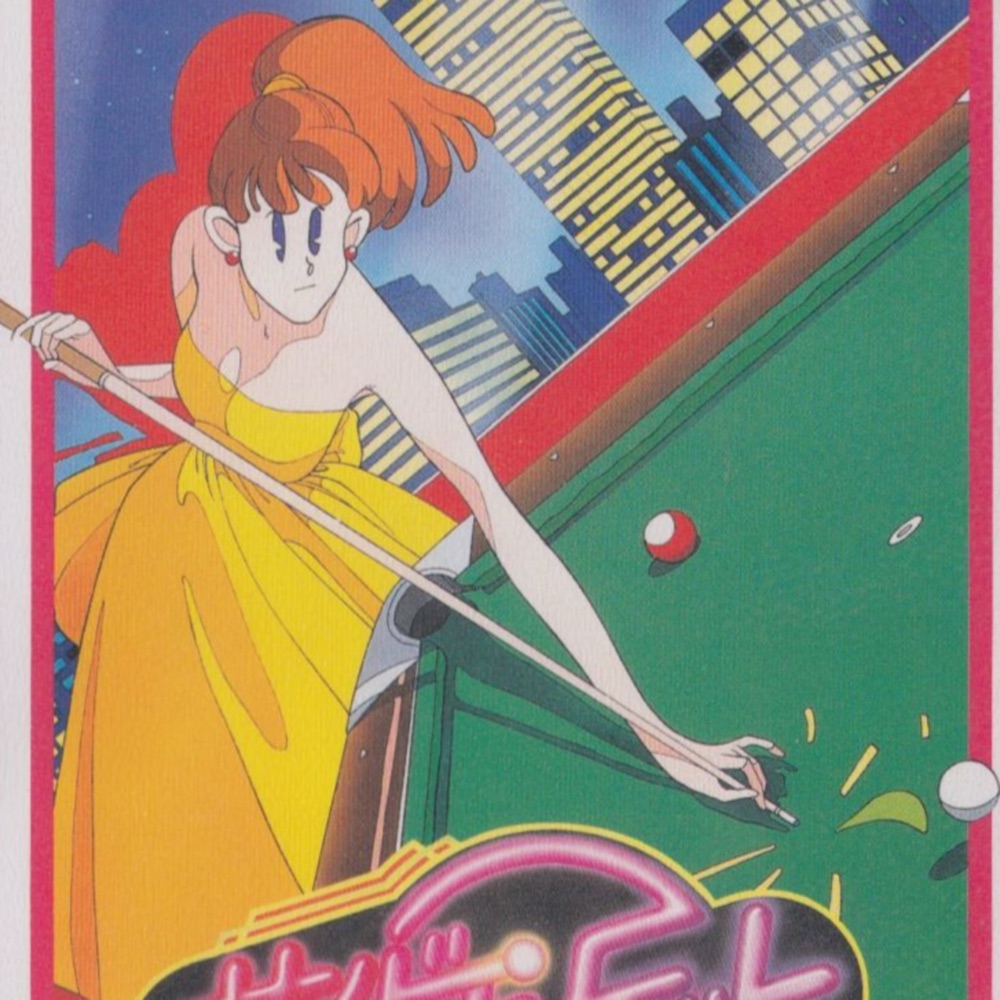
Chalk up your favorite cue stick and challenge your friends to the ultimate game of skill... pool! It takes a pretty cool dude to sink the tough shots on this pool table. FOR MORE NESTALGIA as well as show notes and links check out www.NEStalgiacast.com
- Introductions
- Some Recent Mail
- Chris Logel - I can only get to the final battle with Jaws using my rapid fire controller. The final battle is the most frustrating and I have never managed to complete it. #Jaws #NES @EspositoFilm
- Chris Stenshoel - Karate Kid is brutally frustrating. Jaws and Goonies are still fun to play, but that might be because I had them both as a kid.
- Darren on Zanac - I know they’re not exactly sequels but essentially they are. Gun-nac for the NES is far and away my favorite shooter on the nes. And Space Megaforce is my favorite SNES shooter. Both are updated versions of Zanac. I wish they got a shout out on the show.
- Jesse Waldack - it was joked about DK being in Punch Out and relegated to a spectator, but it was never brought up that he IS the final boss in the Wii version of the game.
- Development
- Data East
- First on Arcade in 1986, ported a year later just a month after Lunar Pool
- First Impressions
- I can’t believe in just one month a new billiard game has completely dethroned the only other billiards game available for the system.
- Tales from the Manual
- “English”
- A whole diagram on how to hit a cue ball and how to use a cushion
- Objective
- It’s billiards
- Gameplay
- Training
- Practice different kind of shots
- Even has video replay to show you how to do it
- Controls
- Let’s compare to Lunar Pool
- Pocket Game
- The story mode, compete for the World Championship
- Each course increases the amount of balls and the score required
- 2 Player 9-Ball
- Players play in rotation, the first player to shoot in the 9 ball wins
- Where was this mode for 1-player
- Training
- Sequels and Spinoffs
- Side Pocket for Game Boy
- featuring a smaller playing field (to compensate with Game Boy's screen), simplified physics and a different screen layout.
- One unique addition to the Game Boy version is the ability to play single-player nine-ball mode, while in other versions this mode is limited only to two players.
- Side Pocket for Super Nintendo
- This version features a completely different contents compared to the original, including revamped graphics, new smooth jazz-oriented soundtrack, new sound effects and photo-realistic background sceneries during gameplay. The main game modes remain identical to the original, with several alteration on the Pocket Game mode. This mode now features 5 levels represented as "cities" (Los Angeles, San Francisco, Las Vegas, New York, and Atlantic City) and the player starts with 8 lives. In addition, a new "trick shot" mode is featured, in which the player can try one of the 19 trick shot levels, each with increasing difficulty.
- Pocket Gal
- arcade adaptation of the NES version of Side Pocket released exclusively for Japan in 1987
- Pocket Gal II
- English version of Pocket Gal
- Super Pool III (Also Pocket Gal)
- which removes the stripping
- Pocket Gal Deluxe
- Released in 1992 it is what the SNES version is based off of
- Side Pocket 2
- Also known as Minnesota Fats: Pool Legend on the Genesis
- Side Pocket 2 expands greatly upon the original game by adding various pool games (including eight-ball, straight pool, and one-pocket) and the ability to play against AI-controlled players.
- Side Pocket 3
- Japan only for Sega Saturn and PSX
- Unlike the prior installments in the Side Pocket series, Side Pocket 3 renders the pool room environment with 3D polygons. In spite of this, the table can still be viewed in a traditional, top-down fashion.
- Side Pocket for Game Boy
- EGL (Mike, Sean, Joe, Sam)
Auto-generated transcript. Each paragraph starts with its timestamp. Speakers are not identified.
Side pocket, chalk up your cue stick and rack up those balls. Now get ready, get set, break.
Nostalgia And welcome to NEStalgia, a chronological exploration of every NES game released in North America. I'm Mike. I'm Joe. And I'm Sean. And the three of us, though you guys may not know it, it's been a while. Here we are. We're caught up. It's been a whole seven days. Yeah, a whole seven days. And we're all good. But you know who's not good with us?
Who? Some of the listeners. They left some mail that we have to answer to. So for the first time ever, we have a little bit of listener mail of just some general thoughts that I thought we'd do before we go into the normal episode. Are you guys cool with that? Like, am I going to be hurt by these things? No, no. Most of them are actually just thoughts. Okay. Just not even about nostalgia. Just about like, yeah, shower thoughts, if you will. Okay. You know, things that happen in their daily life and they're seeking advice. Yeah. I'm ready.
No, it's not. Okay. This is actually just thoughts on video games that we've talked about recently. We have Chris Logel first. And sorry if I butcher anyone's last names here. I'm just saying them as they appear.
Chris writes, I can only get to the final battle with Jaws using my rapid fire controller. The final battle is the most frustrating and I have never managed to complete it. Thoughts? I mean, like, it's ridiculous. It's not a very good, it's not a very good final battle. It's hard to do that. I understand.
Your pain is hurt. It is tough. So, I'm trying to remember, you have to build up your power. Your power, essentially. So, I wonder how much power there is. Because even with a lot of power, it's tough. I think it goes up to seven or nine. I think it's nine. Yeah, seven or nine. And from what I remember, I actually did do a test of like, how many shots does it take for a level one power to defeat Jaws? And the answer I got, with a rapid fire controller, was that you can't do it.
Oh yeah, because it never times out before you can. Yeah, you'll never be able to finish him off and he'll like restore enough health. Oh right, that's right. That it doesn't matter. Yeah. So, I definitely understand the frustration there, but I do think like, you know, that's the grindy part of the game that we kind of complained about, that there wasn't more to do with the ports and stuff like that. All right. Then we have Chris Stenshall, who writes, Karate Kid is brutally frustrating. Jaws and Goonies are still fun to play, but that might be because I had them both as a kid. I 100% agree that Karate Kid is brutally frustrating.
I felt like I needed to punish myself to get through that game. The only thing I could do in that game was kick. Anything else I couldn't make contact. Things would just come out of nowhere, hit you, and you really didn't have a lot of control. Just an exercise in jank. Yeah. And how do you feel about like, nostalgia with games as you're a kid? Like, have you ever gone back to a game and said like, wow, this stinks? Or do you still like it just because you liked it so much when you were a kid? 1942, I liked it when I was a kid. Okay. And I went back and I was like, this is horrible. I remember loving the original Twisted Metal, and then I went back and played Twisted Metal,
and I couldn't understand what was happening. I couldn't understand how to control the cars anymore. It was a mess. Yes, I did that too. It operates at like 12 frames per second. I don't know how I could do that. I wasn't crazy about it. I remember playing it as a kid, but when I went back to it, I was like, what are the controls in this game? Yeah. The original Star Fox for Super Nintendo was like that for me because the game actually runs at like, I think max, it's like capped at 15 frames per second. Yeah. But it goes as low as like 10 in certain scenes.
And I was like, how did anybody ever play this? So I do understand. Like, I think for the most part, if you liked it as a kid, you're probably going to like it still growing up because you have an attachment to it or remember like memories with it. But occasionally, like if a game is jank, it's just, it remains jank. Exactly. All right. And then we have Darren and this is about Zanuck. I know they're not exactly sequels, but essentially Gunak for the NES is far and away my favorite shooter on the NES and Space Megaforce is my favorite SNES shooter. Both are updated versions of Zanuck. I wish they got a shout out on the show.
Should we try them? I guess we should try them. It seems like we're going to get to Gunak eventually. I don't know what episode number that is. It might be the 300s, the 400s. It might be in a couple of years. Yeah. But I, you know, my love for shmups is growing as we continue to play through this library. So I say, sure, I'll give Space Megaforce a try. Yeah. What space, what system is that? That's for Super Nintendo. Okay. Super Nintendo usually delivers.
Yeah. That's a, by the way, Sean, what you did there, that's a debated topic. A lot of people are like, do you call it the SNES? Do you call it the Super Nintendo? Do you call it the SNES? Apparently SNES is like the do not say that one. I say them all and I don't really care. I feel like I interchange that a lot too, yeah. Which one, if you had to, out of the three, which one do you go to? I mean, Super Nintendo is what I called it when I was a kid.
And then, no, I kind of said Super NES too. No, it's Super Nintendo. The reason why I don't say SNES is because- It sounds gross. And you also don't call the NES the NES. The NES. We call it the NES. We say NES every day. Oh, shoot. NES. More of a wordplay thing, but I see where you're going. Okay. And last but not least, Jesse Waldeck writes, it was joked about DK being in Punch-Out and relegated to being a spectator, if you remember we talked about that in the arcade version, but it was never brought up that he is the final boss in the Wii version of the game.
I think that's awesome. I didn't know that. I didn't know that either. I checked it out on YouTube. It's actually really cool. I'll try to link to it. I think that that's wonderful and I always thought Donkey Kong should have a place. I'd like to see someone do a ROM hack. He's the final boss and he's replacing Mike Tyson or is he after Mr. Dream or whatever? Well, Mike Tyson's not in the Wii version.
Keep in mind, this is the full lead with the motion controls and everything. It's not like- But it's not like they're Mr. Dream, replacement of Mike Tyson, and then the final boss. Right, right. It is Donkey Kong. I would just like to say that as much as you might learn random factoids from us through the show, we can also learn from you because we are not authorities on anything. Yeah, we don't know what we're talking about.
Literally playing these games for the first time. Yeah, that's the idea. We have questionable backgrounds. None of us are qualified for these positions. And no one pays us to do it. It actually works out pretty easily. No harm, no foul. All right, guys. It's time to get into SidePocket.
It was developed by Data East. What was? Data East, remember? SidePocket. Oh. Yeah. SidePocket. Yeah. I wasn't sure if I was going to put a little music cue in between SidePocket and this. You probably forgot during the music cue. It's true. Yeah, yeah, yeah. So SidePocket, developed by Data East, first on the arcade in 1986, ported a year later, but also just about a month or so after Lunar Pool. Remember that? We did that episode recently. I remember. It's a classic. I think it was like episode 75 or 74, Lunar Pool.
And we had good feelings about that game for the most part. Yeah. It was a pretty competent port of billiards with this added gravity and friction effect. I think it was just called friction, actually. You just adjust the friction on the moon. That's all. Right. Can we get some first impressions starting with Sean? Um, well, since Lunar Pool is my only point of reference aside from terrible flash games from the early aughts and I guess maybe that a couple like PS2 games. This is the, so Lunar Pool is the only thing I have reference to. Uh, I don't think that the moment to moment gameplay in this is as good as Lunar Pool. Um, it's interesting. I like the, uh, it's actually set up to be in real life kind of pool. Like you're not on the moon.
I like that. But, uh, that was my first impression. All right, Joe. Yeah. I mean, I, my first thought was that this is pool. It's just regular pool at first, it seems. Um, and I do agree that physics wise, if, before you get into the friction and everything physics wise, this didn't seem to, things didn't seem to react quite as good as they did in Lunar Pool. Yeah. But otherwise, yeah, it just felt like kind of what you'd expect. Okay. And I think for me, this opened my eyes to thinking like Lunar Pool is more like a, um,
like a mini golf game with multiple balls to hit. And this is actually billiards. I think that that's what I took away from this. Wow. I completely forgot that Lunar Pool was mostly just weird shapes. Right. Weird shapes and stuff like that. And this is just like, this is what you see is what you get. You're playing a billiards game. Uh, and it's kind of funny that in just one month, a new billiard game has become completely available for this system.
And I know you guys aren't crazy about it, but I'm going to say I like this one more. Okay. Than, uh, than Lunar Pool. We'll get into it. Yeah. Let's, let's, let's do just that. First, just to get some terminology out of the way in billiards, does anyone know what English means? It is the, uh, Oh, you go ahead. I'm, I'm, you seem more confident than me, but I was gonna say, is that when you put a little spin on it? Yeah. It depends. It's where you hit the cue to give it spin or backspin and all that fun stuff.
I had no idea about this before, but it's also a thing in tennis and even like, it just refers to a ball in general, I guess when you hit it. So it's even can be done in baseball and it's, it was just like, I saw it in the manual and it was like English and then talked about like a bunch of things that had nothing to do with the English language. And I was like, hold up a minute. What are you talking about? Uh, but I do have to give a shout out to the manual because there are several pages of
diagrams on how to hit a cue ball, how to use the cushion, how to like pocket balls from different angles. It's, it's actually incredible. See, I didn't read through this length. I didn't read the manual to this one. Yeah. There's, there's a whole, I rarely don't. Yeah. You usually are manual authority, which Sam likes to think he is, but you usually are the actual manual authority, but it tells you like, this is the head rail. This is the foot spot. This is the center spot.
This is the side pocket. Like it's like, that's, that's nice. But then it also explains, and you'll need this in the game, what it means to hit the cue ball. If you follow, if you draw, if you do right or left, or if you're just hitting the center, which were things that I didn't use that much in the game, but we'll talk about that when we get to mechanics, I just think that it's really nice for a manual to include not only a bunch of diagrams on how to do it, but then lessons on like things to do. And then the game follows up with a whole lessons mode. Right. The manual for this game seems like it could just be a manual for billiards in general. It probably was.
And then they just added screenshots of the game into it. Well, if you think about, I mean, have any of other sports games dealt with like how to actually play the sport in this much detail? Or is it? I think that when they do, it's usually contextualized much stronger within the game. Right. Like, oh yeah, in football you have to, you have to get past the 10 yards. It doesn't explain like the detailed rules of football. Like this is explaining a lot of detail about pool. Yeah, exactly. Yeah.
So Sean, I think you did this for us in the lunar pool episode. Can you take us through the objective of billiards? What do you do in a game of billiards? In general, because there are many different billiards games, the objective is to get the colored balls into the little holes in the corners and sides of the billiards table. And you use a stick to do so.
In this game, your stick shoots an imaginary light out and it tells you what your ball is going to do if you hit it straight out. And then you just go on and so forth until there are none left. That sounds like pool to me. We better cross reference that with his first description of pool and make sure it all adds up. Well, that was pool on the moon. Anything could happen. That's true. That's a good point. Theoretically, pool on the moon, if you hit the ball, it just goes on forever. Nope. I don't know. There's friction. There's friction on the moon.
Sean's also our space guy. So it helped that. He's really into like NASA and stuff. So it helped that he's on this podcast for two folds today. He knows a lot about billiards and he knows a lot about space. I'm going to put a lot of less space on this. Okay. You were right. If you use, if you're on lunar pool and you just set friction to zero, then yeah, it goes on forever. Great.
And that was a problem because then it never ended. You would have to soft reset the game. Yeah. Before we get into the main modes of side pocket, there is a training mode that kind of gives you like different lessons and practice shots. Did anybody try that at all? I tried it briefly, but I did feel like the, the, so that's where it gives you a shot to do. You have to attempt the shot first. Then it says, no, here's the answer. Oh, I didn't do that.
Assuming you don't get it right. Assuming, which, trust me, I didn't. Right. I like, I love that part though. The, the, you kind of glossed over it there for a second, but I love the video replay of showing you like, no, do it like this. I liked it too, but I wish that it kind of paced out. Is it that condescending when it does it? No, it's actually very quick. It's like, no, this is the right answer. And it does it. And it's like, wait, pause it for you. I got to look at what you did for a second.
It's like, no. It helped a lot because it wasn't like, here's what you do when the ball is like three fourths of the way across from you. It was actually talking about like when you should use draw or when you should use follow on your cue stick or like how much power to apply in a given situation. You're talking about when it sets up a trick shot for you and asks you to do it. Yeah. So what I didn't care for about it though, was that it asks you to do the shot first. Then it quickly shows you it, but doesn't give you a chance to then try it. It just goes on to the next shot.
Right. So I never feel like I get to see if I'm improving or if I'm actually learning from it. I think that if they'd have bookended it with attempts, that would have been better. But I do like the, here, do your best and then showing you. I think that's a good way to learn. Yeah. I would have preferred like, you know, a textbook that opens up and then you select like the lesson and then you can just go back to that lesson. I thought you were being sarcastic. Let's talk about the manual again, right? It's practically a textbook.
No, but I do think that, you know, having something like that is worth it for a game that's actually trying to simulate billiards because if you've, you know, it's not like baseball or football. The rules aren't like apparent to everyone who plays them. And you might not know, like, I don't know, in baseball, basic strategy is learned to any kid who plays in Little League. If you're picking up a billiards game, there's a chance you don't know how to like hit a ball from the opposite side to go in the corner pocket or something like that.
Based on an angle. I don't think, I don't know like what context you mean that in though, because the first time I played Madden, I didn't know the rules of football. Like, yeah, I was like, I was a little kid and I'm like, my dad watches sports. So I think that you can come in blind in any, in any genre. Okay. And so it sounds like you did come in blind because you passed over the training, right?
Um, yeah. I mean, like I know how like the pool table works, but yeah. I just meant like, do you feel like you actually did improve as you continued to play the game? I'll get to why I didn't. Okay. Um, but no. Yeah. I, I, I'm just saying like a lunar pool could have used something like this. I think any game can use a training mode in a, in a simulation style environment. Yeah. You don't need a training mode in, uh, in like a shmup, you know, you don't need to learn like, here's how to deal with shooting these targets. Like, I don't think that's necessary. You'll learn that through game.
Yeah. I do think it is really cool that this is, this not, this actually would be giving you real world knowledge on how to play real pool. Like it's like, you know, it's giving you some insight on how to actually, unfortunately though, it will never teach me how to hold the key stick. And that's the one thing that I really suck at when it comes to billiards.
All right. So let's get into the controls of the game and controls. I mean, everything about playing this game, physics, how, how to hit the ball, you know, uh, styles of hitting the ball and stuff like that. So, uh, does anybody want to talk through their feelings? We don't have to compare to lunar pool right away. We can just talk about what we liked and didn't like about the setup. I'll start. Sure. The thing that immediately came to mind to me was something I asked for in lunar pool, which was to finally get a meter.
Remember? I had talked about that and how lunar pool was kind of missing that. And I would like to have seen that the way it was done in golf. This isn't exactly how I described because there's still. How do they do it in lunar pool? I think you just pull back. Yeah. Right. You just pull a cursor back. Oh, however hard you want to hit it. Okay. Yeah. I remember that now. And so with this one, you actually see like a minimum and maximum force and you can just let it like slide until you get where you want it to be. I don't, I think if you don't do anything at all, it will register the smallest hit possible. No, no, no. It'll keep going back. No, it'll keep going back. I think I got like a foul one time for whatever you call it. Oh, I don't know.
I was able to just let it run its course and it would come back. Okay. I never tested it because I didn't attempt it because in the other games that I've been trained about swing meters, it's usually that if you let it go back to the beginning, that counts as like a failed stroke. Maybe. I don't know. But no, I'm just saying, I don't know what happened, but I, I really liked the inclusion of this because this is the kind of thing where it does matter because most people would want to hit with max force and you immediately learn like, no, you'll really crush the ball. Like nobody ever uses their 100% potential when they hit the cue ball into like a ball that's right next to them. That's true.
Um, I would say that, um, as far as the physics of this game goes, uh, I really don't like it in comparison to a lunar pool because in that one, you were able to customize it to what you felt was how a ball should go across the felt or whatever the material is. Um, this game felt sticky and I don't know if it's just because I don't know if in this game there's less, uh, real estate on the screen, um, for the actual, uh, billiards table. Everything, the balls are definitely smaller, uh, in this game compared to lunar pool and stuff like that. I can't say the actual like screen sizes, but it does seem like there's a lot of unused real estate for the actual billiards because that UI at the top is so chunky.
Yeah. And also, yeah, I don't know if this is what you mean by sticky, but it feels like the ball is like trudging through something. It feels like everything feels very slow and heavy. There isn't as much momentum as it felt was in the other game. Right. Granted it's subtle, but we, us having played these so recently back to back, it's, it's very noticeable. Right. And then when you're trying to break the ball, even at the very beginning, break them.
Yeah. It's like it's one usually moves and you know, if you hit it hard enough, it goes into a pocket usually, but otherwise your, your next, your next shot is usually just like break it again. Yeah. Break everything again and hope that another one goes in because you got a streak. Yeah. There was more points when you continuously get them in and stuff like that.
I, I guess I didn't feel, I guess now that you mentioned it, Joe, about comparing the two, Lunar Pool definitely felt lighter, even on its standard setting, which I think was like 60 something out of 255. Something like that. Um, but this game overall to me just felt like every shot that I tried to do, I usually wanted to keep my power meter like somewhere in the middle. I think it was a little if I was confident about the shot I was making.
Yeah. Because otherwise if I went too little, it wouldn't, it wouldn't reach the ball. Yeah. It wouldn't make it to the shot because there's a, I don't know, there's just a very extreme difference. Yeah. Between min and max for what is a relatively small meter. Yeah. So you kind of always want to aim for that halfway point and just hope that like, that's just enough power. To get the ball into the pocket.
Um, in terms of other things that you can control in this game and it's a, you know, it's my fault. I didn't read the manual, but I also like had some temporary blindness and I didn't even see, uh, the indicator that, that showed you where you were going to hit the cue ball. So I didn't even know that you could put English on the ball. Huh? So I tried playing this game with direct strikes the entire time and that's why I was so bad. Well, here's why you didn't know about that. Okay. It's, you know, yes, the manual would tell you, but it's also not that intuitive. It's not, I did eventually learn. Okay. But I mean, yeah, you have to hold the button down and then.
Yeah. So, uh, for those of you that know billiards, well, uh, there isn't a second objective that you want to hit the balls in order too. So that means getting the first one in and then number two, number three, you won't know by the colors, unless you're really like a billiards master, you won't know by the colors, which number is which. So when you press B, it reveals the numbers. Mm hmm. Not a bad touch. I don't really couldn't think of a better way. It also shows in the top left, the color that you should be aiming for. Oh, that's a good tip. I did. I didn't notice that. Okay. That's good. But I did like the, you know, should revealing all the numbers and kind of switching between that mode is actually.
But another thing is, is that if you want to change the English on the ball, you have to, uh, while pressing the B button. So holding it down, then you move your cursor around to change the type of spin you put on the ball. And that I thought was like, can't we just hit like select to get like into the ball mode or something like that? Like I also, that wasn't apparent to me right away either. It was only when I started watching other videos that I was like, oh, people are like,
you know, cause follow and, and draw, I think are the most important ones. The spin left and right is like for people who really know what they're doing, but follow and draw are important to set up your next shot. If you're just hitting dead on each time, you're just going to be dead in the water wherever you wound up making the connection with the previous ball. Follow lets you move a little further. Yeah. If you're hitting it directly.
And draw lets you kind of like bring it back, which I thought was like done really well. The follow and draw system in this game. Maybe they were being too generous considering like the amount of skill that they assume the player has and then proceeding to be like, but he just did the perfect draw shot. Like there's no meter for that. You know, you just say, I'm going to draw. I'm going to hit it. Right. I'm going to draw all the way down. So that would mean your cursor moves all the way down to the bottom of the cue. And then you perform a perfect draw hit where it immediately spins.
And you can see it. There's a little dot on the white cue ball on the screen. You can see it spin. And it's like, I don't know anybody who's not a professional skill-y player who would be able to pull that off. But again, it's like, you know, when you're in Madden, you throw a, you throw a deep long ball and you can't do that. But you pressed Y.
You pressed Y. Yeah. No one's asking for like, I mean, does this happen? You play Madden more than me. Have they ever made it like flick the right thumb stick to pass? They have included a bunch of like gimmick, uh, gimmick, uh, mechanics that make it a little bit more skill-based where at one point they had a vision cone so that you had to, you had to simulate seeing your open receiver before throwing it. And it's, uh, I mean, they, they do it, but I mean, I just play on the regular style.
No, I think there's something to be said about that. There, there's a, maybe I'm asking for too much there. And I don't even know if I necessarily want that. I thought it was just funny that like you hit a ball from a certain direction and it winds up doing nothing. But your, your technique was perfect, you know? Yeah, exactly. But there is something to be said about like simulation versus fun, you know? Exactly. You don't want to simulate every single thing. Nobody wants to be as bad at a game in this, in the video game version as they are in real. Yeah. The idea is it's, it's, what is it? Wish fulfillment, right? Yeah. You want to be like the badass, uh, pool shark.
Yeah. I'm always thinking of Paul Newman. You know, like from, um, that movie with Paul Newman. Yeah. Him and, uh, Tom Cruise in that Martin Scorsese film. Uh, pool shark. Yeah. I don't know why I can't think of it. A jaw. Yes. Yeah. Tom Cruise played the shark.
The shark. Yeah. The pool shark. That's funny. I didn't notice that. I just walked into that. All right. Uh, so we're making puns here. So before we go into our next segment, I want to make it clear that I'm not going to be, it's not crazy. Uh, there is a movie with Scorsese, Tom Cruise, and Paul Newman. That's called The Color of Money. However, there is another Paul Newman billiards film from like 20 years before that, 1961, called The Hustler. And that's with Jackie Gleason, who, um, he, he, he plays the legendary Minnesota Fats.
Oh, and no, no. And what's funny is you're going to laugh for a minute. But there is a real life pool player who then changed his name to Minnesota Fats based off of the Jackie Gleason character in the movie. He, he wasn't. Legally? Like, no, not legally. Oh. It was like his nickname. Before that, he was like, cause he came and he grew up in New York City. So I think it was like Bronx Flats. Bronx Fats or something like that. Okay. And then he was like, no, I'll be Minnesota Fats. Wow. Yep. That won't be the last time you hear about Minnesota Fats. Okay. Just throwing that out there.
We need to talk about Pocket Game, which is how it's referred to on the screen in Side Pocket. And that is, for lack of a better word, the story mode, or as you guys want me to call it, the career mode of this particular game. You compete for the world championship. You start at the local city level. Yeah. And you just win three games of billiards, and then you're competing for the world championship. That's all it takes. That's really all it takes. What is different about this mode?
The structure. I mean, what's the question? I'm setting it up. I'm setting it up for you. Can you tell me what changes here? What's the biggest change between playing story mode and playing the nine-ball game? Well, the context is different in that when you win a game, you are treated to the moment after you win, and you immediately seduce a young lady next to you,
and then she just challenges you to a trick shot, and then you move on. But if you don't do well, she's not into it. She's not into it anymore. It depends on your points. Yeah, yeah. There's certain times where she will have a bunch of hearts over her, and then there's other times where she's going to get a hand. Oh, you know what? I didn't know that. Yeah, no, it's true. You need a certain amount of points. There's a hand? Yeah, if you do bad, she does the... I think she does the hand in your face, kind of turn their back on you.
So there's a couple things to set up story mode here. So just starting at the very beginning when you're at the city level, it basically says you need to get 3,100 points to move on, which is fairly easy. You don't have all the balls, though. I think you only have six in this particular instance, so it sets up just the six balls. You've got to hit them in the order,
and you want to streak them. If you don't get two in a row, you start to lose lives. And once you lose, your lives are represented by balls as well. And I think you get five. And then once you lose all five, it's game over. And that's just throughout the entire story mode. So... You can regenerate balls, whether it be from hitting balls into called... I don't know what the mechanic is, but it's like... I think of it as a called shot.
But you don't get to choose. You don't get to choose. It just sort of happens, and that's how they portray it. Basically, a star will appear in one pocket, and you're going to do better if you shoot in that pocket. But apparently, also, if you scratch into that pocket, you get a really weird bonus. Yes. Really? Yeah, it depends on which one it is, but I think that's the zone star one. I never attempted to just actually scratch my ball on purpose, so I never got to see this outside of watching other people play. But it was interesting to learn that, yeah. Yeah, basically, just so you can get that out of the way, if the zone star pops up and you sacrifice your cue ball in, which will cost you a life,
but essentially it will change the table into a different mode where stars appear in all four corner pockets, and then the friction on the table is actually reduced. So there is a little bit of a physics thing.
And then if you sink the last ball in this mode, you get multiple extra lives. Interesting. So there is like a risk-reward factor to it. Personally, I would have never tried that. That would have just caused an early game over for me. I was having a hard enough time as it was. Not with the very first level. I will say the city level is nice because there's only six balls, and they break enough so that you can kind of –
I actually did one time successfully get them all in order, which I thought was really cool. In a streak? Not in a streak. Oh, okay. But you do get a lot of points just for getting the numbers in order too, which I thought was nice because there's like two different ways to play the game. One would be to get a lot of points by streaking it, going to the next most obvious ball, and then the other one, if you are okay with losing some lives,
might be to try and just get the numbers in order so this way you get a bigger streak that way. I think by doing the numbers and just pocketing the balls in general, I actually scored like 7,100 on the first table.
I think I only got like 5,000 or something. Yeah. I have actually no idea. That's okay. Did the girl kiss you? No. Okay. So you didn't probably score as well. That's why I knew about the hand. And then the trick shots, they do get harder as you go up in the championship, but the first one is just kind of like, you know,
there's nothing. It's like hit the balls like right next to the corner pocket, and it's like, can you make the shot? It's like I just got six of those in. Yeah. It's a little patronizing, but I dig it. Yep. Also, the trick shot, when there's a certain pocket or pockets that it wants you to get, and instead of putting a star in those pockets, it just says no on all the other pockets. I thought that was really funny. The pockets that you don't want to do just says no. I like to think of it as like, because I know that maybe the second trick shot, maybe at the state level,
there's a bunch of like light bulbs on there. I just like to think that that same woman from the cut scene like took out a bag and just like threw them on there. This is a tournament setup. What are you doing? Are we sure the trick shots are the same? Maybe they shuffle. I feel like my light bulb one was later. I don't know. I don't think they shuffled. No. I'm pretty confident just because I think for the first two levels, that's really like to my extent. Of how far I got in this game. And I kept playing the game a lot, I'll be honest, but I just couldn't get past that second level.
For me, they kept being the same trick shot. Gotcha. So as you move up from the city to the state, to the country, to the world championships, the number of balls increases too.
And did anybody find that like, as they added more balls, that made it more challenging? Or made it like, you know, hey, now I've got more opportunity. I think it was harder to do it correctly. Whereas you may have inadvertently gotten easier shots. They're not going to be in order, or they're not going to be,
maybe they'll be, they'll be streaked, but I don't, I think it's harder to do it in order. It's harder to do it like, as well as you, like, as well as, like, it's hard to do it perfectly now. But, but it's probably, probably, I would say easier to, to randomly. So I, I joked early on in this podcast, about how bad I was at breaking, um, the balls. But did anybody actually like, figure out a strategy for that? Because that was the biggest thing for me,
was that, starting with more balls, meant that the break wasn't going to, break as nicely. And so I was going to mostly be dealing with, hitting these balls into each other for a while. And that caused me to lose a lot of lives. I couldn't really figure out a strategy. I mean, the only thing that seemed to help a little bit, but I don't know how much of this is just me expecting it to be better,
is not hitting it head on, and hitting it like, slightly to the left, or slightly to the right, like you would in pool. In my personal experience, I always tried to like, hit it a little off center, so it's not like, so that the whole bracket isn't absorbing all of that power. Right. Um, but I noticed like, if, when I tried to do that, the physics were wonky enough that, it, they just didn't move at all. Uh, so you need to hit it directly, to get the most,
like potential energy out of it. So it was sort of, uh, this damned if you do, damned if you don't. Got it. And I did, uh, eventually I, I put draw onto like full, so this way it was all the way down when I was breaking. So this way, after I hit everything, the ball would still kind of go back to where it originally was when it sets up. They're a little farther apart. And then I could break them all again.
And I was like, that sounds like a good enough strategy for me. So nobody, did anybody beat this game? World championships? they couldn't get to the worlds. Okay. Yeah. What, you did, you did get to country? I did get to country and then I lost. Okay. Yeah. I mean like it, it gets significantly harder. I mean the, the point requirements, I think the, plus your, uh, your lives don't regenerate if you, uh, if you don't do the things that give you the extra lives. Right. If you don't get the balls. So I ended up at like the country level with like two balls left. So it was, uh, it was difficult. Got it. And Joe, I don't remember if I got to country. I don't think I did. Okay.
Good. Yeah. That's it. That's the end. That's it. It doesn't really matter if you did or not. Yeah. I don't think I, exactly. It gets filed under the many games I did not beat. Yeah. There is though, and this is very strange in the two player section of this game, there is a complete nine ball game that you can't play on your own or with a computer. You can only play with a second player and it follows the rule of nine ball pool, which is the first to shoot in the nine balls wins. But player one goes first and continues on their streak until they go to,
until they don't make the shot. And then player two follows and you can score and actually play like best of three or best of five. And I was like, why can't this mode exist for? I think they just don't, didn't have a computer AI because there's no computer AI doing anything else. Right. Anything. So I guess they just, except for like the pre not pre rendered, but you know, the, the stock, like here's how you do this shot. Right. But those are, but they're entirely situational. So I understand why. That's true.
Maybe like, yeah, that would have, it would have just been perfect every time. So you would have had to, I mean, we already saw what AI does in a billiards game with lunar pool and that computer didn't know what it was doing. Right. Yeah, that's right.
I think the problem is, is that you're trying to program, especially on an eight bit system, you're trying to program like priority levels of, like getting shots in and power and like where they are in relation, everything. It's a lot to calculate. Yeah. I think that's why like they leave it. Yeah. They leave it to the player because it's also a lot for the player to calculate. You know, we, we talked about how there's a lot of skill required, but I don't know about you guys, but I do feel like I learned something, but, but the skill level is still a lot to overcome. I don't know as a kid, if I ever would have purchased this game, just because I, one, I wasn't really into billiards, but also I don't feel like I would know what I was doing.
Going back real quick to, uh, the game of nine ball. Is that the, the diamond shape break? Yes. Okay. What is the, what is the game that is like, you know, you get, uh, solids or stripes. That's like 16, right? Is that 12 or? Oh, I think it's, I think it's 16. Is it called 16 ball? No, it's not, but I know what you're talking about. That's the one where like, if you get the stripes in your stripes and then the eight ball is last. I think that's called eight ball. Yeah, no, it's called, okay. It is called eight ball, but that, cause you have to get that, the, the black eight ball in last. Yes. And you have to call the pocket on that one. Yeah. I just want to play that game. Yeah. That game. That's like what we all play ever.
Yeah. And that one would have been very easy on the system too. Cause you can identify stripes and solids on this without having to rely on checking out the numbers. The B button, but skills. Did, did you guys feel like you got better as the game went on? Do you feel like you learned something? Yeah, I think so. I do think that this would be,
okay. Comparing it to lunar pool, a better candidate. If you wanted to learn about pool, you, you might be a little skewed by the way the physics don't exactly match up to the physics in real world. But I think you could learn about, okay, this is how you do this shot. This is how you do that shot. Um, I do think that you, this teaches you if that's what you're looking for in this video game. And I don't, I don't know if anybody's looking for that. Exactly. The only educational game I can remember for this freaking system is Donkey Kong Jr. Yeah. A great game. Incredible game. So before we go into the essential games list, we have to do our sequels and spinoff section.
And, uh, you know, of course for a billiards game, you know, what are you going to get, right? What are you going to get in the sequels and spinoffs? Well, how about side pocket for Game Boy? Okay. Uh, it's a smaller playing field, if you can believe it, than the already small playing field. Everything is just monochrome green. So the numbers are always on, uh, you know, like you, you don't get enough pixel real estate for that. Yeah, they do have, well, I mean like they're worse than numbers. They're just little dots.
Uh, you know, you're like, I don't know. I don't know how to describe it. I guess it's really, it's not pretty. Okay. Very few pixels. But the physics work the mostly the same way. They're a little simplified, uh, but they work mostly the same way. So it's actually a pretty competent port. If you wanted to take it on the go in 1989, you know, I think that that's, or 1990, I think the game came out for Game Boy. But that's pretty cool. However, one unique addition to the Game Boy version is the ability to play single player nine ball. Hey, they fit it in the Game Boy version, but they couldn't do it in hours. maybe they felt more obligated because unless there's like a link cable,
uh, ability, nobody's going to be playing two player on the Game Boy. Right. Do they have one cable, link cable capability? Yes, it has link. It has the link cable capabilities and then you can play two player, but you can also play single player nine ball, which was completely missing from our NES port. Wow. So what other sequels and spinoffs could there be? Right? How about side pocket for Super Nintendo? I see where this is going. This version features a completely different, um, basically it has like revamped graphics, uh, a jazz soundtrack, Oh man. Yeah. Sound effects,
photo realistic background sceneries during gameplay. And even though the main game modes remain identical to the like NES version, there's a, there's a couple of new game modes. This one has five level, five levels in the story mode. Instead of doing the city and then building up to the world championships, you have Los Angeles, San Francisco, Las Vegas, New York. And then of course, where all the big shots play Atlantic city is the final destination instead of Las Vegas. And you know, Mike, I did, I did know that because I also know that the,
uh, that the whole thing that they have with the lady, uh, that turned into a full blown dating sim. Okay. Well, hold on a minute. You're jump, you're skipping my story. Are you serious right now? You're skipping my story. I was making a joke.
Oh, you were not joking. Um, side pocket for super Nintendo also lets you have eight lives instead of five. So that's, um, that's good, right? Good. More lives is better. And you can, uh, there's also a trick shot mode now instead of just the lessons. You can try, um, from 19 different trick shots, you can choose. And then each one has increasing difficulty. So you kind of want to like check off that you completed all 19 trick shots. Okay. Now you sound nervous because you've found out about pocket gal. Okay. Wait, wait, No way.
I'm the, the, the third party here. There's no way you just brought up the, Sean just brought up the dating sim. I did not know about this. And you guys didn't know about this. I thought it would be hilarious. It's the perfect segue. Because we have, uh, pocket gal, which is the arcade adaptation of the NES version of side pocket released exclusively for Japan in 1987. Of course it is. I, I can't see what's different though. It's like, why? Okay. So is that just side pocket, but it's called pocket gal. Then what about pocket gal two, which is the English version of pocket gal. Okay. So wait a minute. We only ever got pocket gal two. We never got pocket gal one. That was exclusive to Japan because then there's super pool three.
Also pocket gal, uh, which removes the stripping. Oh, wait a minute. I forgot. I forgot to mention in pocket gal one and pocket gal two. The biggest difference from side pocket is, is that women strip as you reveal, as you get the balls into the pocket. Oh my God. thankfully super pool three got rid of that for us. Uh, but yes, pocket gal one and two. In North America.
This is insane. This is a Nintendo system. Well, no, uh, pocket gal is just for Japan. And that, that had the stripping. But we'll pocket gal two. You said, pocket gal two never came to the NES, but it did come to, I guess like arcades and stuff like that. But that's the English version. That's the English version of pocket gal one. It's just, why is it called pocket gal two? Nobody would recognize that. And then super pool three also just called pocket gal,
not pocket gal three, uh, removes the stripping from the game, but is mostly the same. And then in 1992 pocket gal deluxe is, um, is released. And that is what the SNES version is based on the side pocket SNES version. Are you guys following along? A little bit. So there's side pocket, side pocket, pocket gal, pocket gal two, super pool three, and now pocket gal deluxe, which is what side pocket for SNES is really is like based off. Right. And then, and then later they released Hunie pop. Uh, no, later, later they released side pocket two. Okay. Side pocket two, also known as Minnesota fats. Oh my God. Cool legend on the Genesis.
Side pocket two expands greatly upon the original side pocket by adding various pool games, including eight ball. The one that you really want to play. Straight pool, which I have no idea what that is. Me neither. Uh, one pocket, I guess where you just have to like, or you have to get it into a specific pocket and the ability to play against AI controlled players. So finally that comes in. There's one big thing I forgot to mention though.
Side pocket two does have a story mode where you play as Minnesota fats. Okay. And while it is pretty good on the Genesis, it is miles better on the Sega Saturn with a full movie included into the game. Uh, it's unlike, it's unlike anything. When you say full movie, I'm talking about like, yeah, FMV sequences on a Sega Saturn, uh, where, and this is in English and where you play as Minnesota fats, trying to work his way through the, the system to get to Atlantic city and win the big game.
but no one has been like, I can't, I'll show you guys afterwards. I, I have to link it in the show notes. Nobody can understand. This is like night trap levels of bad. Do you guys know what night trap is? Of course. Like this is that level of bad acting. It is unbelievably hysterical. And because it was on Sega Saturn, no one knew about this. Everybody probably just thinks about the pixel art version with the,
uh, you know, with the text boxes on the Genesis version, but then they adapted it into a full story. I think that's a bonus. For the Sega Saturn. Yeah. Get our hands on a Saturn. Does anybody have a Saturn? Yeah. That's a let's play episode. I do not have a Saturn, but if you notice, there's a reoccurring theme of like sequel, our sequels and spinoff section getting really extreme and odd sequels only on the Sega Saturn or Japanese PSX. You know, like that's,
that's, that's where the, those are like the destination for us. That'll be our next system that we have to get to. Forget the Super Nintendo, forget the Game Boy. Let's just jump right to Saturn. Let's do it. We're not done yet. There's one more. Side pocket three.
Japan only for the Sega Saturn and the PSX. If you can believe PlayStation one, I know. If you, I know. I'm just saying for the uninformed, they might not know why I'm calling it PSX. If you can believe it, it's actually less advanced than side pocket two in the sense of like having a full blown story mode and everything like that. But instead it has, it's like a full 3D polygon environment where you can actually like, you know,
line up at the angle and everything. Yeah. Use the camera and a free angle and everything like that. But then you can also switch between the two at any time. You can choose between like a 2D top down view or your 3D polygon view. So I, I think that's a nice addition. It's only available in Japan. So I have no idea what they're saying. I don't know if Minnesota fats is referenced at all from his legendary conquest of Atlantic City inside pocket two.
But I just thought you guys would really like to know that while Lunar Pool had no future releases side pocket really just continued for a very, very long time. Wow. Um, let's move into the essential games list.
All right. It's time for the essential games list. And we're the only thing we're going to do different this time is because we have Lunar Pool to compare it to. After you give your vote of whether it's essential or not, I'd also like you to say which one you'd pick if you could only own one, because you have to keep in mind that this is November 30th, 1987. And so Christmas is right around the corner and you can only ask for one pool game. So which one are you going to ask for? And I guess if it was Hanukkah, you could ask for it as well. So I'm sorry for not being inclusive. So now we are. Sean, give me your essential games list vote. You made that much more awkward than I need to be.
Um, all right. So I, I need, I still need to like get over all of this weird shit you just told me. Um, but now just thinking about side pocket as side pocket, as I was thinking about it before you told me this whole odyssey, um, it's definitely not essential. Um, I don't think that any billiards game can be, um, except maybe like the Sega Saturn version of the FMV game. Um, so in comparison, I, I've had to think about this, like as we've been talking,
um, when I, the only thing that I really like about, uh, lunar pool, that's better than this is just the physics engine and everything else seems to go above and beyond in, uh, inside pocket. It's especially like a mini career mode. So now that I think about it, I think I would prefer side pocket as a, as a more, uh, realistic representation of the game outside of the nitty gritty, uh, friction element. Um, so yeah, that's, that's my take.
And is it essential? Oh, it's not. You said no billiards game will ever be. Yeah, exactly. Just a reminder. Yeah, everybody wasn't listening. Just a reminder. No billiards game can be essential. Joe. I'm going to echo that. I mean, it's going to be tough to get a billiards game on the essential games list. I do not think that this is essential, uh, plain and simple. I think it's, I don't think anyone's expecting us to vote it essential. As far as my, my pick between the two games, I think I still do stick by,
um, lunar pool. And the reason is not only because of the physics, which I did like, I think the biggest reason is because of the, the unique and funky tables that you have in lunar pool, as much as this does, if you're trying to learn pool, we did kind of come to that conclusion during this episode, that this is probably the better game to, to, to be playing like real billiards or, or learning how to, not even necessarily about learning, but about like simulating that. But I feel like at least personally,
I would get bored of this game much more quickly than I would lunar pool, where there's zigzagging tables and tables with holes in the middle and, and a bunch of different things where you can kind of like, practice and play around. And I just think it's more fun, uh, in that sense. So I, I guess it depends on what you want, but I think personally,
100% a lunar pool. I would like to jump in real quick and just say that, uh, I agree that you, that you should like the game based on what the game is instead of like, it's weird that we jumped to the idea that we're trying to learn pool because none of us are. I know, I was saying that a little too much there, but we, we did all talk about it. Right. Like I don't, I don't play NHL like 2K or whatever, 2K, whatever. Yeah. Because I want to learn hockey. But the learning is maybe not, not what I meant necessarily as much as the simulating real pool. I, I gotcha. Yeah. Okay.
Granted, that being said, I do think that the, the physics feel a little weirder in this game also. Exactly. Except for the fact that in the other game you could literally adjust the physics.
So I, Mike, stop me from talking. No, yeah, I will save you here. And I will say that, uh, in terms of the essential games list, you know, I don't know if another game will get on until we get to Minnesota Fats pool legend.
I think we take the old other games off. I was thinking about it. I was like, well, I need to kind of see that movie in full before I make a decision. If a pool game could ever become an essential game or not. But of course I stand by Sean here. I don't, I don't know what it would take for a pool game. I think it would have to do something. There's a game called pocket jockey for the three DS made by game freak. And that takes horse racing and actually makes it into a video game where it's less about the horse racing part and more about solitaire.
And it's serious and it's beautiful and it's a great video game. And that, that's one of my favorite video games, honestly. But wow. Yeah. But all that aside, I guess that's what I'm saying is like, I don't think a straight adaptation of pool is ever going to take it into my, into my essential games list. I think lunar pool was more fun and friendly for the system.
And so I think like the kid in me would pick that one. Like, like, Oh my God, pool on the moon. And there's all these, look at all these crazy layouts. But you know, if we're being honest, I, I think side pockets, the actual winner of the two. It has, it has so much more going for it. Despite the fact that the physics are like, I don't know. I take a little, a little less physics. Uh,
if I got all those other modes with it. Yeah. So I'm saying that knowing my idiot self, I'd pick the inferior game lunar pool. But in reality, I think the winner of these two games right now, and who knows, maybe we'll get more billiards games as time goes on. Uh, I think the, uh, side pocket is the one to play. Okay. All right. And, uh, that's all the time we have for this episode of nostalgia.
If you love nostalgia, if you love it, only if you love it, if you like it, just continue on. You could actually probably stop playing right now. But if you love nostalgia, just tell somebody, you know, I really love this podcast that I've been listening to. And I think you should listen to it too. And they'll be like, for the last time,
I told you, I don't listen to podcasts. Uh, no, all truth be told, we only live, this, this whole podcast only rides on the success of you guys. So thank you all always for listening. And we just want to encourage more people to listen. So anything you guys can do to help us with that. If you're ever reviewing something on Amazon, that's completely unrelated, just shout out nostalgia, you know? Yeah. Or if you go to Atlantic city and you play, pool, be like, Oh my God, this is just like episode blah, blah, blah of nostalgia where they talked about side pocket. And I am Minnesota fast. You know, it's, I think that's like how you would be listeners. Minnesota fat. That's undoubtedly, he was born in like 1913.
Uh, what does that do with anything? I don't know if he's still around. So he is. I'm going to look it up right now because we're like, we're borderline post show right now. Um, Rudolph Wanderone, who is, uh, Minnesota fats. He died in 96. Oh, um, in Nashville, Tennessee though. All right. Can we dedicate this episode to him? If you didn't? Yeah, sure. But actually why not? That's beautiful. But if you didn't notice, I did call out that he died in Nashville, Tennessee for a reason. Okay. Not in Minnesota. Yeah. They wouldn't let him go to Minnesota.
Uh, I guess that, you know, that really only has to do with the fact that the movie that he was Jackie Gleason and everything like that. Turns out also Rudolph, uh, or Minnesota as most people call him, he didn't really have like a prolific, like championship career. He didn't have like a lot of championships under his belt as a pool player, but he's very, uh, remembered. He was very nice. Can we actually make sure that he didn't do anything heinous? Or like hold like objectionable views? Do you consider a rivalry with Willie Moscone? Yes. To be heinous? Uh, let's see. I'll look for controversies.
Um, age controversies. He lied about his age. He wasn't born in 19. Well, I think maybe that's like a conspiracy thing is that like, did he really, was he really born? Oh, he was born in 1913, but sometimes hinted he was born earlier. Even as early as 1900. He hinted at it? Like, what did he say? He was like, I may have been born in 1900.
And then he winks. Even as early. And then he died in Nashville, Tennessee. I love that like, even as early as, like he's given like a range of like, you know, where he might've been born or when. I just liked the idea that this was a guy whose name was Rudolph. And he said, nah, screw that. I'm from New York. I'm going to be called New York fats. Then he became Broadway fats. Then he became Chicago fats. Then he became double smart.
Then he became triple smart fats. And finally, Minnesota. Are these names like a big thing for, what does fats mean in pool? I don't know. I mean like, I thought it was something sort of like a fats domino, you know, it just, it just sounds cool. Yeah. Maybe, maybe his name is real. I can't figure out anything about this fats thing, but, but it's like alter. Jackie Gleason was fat. So there's a reason why he might've wanted to call himself Minnesota fats. Are aliases like a big pool thing? Yeah. I mean, I don't, maybe I don't think so, but I would say, yeah. I would say that, you know, like in that era, everybody had a goofy nickname, you know, like, yeah,
he named himself that for a disease. Yeah. Oh my God. All right. Uh, this is definitely post-show language. So I'm Michael Esposito. You can find me on at Esposito film on Twitter and we'll talk to you soon.
Did you guys know that there are, there's an episode of family matters and an episode of fresh prints that are exactly the same plot, which both involve the dads of, of those two families hustling another hustler into believing that they're not good at pool and then proceeding to like rank in all the money. Do they both have the same song too? I don't think they both have the same song, but it's just incredible enough that like that happened because they were also like, they, they were on competing networks.
Uh, wait, what was family matters? Family matters was ABC. So that, yeah, I guess that'd be. So fresh prints was what? Well, I don't know actually. What did it start? Fresh prints network. I know it's on like Nick at night now, but CBC. NBC. So there you go. So yeah, they were on competing networks. So, you know, and they were, yeah, they were pretty much fighting for, you know, the, the ratings. There's also a similar episode of Drake and Josh that uses the same song. Yes, I think so. And I think like, you know, for what it's worth, it's okay when Drake and Josh do it.
They're just two lovable brothers, you know? I know. There's nothing wrong about that. Honestly, it is a fairly common situation to find yourself in. I don't remember the family matters on, but I think it was okay for Uncle Phil. I mean, the other guy was hustling Will, right? Yeah, yeah, He's giving him a taste of his own medicine. Are we just saying like, whether it's ethical or not to hustle? I'm saying,
how many times in your life have you found yourself in that situation where you've been hustled by a pool player, and then your dad comes to rescue you and hustles the hustler into a game pool? Yeah, like three tops. Yeah. I've had that happen with like, you know, I can't get into it on the podcast. It's all right. Yeah. Rest in peace, Minnesota Fats. Rest in peace, Uncle Phil. What's his name? I do know this. Avery, right? James Avery. James Avery from the Fresh Prince. Rest in peace. Voice of Shredder. What? Voice of Shredder.
For one particular series. Right. No, I just mean like that. You really angered him with that. Yeah. Be like, you know, be like saying rest in peace. For the 80s series though, right? Yeah, yeah, for sure. For sure. Rest in peace, Will Smith. It's bound to happen. Whoa. That's not a threat.
Oh my gosh. What an episode. Oh my goodness.