408 · Dragon's Lair
The NES version for Dragon's Lair brings Dirk the Daring in a side-scrolling game, different from the interactive movie gameplay common to the other games under the same license. Support NEStalgia directly by becoming a member of our Patreon at https://www.patreon.com/Nestalgia Members at the $5 and above level get access to our brand new show NEStalgia Bytes. A look at the famicom games you can play without any Japanese knowledge! For More NEStalgia, visit www.NEStalgiacast.com
This is not the Dragon's Lair people remember. The arcade game was a Laserdisc cartoon where you hit the right direction at the right instant. The NES version, developed by Motivetime, is a platformer that retells the movie, and it is merciless. Mike, Sean and Joe were on this one. Between the title screen that restarts if you try to skip it and the dying, we ended up talking about Sprite.
What went wrong
- A drawbridge that eats you. You can die to the dragon, to the bridge, or by touching the door. Beating the dragon means getting into one spot, ducking, and throwing knives that drop on the way. It took us 10 to 15 minutes, and on the first day we couldn't get past the first five steps. The correct move looks like a cheese, and the whole game works that way.
- That jump. Dirk commits and can do nothing in the air, like a T-pose. We guessed it was deliberate, so that every move feels like a trap, but it is still the worst jump in recent memory.
- Memorize, then repeat. Almost everything kills in one hit, so you learn each room by dying. Snakes burst from the walls like the Kool-Aid man, and respawning bats nickel and dime you. Mostly you park away from enemies and cheap-shot them, rinse and repeat. You can't get better at it, only remember it.
- Punishment. Six lives, no continues, no passwords and no saves. A game over sends you back to the drawbridge, and dying sends you to the start of the level. Pickups are letter blocks (E for energy, L for lives, and a G where a gold coin should be).
What it has
It does look like the movie, with smooth, rotoscoped animation, and the stiff, flowy motion makes it feel like a video. We compared it to a handheld Bloodborne redone as a JRPG: it keeps the name and loses everything people came for. We never found a moment of joy. The back of the box says "Now was the time for heroes," which only made sense once we read the whole paragraph.
Beyond the game
The family is odd. A 1991 Game Boy platformer has you collect 194 fragments of the Lifestone, and a 2001 Game Boy Color version that does the FMV after all began as a tech demo for Tarzan. The Super Nintendo version is another stiff platformer with smoother motion. The 3D one from 2002 is cel-shaded. The strangest is Frankie, Joe, and Dirk on the Tiles, a Game Boy slide puzzle from 1993.
The bottom line
Skip it. We all voted no on the Essential Games List, and it was not close. The first vote put it among the worst games played, with no joy in it. Sean said any merit shows up only next to the arcade original, and that he'd never play it again. Joe called it a lesser spin-off that is only appreciated historically. We'd happily try the arcade cabinet at a barcade, but not this.
Written from our conversation in this episode.
- Now was the time for heroes
- 1. General Overview – NES Version
- Elevator pitch
Sullivan Bluth Presents: Dragon’s Lair on NES turns the famous cartoon laserdisc game into a brutally unforgiving side scrolling “cinematic platformer.” You are Dirk the Daring creeping through Mordroc’s castle, dodging instant death traps with stiff jumps and limited weapons. - Who made it / when
Developed by MotiveTime in collaboration with Sullivan Bluth Interactive Media, published by CSG Imagesoft in North America. - Reputation in the NES library
Known as one of the system’s toughest and most frustrating games. Dirk is huge, slow, and fragile, and most hazards kill you outright. A mix of platformer and memory test where many players never get past the drawbridge dragon. - 2. Story & Objective (NES)
- Basic plot from the NES manual Evil wizard Mordroc has imprisoned Princess Daphne deep beneath his castle, guarded by the dragon Singe. Dirk the Daring marches to the castle gate “feeling no fear,” determined to descend into the caves and rescue Daphne out of love and duty.
- Overall objective Survive four main levels inside the castle, each filled with bottomless pits, monsters, and traps. Each level ends in a boss like sequence, and after clearing all of them you finally reach Singe and Daphne in the lair. GameFAQs+1
- NES twist on the arcade story
Plot is basically the same as the arcade original, but instead of reacting to animated scenes, you physically walk, crawl, and jump Dirk through handmade NES stages that only loosely echo the movie moments. Wikipedia+1 - 3. Core Gameplay Loop – “Platformer plus memory game”
- What you actually do
Move Dirk through very hostile platforming gauntlets, one small step at a time. You throw weapons at enemies, try not to get clipped by bats or skulls, and learn exactly where every collapsing platform, spike, and projectile appears. - Stage flow
- Level 0: Drawbridge with the famous dragon underneath.
- Level 1: Entrance Hall and Hall of the Grim.
- Level 2: Treasury and Dragon’s Breath shaft.
- Level 3: Gold Mines.
- Level 4: Final descent to Singe’s lair.
- Elevator hub
After beating a level you ride an elevator down a shaft that stops at four floors. - “Only if you played” flavor
The loop is basically: die to a trap, reload slightly earlier, and then do the exact right movement next time. It feels more like learning a long, punishing script than improvising in an action game. GameFAQs+1 - 4. Controls & Feel
- Button layout
- D pad: walk left or right, down to crawl on hands and knees, up to stand.
- A: jump, with two heights depending on how long you press.
- B: throw your current weapon (dagger, axe, fireball).
- Start: use the candle, which lights dark areas or reveals secrets. GameFAQs+1
- How it feels to move Dirk
Dirk is tall, stiff, and slow to react. Jumps follow pre programmed arcs rather than physics, so it feels like firing off an animation more than doing a precise platformer jump. Misjudge the arc even slightly and you slide into a pit or an enemy. Speed Demos Archive+1 - Self draining attacks
Every time you throw a weapon, you also chip away at your own energy meter. You can literally kill yourself over a long section by spamming attacks, which is something you only discover after watching your life bar shrink even without getting hit. GameFAQs+1 - 5. Level Design & Set Pieces
- Level 0 – The Drawbridge
You inch across a bridge while a dragon jumps up from below. The timing is so strict that many players never reach the castle interior. - Level 1 – Entrance Hall / Hall of the Grim
Classic castle corridor platforming with falling ceilings, swinging hazards, and the Grim Reaper boss whose finger beams track you based on RNG. You quickly realize you must memorize exactly where floor tiles crumble. GameFAQs+1 - Level 2 – Treasury and Dragon’s Breath
Gold filled rooms with rising bubbles and serpents, plus the notorious Dragon’s Breath section where gusts push Dirk around. The updraft physics are so odd that speedrunners broke down the movement frame by frame to understand it. Speed Demos Archive+1 - Level 3 – Gold Mines
Mine carts, trolls, and claustrophobic tunnels. You are forced into fast sections even though Dirk is built for slow, deliberate movement, which is part of why it feels unfair. GameFAQs - Level 4 – Final descent and Singe
Vertical descent into lava themed caverns, then a fight with Singe where you dodge random height fire puffs and chip away at a huge health pool. Manipulating the pattern is possible but extremely technical. Speed Demos Archive+1 - 6. Enemies, Items & Systems
- Common enemies
Bats, skulls, serpents, baby dragons, and various castle creatures, most of which kill you outright or strip large chunks of energy on contact. Singe has 40 HP, the Grim Reaper 16 HP, and even the dragon under the drawbridge takes a serious beating. Speed Demos Archive - The Lizard King
A semi random mini boss that appears if you steal enough gold. The game runs an RNG check every few movement frames to decide if he spawns, and he keeps coming back for his treasure until he hits you and reclaims it. Speed Demos Archive - Letter blocks and loot
All items are hidden in blocks marked with letters:- A: axes (strong, arcing projectile).
- D: daggers (starter weapon).
- F: fireballs (strong but slow).
- E: energy refill.
- L: extra life.
- C: candle.
- G: gold bags for score.
- P: points.
These blocks respawn whenever you die, so routes often include re farming weapons or lives. GameFAQs+1
- Candle secrets
Using the candle not only lights a dark stretch in level 2, it also reveals hidden items in multiple stages. It is one of the few times the game feels a bit like an adventure with secrets instead of pure punishment. GameFAQs - 7. Difficulty, Deaths & Fail States
- Lives and progression
You start with 6 lives, have no continues, passwords, or saves, and only a handful of extra lives exist in the whole game. Losing them means starting over from level 0, which reinforces that “one long marathon” feel. GameFAQs - Instant death design
Many hazards ignore your energy bar and kill you outright: pits, some enemies, and many trap triggers. Even when you do take damage instead of dying, the math is strict enough that a couple of mistakes end a run. GameFAQs+1 - “Memory game” label
The GameFAQs guide literally calls it a mix of 2D platformer and memory game. You are expected to memorize exact positions and timings or you have “very small chances” of getting past an obstacle blind. GameFAQs - Bugs and cheap shots
There is even a known bug where colliding with the Lizard King near a serpent spawn can drain a huge chunk of energy in one continuous hit, which feels less like challenge and more like the engine turning on you. Speed Demos Archive - 8. Graphics & Sound – NES Take on a Cartoon Classic
- Visual approach
The NES game tries to be “cinematic” by using a very large Dirk sprite, detailed walls, and lots of animation on hazards, but of course it cannot imitate Don Bluth’s full motion cartoon. Compared to other NES games it looks striking, but compared to the arcade it feels like a stiff, brown cousin. DPSimulation+2Wikipedia+2 - Audio
Original music and sound effects replace the orchestral arcade score. You get standard NES beeps, hits, and short tunes between stages, with no voice acting. The contrast between the lush arcade audio and the pared down NES sounds is a big point to talk about. Wikipedia+1 - 9. Arcade Origins – The 1983 Laserdisc Game
- What the arcade game actually was
Dragon’s Lair in arcades is an interactive film on LaserDisc. You watch fully animated Don Bluth scenes and react at the right moment with joystick directions or a sword button. If you choose correctly, the disc jumps to the “success” shot. If not, you get a bespoke death scene. Wikipedia+1 - Why it mattered
Released in 1983, it was one of the first games to use LaserDisc for full motion animation. It looked far beyond anything sprite based cabinets could do and quickly became a crowd magnet in arcades despite technical headaches with disc players wearing out from constant seeking. Wikipedia+2Wikipedia+2 - Arcade vs NES contrast
- Arcade: pure quick time event movie, short but spectacular, deaths are part of the show.
- NES: methodical, twitchy platformer with heavy trial and error, where deaths are mostly frustrating and rarely entertaining.
- 10. Ports, Sequels & Spinoffs
- Coleco ADAM Dragon’s Lair (1984)
- Platform and context
First home conversion of Dragon’s Lair, released for the Coleco ADAM computer in 1984 on disk and digital data pack. Coleco reportedly spent around two million dollars to license the property and originally hoped to build a LaserDisc style home experience before settling on an ADAM game that the hardware could actually run. Dragon's Lair Wiki - How it plays
It is not an FMV port. It is a heavily downscaled adaptation that uses traditional graphics and has its own gameplay. It advertises eight stages, each loosely based on arcade scenes: Falling Disk, Skull Hallway, Burning Ropes, Weapons Room, Giddy Goons, Tentacle Room, Checkerboard, and Singe’s Lair. Dragon's Lair Wiki
Hardcore Gaming 101 notes that the ADAM version actually uses two gameplay styles: in some scenes you directly control Dirk through obstacles with the joystick, while others work more like a timed reaction sequence inspired by the arcade. Hardcore Gaming 101 - Why it is interesting
- Historically important as the first Dragon’s Lair home release.
- Shows very early attempts to “fake” the arcade’s spectacle with limited home hardware.
- Later got a ColecoVision homebrew port by Team Pixelboy in 2012 that uses the Super Game Module to handle its demands, with a boxed reprint in 2023. Dragon's Lair Wiki+1
- SNES Dragon’s Lair (1993)
- Platform and release
Side scrolling platformer for Super Nintendo, developed by MotiveTime and released in 1993. Data East handled North America, Elite Systems the PAL version. In Japan it came out on Super Famicom under the title Dragon’s Magic, published by Konami. Dragon's Lair Wiki - Gameplay snapshot
Very similar concept to the NES game: big Dirk sprite, slow movement, deliberate jumps, and heavy emphasis on memorizing traps. Reviewers complain that Dirk has a lot of momentum, so it feels like you are always sliding on ice and overshooting platforms or running into enemies. SNES A Day+1 - Reputation
Frequently cited as one of the weaker SNES platformers. People praise the graphics for trying to echo Don Bluth art, but controls and level design are often described as frustrating or outright “ruined potential.” Hardcore Gaming 101+1 - Podcast angle
Good comparison point with the NES game: same developer, same basic idea, more horsepower, but still considered clunky. Nice “could SNES even save this design?” discussion. - Game Boy: Dragon’s Lair – The Legend (1991)
- Platform and premise
1991 Game Boy platformer by Elite Systems, published by CSG Imagesoft. It stars Dirk, but otherwise throws out most of the arcade structure. Wikipedia - How it actually plays
- Pure platformer built around collecting all 194 fragments of the Life Stone across 11 regions. Wikipedia+1
- There are no enemies to fight. The entire game is precision platforming: moving platforms, spikes, timing, and route planning. Incube8 Games
- The goal is to clear every screen and then reach the final area where the “Good Knight” lies in a deathlike trance, restoring the Life Stone and rescuing Daphne. Wikipedia
- Weird trivia
The Game Boy game is basically a reskin of a five year old ZX Spectrum game called Roller Coaster. Dirk is effectively navigating a set of fairground rides disguised as a fantasy quest. Wikipedia - Podcast hook
A Dragon’s Lair game with no combat, only jumps and collectibles. Great “license stapled on top of an existing game” example. - Game Boy Color: Dragon’s Lair (2001)
- Platform and tech angle
2001 Game Boy Color port developed by Digital Eclipse and published by Capcom USA. It is a direct adaptation of the 1983 arcade game, using full motion video style compression on an 8 megabyte cartridge. Wikipedia - Gameplay
Very close to the arcade: you watch small, compressed scenes and input directions or a sword button at the right moment. Fail the command and Dirk dies; you get five lives before game over. It even adds a tutorial mode so you can practice sequences, something the arcade never had. Wikipedia - Development story
- Started as a tech demo to show off Digital Eclipse’s FMV compression, first used on the GBC game Tarzan.
- Shown at Classic Gaming Expo, then pitched to Rick Dyer and Don Bluth, who approved an official version.
- A lot of art and code had to be redone to squeeze all those scenes into the cartridge at about 10 frames per second, with aggressively tiled backgrounds and minimal audio. Wikipedia
- Reception
Widely praised as a “how did they even do this on GBC” port. Visuals get strong marks, while audio, controls, and replay value are more mixed, but overall reception is surprisingly positive for a Dragon’s Lair conversion. Wikipedia - Podcast hook
Perfect example of late handheld wizardry: the same game concept that melted laserdisc hardware now running on a tiny Game Boy Color cart. - Dragon’s Lair II: Time Warp (Arcade 1991 and home releases)
- Core concept
LaserDisc sequel to the original, finished and released in 1991 after an earlier mid eighties start. Dirk chases Mordroc through time to stop him from putting the Death Ring on Daphne’s finger and forcing a cursed marriage. Steam Store+1 - How it changes the formula
- Still quick time event based, but structured as linear stages instead of randomized rooms.
- If you die, you restart from the current level or a checkpoint instead of jumping to some other random scene. Dragon's Lair Wiki
- Almost every required action is telegraphed by a brief flash showing where Dirk should go or what he should use. This makes it more readable, but some critics say it turns the game into a “Simon Says” light show. Dragon's Lair Wiki
- Branching endings and “director’s cut”
Originally, the idea was that collecting optional Treasures in each stage would change Daphne’s fate, with a shorter, easier ending if you got everything and a longer “Banshee Daphne” sequence if you did not. Arcade releases ended up making all treasures mandatory so only the long ending played. The shorter path survives in modern “director’s cut” style home versions. Dragon's Lair Wiki+1 - Reception and ports
Not the phenomenon the first game was, but it did get CD based home ports and now sits in compilations like Dragon’s Lair Trilogy. It is usually remembered as “more of the same, with better signposting and some wild time travel scenes.” Dragon's Lair Wiki+1 - Dragon’s Lair III: The Curse of Mordread (1992, home computers)
- Platform and release
1992 home computer title developed by Don Bluth Multimedia and published by ReadySoft for Amiga, Atari ST, and MS DOS, with an Apple IIGS port much later in 2022. Wikipedia - What it actually is
It is a sort of “expanded” Dragon’s Lair II for home systems. It mixes:- Footage from Dragon’s Lair II that did not make it into the earlier PC version.
- New sequences created specifically for this release, most notably a Blackbeard the Pirate stage that had been planned for arcades but never finished there. Wikipedia+2Dragon's Lair Wiki+2
- Gameplay
Still plays like a LaserDisc style QTE game, but on computers instead of an arcade cabinet. You watch scenes and input directions or actions at the right time in typical Dragon’s Lair fashion. Dragon's Lair Wiki - Podcast hook
Great to talk about as “Dragon’s Lair II point five” and as an example of how home versions sometimes became the place to recycle unused animation from the arcade pipeline. - Dragon’s Lair 3D: Return to the Lair (2002)
- Platform and release
Full 3D action adventure developed by Dragonstone Software and released in 2002 for Windows, Xbox, GameCube, and PlayStation 2, using the Genesis3D engine. Wikipedia - How it reimagines Dragon’s Lair
- You directly control Dirk in third person through a big, continuous version of Mordroc’s castle.
- The game includes many rooms and enemies from the 1983 original, plus lots of new puzzles and combat encounters. Wikipedia
- Visual style uses cel shading to evoke the Don Bluth cartoon look in real time. Wikipedia
- Reception
Reviews are mixed to slightly positive. People liked finally getting a “real” game out of Dragon’s Lair, and liked the art, but often criticized the camera, clunky platforming, and sometimes repetitive combat. Metacritic scores land in the average range across platforms. Wikipedia+1 - Podcast hook
Nice “what if they had done this for NES or SNES” thought experiment, and a clean dividing line between the FMV era and a more modern action adventure style Dragon’s Lair. - Franky, Joe & Dirk: On the Tiles (Game Boy, 1993)
- Platform and setup
1993 Game Boy puzzle game published in Europe by Elite Systems and Mindscape, developed by Audio Visual Magic. It crosses over characters from three Elite series: Dr. Franken, Joe & Mac, and Dragon’s Lair (Dirk). ALL PLATFORMERS - Gameplay
- Classic sliding tile puzzle: you see a scrambled image from one of the three franchises and slide pieces around to recreate the picture. MobyGames
- Adds gimmick tiles that briefly appear while you play:
- Bomb tile: if you do not move it within about ten seconds, it explodes and ends the game.
- Lock and key tiles: a locked tile cannot move until you trigger the key tile.
- Others that reshuffle tiles, add time, or auto complete the current puzzle. MobyGames
- Two main modes: a normal game with all the special items and an “against the clock” mode that removes the gimmicks and just focuses on speed. There are four difficulty levels and password based progression. MobyGames+1
- Reception
MobyGames aggregates very low critic scores (around the mid 30 percent range) and lukewarm player impressions. It is more interesting as an oddball crossover than as a must play puzzle game. MobyGames+1 - Podcast hook
This is your “deep cut trivia” card: Dirk’s weirdest appearance, in a picture tile puzzler with Joe & Mac and Dr. Franken. - 11. Podcast Talking Points
- NES specific
- Is there any moment where the NES game actually feels cinematic, or is it a completely different genre wearing Dirk’s outfit?
- Arcade vs NES
- Which is more “video game” to you: reacting to a cartoon with one button, or wrestling with awful jumps in a handmade level?
- Franchise angle
- Is Dragon’s Lair a successful “brand” or mostly a tech showcase that people remember for how it looked?
- 12. Essential Games List Segue
- Now it is our turn to face one last perilous leap… with THE ESSENTIAL GAMES LIST.”
Auto-generated transcript. Each paragraph starts with its timestamp. Speakers are not identified.
Dragon's Lair, now was the time for Heroes.
And welcome to NEStalgia, a chronological exploration of every NES game released in North America. I'm Mike. I'm Sean. And I'm Joe. Sullivan Bluth Interactive Media Incorporated presents Don Bluth's Dragon's Lair, all rights reserved, released by CSG ImageSoft Inc. Trademark, licensed by Nintendo of America Incorporated. That is the very first screen you see in this game. That is too much. Mike, you've already failed. There's a lot of bluth in there. Yeah, you've already failed the podcast. We're going to have to start over from the beginning. Why is that?
I think that's just how anything related to this game goes, you know? Oh, right, right. Yeah, anytime anyone makes a mistake, you'll have to immediately start over. It's all timed perfect. Uh-huh. Well, actually, yeah, we'll get to that because it is a little different. But Dragon's Lair, a lot of history to this game, mostly because we're not playing the version of Dragon's Lair that is celebrated. Maybe not from a gameplay standpoint, but from a medium in video game history standpoint.
Dragon's Lair is famous for being basically a cartoon that you watch and do quick time events for in order to successfully win. But if you don't do the right thing, you do get a cut scene to show what you did wrong, too. So it's like there's a lot of interesting things that can go wrong and things that can go right and seeing that through. And it's basically a game of memorization in the arcade version.
But for whatever reason, the NES game had to be something completely different. They couldn't make they couldn't translate that into like some kind of pixelated movie. So they had to turn it into this platform action game instead that kind of retells the events of the movie. All that to say to get back to that very long title screen that has all the rights reserved and companies and who worked on what.
Those should just be if they're trying to go for like that movie effect. You know, movies always start now with like seven different companies that worked on the movie. And you're not sure if the movie started yet or if it's just another company. That's what they should have all been individual things. It should have been like Sullivan Bluth, Interactive Media presents Don Bluth's Dragon's Lair. And then, you know, like keep hitting me with companies. But instead, it's just all at once like a sandwich. It's kind of crazy. Yeah, maybe it was like a patience thing. Yeah. Can you imagine? Like, I feel like I feel like you just want you just want to make this at worst. A worse experience.
I guess. Although, Mike, your suggestion would get people primed for how patient they need to be during this game. Yeah. We didn't even tell you how long each card should be up for. Right. Like Sullivan Bluth, Interactive Media should be like up for at least 15 seconds. Every time you try and skip it by pressing start or a button, it just starts over.
Yeah. Right. That's the restart button. Yeah. So the game was on, it's a Laserdisc game. Did you guys ever own any kind of Laserdisc? No. My, uh, wait, what is it? Is it my 10th grade? My 10th grade chemistry teacher had a Laserdisc player to show very outdated chemistry videos. Um, he would type in the frame number instead of using like a chapter. Was this your 10th grade? Oh yeah. They were already outdated by that. I was just saying like, this is like, like 2007.
Something like that. And he just really liked his Laserdisc player. I couldn't tell if he was trying to be funny or if, uh, or if he just had something wrong with him. Um, but that, that was, that was a part of my, my childhood. Yeah. It's kind of funny. Cause in a way you're also, you're learning about what he's teaching you, but then you're also learning about Laserdiscs at the same time. Like you're, you're getting two lessons at once. In a way. And my only understanding of Laserdisc was that they, they were like a preferred medium for like, um, film enthusiasts. And that's actually where like Criterion first started like releasing stuff was on Laserdisc.
Huh? So there's like a history of some of those being very sought after, uh, rare prints of Laserdisc stuff. It's not like it can hold a candle to the stuff we have today, but I don't know enough to say that it was better or worse than- I'd say it's a good step up from VHS. From VHS? Yeah. That was going to be my question. Cause at least it's digital. At least it's digital and you don't have like tracking and stuff like that. And so this Laserdisc game gets turned into this brutally unforgiving side scrolling.
You know what? I'll keep it as cinematic platformer because it is kind of scripted in certain ways that you can't quite tell and that we'll get into. Uh, but you play as Dirk, the daring. Is that a good name for a hero? Well, I don't know if it's meant to be a good name, right? Cause he doesn't, he looks derpy, I'm assuming on purpose. He crawls around kind of like a little, a little dork.
He walks kind of dorky. Yeah. He's kind of supposed to be a little dorky, right? The only other Dirk that I know is Dirk Diggler. So I, I'd say that he's in good company. It's not even the Dirk that makes it. It's the, the, the daring makes me feel like, oh, okay, we're making fun of this guy or like- Like, right, right. It's kind of like lame that he has the daring.
Yeah. And, uh, he has to, um, go through Mordrok's castle. Uh, just a, just another nonsense character name. Uh, dodging all of these, uh, basically instant death traps. Uh, and I don't say that just in the fact that they're one hit KOs. I mean, like everything in the game is designed to kill you the first time. And then you're just expected to remember how to avoid it going forward. Uh, but Dirk also has a very stiff jump. Uh, and I feel like that's where I want to start because we're saying that the, the cartoon
FMV game was turned into a platformer. Platformers are all about the jump. And this is like, this is sin number one of the 1000 sins of this game is that the jump is maybe the worst in recent memory. So I feel like a lot of this game, it's like doing a lot of things that the arcade game did in spirit, but like not in actuality. And if you're going to use like a, uh, if you're going to take something that was supposed to be really visually impressive because it was actually a cartoon and it's not like actually
like game engine stuff. And you're trying to do that in a game engine that you're controlling like a video game. I, I would do kind of what they're doing, like make it that pitfall esque, like what I assume is like rotoscoped, uh, animation.
So it's, it's trying to give you like, Oh, this looks good, right? This looks good. Like, like dragon layer. Yeah. That's kind of something I wanted to bring up too. I'm not saying it was a good, I'm not saying it makes for a good gameplay, but I do think that if you're translating that FMV style thing into like a side scrolling NES game, like they did a great job of not just like, not just translating like, Oh, this looks good for an NES game. Just like it looks good on the arcade, but also like it cut. It feels frustrating in similar ways because of the like weird flowy stiff motion. And like the is there's something about that that makes it feel both like a video and like incredibly frustrating.
And I, I, I got to imagine that was deliberate. Like I, I feel like they wanted the jump to be stiff. So you really have to know exactly where you're going to need the land before you pull off your jump and you can't just like Mario it and get really good at the platforming. And then like dodge things around. Like every moment feels like a, Oh my God, can I get through this again? Not saying that they pulled it off in a way that is like, wow, this is great gameplay. But I think that that was their intent or at least that's what I gather. I think it's just the way he jumps.
That is the most bothering. Like I get the whole rotoscoping and making it look like it's a full motion video, but he jumps as if he's lost complete control of every other thing in his body. And like, he might as well just go into T pose when he jumps. Yeah. It's a very quap. He's completely useless in jump too. Like he can't do anything else. So it's just very like, there's a better way for a human to jump than Dirk decided.
Yeah. And I'm not defending it as in like, no, no, I think it's good. I just, my gut tells me that this is what they wanted. You know, they wanted it to feel like, okay, once you've committed to jumping, like you're stuck. And like, because that just adds another layer of like, everything feels like a trap. The NES game wasn't made by the same people who made the Laserdisc game. It's the, it's the Bluth company.
Yeah. Well, it was in collaboration with them, but they made the, they made the main game too. Uh, so it, it was developed by motive time who I don't have any like information on to pull from, to, to make this like an interesting thing. Other than the fact that like very clearly, you know, you're taking a game and turning it into a totally different kind of game. And it, yes, it has like the, the blessing of the makers or whatever, like in, in spirit, like, Hey, this will make us money. You know, like, I guess that's the kind of blessing that they're getting, but it's just,
I can't think of too many other examples of games like that, that completely change the nature of the game while also being made by different people. Like I could understand if the Laserdisc thing like wasn't possible on the NES, but you would still want to like see through and create your version of Dragon's Lair. Sure. And I think they, that's what they did. Um, I don't know, I can't say for certain whether they went into this thinking like, oh, we're going to just make it another hard trial by error, uh, yeah, trial by error game, uh, trial and error game, uh, that it, that's just like lots of smooth animation. And that's just how it's going to like loop into the original.
But I don't, I don't think they, they really failed. Like I think there's a lot of games that we've played from arcade that have completely changed up what you see on the NES.
Haven't like, isn't that the case? Oh, sure. Sure. Yeah. This is like a really interesting experiment to me where it's like, yeah, it's like, I, when I started playing this, I, at first I was like, wow, okay, this isn't what I remember from just like, not from ever playing it from just like hearing about it, what Dragon's Lair was. It took me a little while to be like, I don't think this is what I know as Dragon's Lair, but I had to look it up and see that it's this other thing. And I was like, okay, so they really just, it's kind of more reminiscent to me of like that weird era where every game was released on like PS2, Xbox and Game Boy Color. Yeah. Where it was like the Game Boy Color game was clearly a totally different game.
Yeah. Definitely the whole like, uh, handheld redesign vibe is here. Dirk is traveling through, uh, this evil wizard's castle, uh, because the wizard has imprisoned Princess Daphne.
And if anybody here, uh, got to the end of the, um, FMV version of the game, they didn't have to go that hard on Daphne. As hard as they did. Uh, but wow. Uh, she is guarded by, yeah, she's guarded by the dragon. What's up? She's guarded by the dragon singe.
I think I'm saying that right. Uh, but that's just like plot. And the actual objective is you got to kind of have to like enter the castle, which might be someone's entire experience with this game. And then once you're inside the castle, you use this, uh, this elevator to go through these four main levels, each filled with endless amounts of bottomless pits, monsters, traps. Uh, and then each level kind of ends in a boss like sequence until you finally reach, uh, the bottom of the layer, uh, with where the dragon is.
What you actually do is, you know, you're, you're get your start the game. You see a drawbridge descend, you, you approach it and then you die either by a dragon killing you or falling, uh, through the, the parts of the bridge that I guess weren't sturdy enough, even though it was holding up just fine before it had any human weight on it. And presumably people have walked over it before if it's a drawbridge. So I guess it's just a trap, but that's, what's really happening in this game is that the, the very first screen may be the final boss for a lot of people.
Yeah. The, um, the, also the door, you can die by touching the door as well. Oh, I forgot about that. So I definitely took probably 10 minutes, uh, just to play the first green. And if I didn't have a podcast to, to, to record for, I would have stopped well before that.
Um, but yeah, so you gotta kinda first, you have to trigger a, a, an event where a, where this dragon pops his head out, um, and creates holes that you have to jump over. And he starts like shooting fire at you and you can jump over him. But with the drawbridge, no, sorry, with the bridge down, they have like, they've also put down the gate because there's a dragon out there.
And now you have to find a way to destroy the dragon. So unfortunately your attacks don't hit him if you've already jumped over him. So you have to get back to the other side, um, or just don't jump at all and then get into a very specific spot and sort of just play footsie with him by crouching. And then you've, uh, you'll probably get a couple licks in and then you've finally, after probably 10 to 15 minutes, you finally beat this, uh, this first screen and you can walk through the open gate.
Yeah. Well, I'll say that you, you have me beat by, by a significant amount of how long it took you to, uh, to beat this because I, I was playing, I'm not even kidding. The first like day that I was trying to play this, I, I looked, I told my girlfriend after her time, she was asking me like, oh, you're playing for the podcast. And I said like, yeah, I can't get past like the first few steps of the game. And she was like, you mean like the first few levels? I'm like, no, literally the first, it was like the first like five steps that I take. I can't get past like that.
And like, it took me and it took me a while. And then finally, like the next day when I figured out exactly what I needed to do, I was like, okay, well I can get, I get a lot further, but I mean, it's not, it's not clear. And like, obviously it's a little bit of a puzzle, I guess, cause there's like only one real like position you can be in to, to hit the dragon. You got to make sure the dragon has appeared on screen, but then stays up.
And if you crouch, it goes back into the water and all this stuff. But like, if you go to the other side of the dragon, like I'll get past the dragon and the door is closed and then I'll like turn around and try to throw the knives at him, but he throws them over his head. And it doesn't let me duck anymore from that side of the dragon. Like just because there's not something they're blocking me from ducking or anything. It's just, that's not what they want me to do. So I have to go back and duck somewhere else so I can hit the dragon.
That feels cheap to me. The whole game, it's sort of, this first screen is a microcosm of it, but the whole game kind of has this feeling of the things you're supposed to do being cheeses in themselves. In themselves, like the fact that when you get into that position to throw your knives, like not all of them hit, like it's not even like it looks like, because there's some, there's like some bullet drop basically with your knives, like that actually lead them into the dragon's head before he ducks down.
And because it's so inconsistent looking and so awkward looking, it looks like you're doing something wrong, but that is the only way to get past that part. It reminds me of in Gradius, there's the, um, the volcano and there's like the spot where you, it's the double volcano and you can just like park yourself somewhere.
And, uh, even though the volcano is spewing all these projectiles, you'll never get hit. And then you just drop missiles on it until it dies. It's like, once you know that you do that every time and it becomes trivial, but it's not something that you would just necessarily find out in, um, in like your specific gameplay. And so when I was playing without looking at a video, uh, this drawbridge, it was, yeah, it was an embarrassingly long time with just like a hilarious amount of ways to die. Like the fact that it's not just the dragon's fire breath that can kill you, but touching the dragon, falling through the drawbridge, touching the door, as Sean mentioned, uh, just wrong collisions.
Uh, all, all those things make it such a frustrating thing that, um, when I finally did beat it, I watched the, uh, YouTube video on like what you're supposed to do. And yeah, that whole idea of just like camping out on the left side of the screen and then like having his head appear up and throwing the correct amount of daggers at him and then waiting, rinse and repeat. You wind up like realizing, okay, sure.
That's not fun, but I'll do that in order to get past the screen. And then most of the game winds up becoming that like always just kind of parking yourself in a place away from the enemies and kind of cheap shotting them. I just want to go back to like, and I'm glad that you, that you sort of circled back to it, that what you said, the, like just memorizing something before until it becomes like rote. And then it's just trivial execution.
Isn't that what dragon's lair for, for arcade was, was like, yes, but at least you were, you were being treated to a visual spectacle. Peel away the Disney animation stuff. And that's, that's the, that's the skeleton behind the game. Yeah. I think that, and I haven't played the arcade version, the original version, but like, I think that what sets this aside is that I can see, I can see the world where it's something that I enjoy, where I appreciate the gameplay because every moment is kind of like a little puzzle.
Figure out what you have to do, where you, you know, like other than that beginning part, again, I only got through that part in the next level. And then like, I got barely through the third section before I started just watching a video of it. But like, other than that first part, everything else that I played it, it always felt like, okay, like I can figure out what I have to do. I think there's just like a lot of things that need to be different.
Like the thing that I have to do should a lot less often be what you guys were saying, like, just stand there and spam the enemy, you know, like that way. I can see a world where like, you can make a game like this, where every moment is satisfying because you're figuring it out. Like it's frustrating and then satisfying. One, because you're figuring out these different things. And two, because it's more forgiving as to where it starts you when you die.
As this game, you die, you go back to the beginning of the level. It's to get to all this extra stuff again. You're actually memorizing the whole level. And that ruins that potential for me to like enjoy this. But I don't know if the arcade game had that potential. The arcade game was more just like, you just get to watch a cool video and you just hope you press the right button. So you didn't watch like a playthrough?
I watched like a little bit of footage of it, but I didn't really like, I didn't really like gather what makes people decide what they're doing. Yeah. The full game executed to completion is an 11 minute video. And it's actually like the feedback that the game gives you visually and auditorily gives you a really good idea of what you're actually doing on this arcade machine.
It's, I think you just have like four directional buttons and an attack button. And you just have to, it'll like, you have to play the game over and over, get to points where you need to hit one of those buttons at a very specific time and get the timing right. And then you'll get some like visual feedback that you did it right. And then you will continue or you will get an alternate video of your character dying. And so there's no way it's not gameplay. There's like, there's no actual gameplay. It's all what we will soon call quick time events in, in video games.
Um, and this, so this is way more of a video game than the original. Um, what you were saying about like, if there were, uh, if, if there were things that like felt good to, that felt good to pull off, like in the first, like in the arcade game, that's impossible because you're only interacting with a video. Really in this game, it's really hard because all you're doing are slowly standing up and, and getting on, getting into like a shimmy position or throwing a knife or jumping in a really weird way. So I don't even know that like, even with your base verb buttons, there is like a thing that you can do to make it feel good.
Yeah. I mean, I, I, and I, you know, I'd just love to put double Zadkin here, but like I did have times where I was like, okay, now I, I see, okay, I got to stand over here, wait for this thing. Like, like where I figured out the timing of it or I was satisfied. It was just, it was just too much of it was just the same thing. And it was cheap over and over again. Yeah. Like, but like I did, I, I can think of games that are like, I, I, I feel like there were some like old like flash games and stuff like that, that were just like so frustrating. But the whole, the whole idea was like, everything is going to kill you and you, but you, you slowly start to like get a rhythm for it as you go.
And like, I, I feel like this has the, the soul of that. And it was just a matter of, can they pull it off? I remember impossible game, which I think was like, I think it was called impossible game, but it was like one of the, it was, yeah, it was like one of the earlier like Xbox arcade games. And it was just a square hopping along the line and it was a nightmare to play, but I spent hours playing that stupid game. But I think that's like more in line with original Dragon's Lair than this.
Yeah. Sean, everything you've said about Dragon's Lair, the arcade cabinet is correct for reference. Cause I know you were saying, I think it's like this. It is. It's four directional buttons in the sword. I think it's also worth mentioning though, that unlike a lot of modern QTE games or, or games that have QTEs in them, it's a very unforgiving amount of time as well. Uh, you basically have to be at the ready.
It's not something where you have like, oh, it flashed and, and you have like a couple seconds to decide, you know, like what direction it's like. It flashed and you better hit that button or, or be in that direction in that moment or else it's going to immediately play the scene where you, uh, where you die. And yes, that's, that's how they made all the money.
Right. So in, in that respect, this game being just as cruel, uh, makes sense. Uh, and I'm not, uh, I'm actually not opposed to them changing the whole thing and trying to like make some kind of pixelated FMV thing on the NES. Like I get that. I just, uh, am not sure that like the audience was here for this, you know, like Dragon's Lair was a hit for one reason and trying to like, it's almost like, uh, you know, um, how do I put this? Like, you know, you have Bloodborne on PS3 and PS, the PSP version is like a JRPG where you like have a team of people and turn-based combat. It's like, that's not Bloodborne, you know, like you wouldn't want that. I do get what you mean.
I think that there's, if, if there was this JRPG version, version of Bloodborne that somehow leaned into the, the, not even just like the vibes, like the, uh, aesthetic of it, but like the philosophy of the game. Like, uh, you have to be more, you have, you have to be more, uh, aggressive in order to conserve health or something along that, like along those lines. I think that would, I would buy that more, but I agree with you that as the audience for Bloodborne, the actual game, I probably wouldn't be the audience for this hypothetical JRPG version of Bloodborne, even if it was doing something like philosophically in the same vein.
Yeah. And I'm looking at this game as like, this is the first version of this game I ever played. But yeah, you're right. If I like bought this and I was like, oh my God, I get to have this at home now. And then I get home and it's like, oh, this isn't even, even similar to the same thing that I thought it was like, yeah, I'd be pissed.
And I think the game just kind of wears you down over time too, uh, in a way that the original game, while being like frustrating, would have continued to eat your quarters. Could you would be like, oh, now I know that, that what to do in that scene, you know? So now I can do everything again the same way. And plus this new scene. And you're basically just paying the full price of a movie to eventually hopefully make some progress in the arcade game here.
Okay. So like Ghost and Goblins, a very tough NES game, but one that we famously said in our episode was not, uh, was not cheap, which I think a lot of people disagree with. But I, I still think it wasn't like, if it was a cheap death, it was something that you still felt like you could improve on. In this game, it's all cheap deaths all the time.
Not necessarily things I feel like I can improve based on the controls I'm given. And so this game becomes something that the more you die and you will continue to die because you just can't anticipate new, like for instance, in the very first level after you, once you enter the castle, snakes just appear randomly. They're not even like, it's like, there's no explanation. They're, they're not, are they bursting out of the walls like the Kool-Aid man? They are because this is actually one of the adaptations from the game where there's snakes that come out of the walls.
It's also, I think this is the worst type of game to have that enemies endlessly respawn thing because it's just like, okay, I figured this part out already. I did this part. And it's just like, you have to, you have to really be focusing on what you're doing next and also what you just did because it's probably coming back. I think the only enemies that endlessly respawn are the ones that are just like, well, we haven't really gotten into this yet. So in most cases, if you get hit by something, you will die immediately. But there are enemies in the game that are just more like nuisances. Like there's bats in the beginning. They wear you down. Yeah, they wear you down there.
And I think that's just a way to like keep players moving so that like, cause if you do all of the actual like platforming and timing stuff correctly, you will, you'll just like not get hit by the things that kill you. But they want those people to still have to move faster, I guess. That's my guess. And I think those ones will just continue to respawn infinitely. But anything that you're, anything else, I think that like the snakes, I think you only kill a certain amount of snakes and then you can move on.
Yeah, I think you might be right. And those enemies that like fly towards you and they take down a little bit of your health. Yeah, cause a snake will just kill you. Right. And it's not the worst thing in the world. You get hit by an enemy that's just going to take down a little bit of your health. But like it does, I don't think, I never found like a health pickup. Are there health pickups? I think you just like, it's just like another way that you're like slowly, it's like death by a thousand cuts in like a, it's like, oh, I avoided all these things. But then like I wasn't paying attention to all these little things and they nickel and dined me to death. And then I ended up dying anyways.
I don't know.
Actually, I think there is health pickups. It's the, each one is a letter, like just a square with a letter. And I think the E, which is also health, right?
Oh, energy.
And I think the E, which is a little bit of a letter, like I said, I think the E, which is a little bit of a letter, like I said, I think it's a little bit of a letter.
In this one, I was more just so frustrated about how often I was dying without feeling like I was really learning anything or finding new things to talk about. And so I know that this is unique to our podcast situation. But again, I think it's worth stressing how punishing this game is. Yeah, that's why I appreciate when we can just talk about other things. Just pretend that this is a podcast about life. Yeah, and then we don't even record it.
Yeah, it's a podcast about Sprite. Love Sprite. Sprite is so good. Spot. Red Spot? Oh, Cool Spot. Cool Spot, yeah. Oh, that's 7up. Come on, poser. Everybody knows Sprite's mascot is just a lemon. That's true. Not even a lime. Right. Is it just a lemon on the bottle? Isn't it like a half lemon, half lime? I think it is. Yeah, it's like a green yellow. I thought it was like a frog.
Sprite has a frog on the bottle? I've never seen that. No, no, no. I'm just trying to induce some kind of Mandela effect in you. Oh, okay. Cool, cool. You made me nervous. Let me look up the Sprite frog. They were probably going to be frog Sprite from Chrono Trigger. The Sprite actually, the way they do the lemon into the lime with the fake little, it's almost like a sun. It's pretty cool. We don't talk about that enough. It's like sun and moon with the yellow and green. See, we got off track. Don't you feel better after playing Dragon Slayer?
I do, actually. I typed in Sprite frog and it came with those sprites of frogs. So then I was like, I should type in Sprite soda frog, but I didn't feel like moving the cursor. So I just said Sprite frog soda. And the AI overview has given me Sprite frog soda refers to a creative drink recipe that uses sprites and are garnished with gummy frogs and have a frog-like appearance. Have a frog-like appearance. Oh, that's AI for you. But the drinks are often, but no, I'm like scrolling down. There's like recipes, there's like websites with recipes of like this frog. Oh, it's real. Yeah. It didn't hallucinate that. Frog pond, lily pad fizzy bomb drink, dirty soda. Two thoughts here about Sprite.
First is the new Sprite like rebrand, terrible. I don't like just the idea of like just text being enough for a design. You need some kind of imagery. So you don't like Coca-Cola.
No, like, well, Coca-Cola, the way that they, there's enough history. There's enough history there. And I know, but it's different. It's different. This is like Sprite used to have like a cool banner around it and the lemon and the lime. Now it literally just is the word Sprite on a green piece of paper and then lemon lime in yellow, which is like not even, they couldn't even do like lemon in yellow and lime and like light green. They just stopped trying.
But most importantly about the Sprite rebrand, they got rid of the green bottle in flavor of a clear bottle. And I don't like the idea that Sprite is clear. Yeah. My Sprite has always been green. You can think whatever the current school of all graphic design is where texture is bad and everything has to be flat and minimal.
I think that's because it's just like easier to make like a phone icon if everything is flat and minimal. No, I'm serious. Probably. Like an app icon or something. Does Sprite have an app? The Sprite app.
Also with Sprite, is it short for something? Like Sprite feels like a naturally refreshing word. It's like, I think Sprite was originally some kind of fairy, right? Or like a ghost, fairy ghost. That's cool. I don't know. There is a Coca-Cola app. I recently learned there's a Burger King app. So I think there's an app. The Burger King app is very useful. Yeah. You can get rewards. There's like a, you can basically get free things every time you go to Burger King. Wow. You rule.
You know what's funny? The guy in the commercial, right? He's like, at BK, have it your way. And then what does he say? You rule. Right. Exactly. But it kind of sounds like he's saying, you're rude. No, it doesn't. Yeah. He's like, you're rude. That's a Mandela effect only for you. No, it's not even a Mandela effect because I know he's saying you rule. Like that's their, that's their whole thing, right? You're the Burger King. But it sounds like he's saying you're rude. I believe me when I say that.
You'll never hear it the normal way now. You'll always hear you're rude. Oh no. I want to talk about one thing for the very beginning of this episode. The video game or the, okay. The video game, the podcast. Did you say, the back of the box said. Now? Read the back of the box for me again. Yeah, it was like now was the time or then is the time or something where the tenses didn't line up. Yeah. Now was the time for heroes.
What is that saying? That's like pretty, it's pretty interesting though, right? Is it like you just died and it's like, wow, now was the time. But you missed it. But don't you think like, it's the kind of thing that sounds so dumb when you hear it. And then you're like, oh, well maybe they are saying something profound. Yeah, it's, I think I'm going to be up all night. I'm sure there's some very like complex past participle future verbiage.
Where that actually does make grammatical sense. It says, here I'll jump in halfway to the back of the box. Dirk the daring walked steadily toward the castle gate. He felt no fear. Fear was for cowards. Not the most courageous knight in the land. Uh oh, Joe sounds like the whole lame thing. Oh no. We weren't going for it.
No other would dare enter this perilous castle where Mordrak had imprisoned the helpless princess. But then no other could match Dirk's unrelenting love for the beautiful princess Daphne. There was no other possible course of action. Now was the time for heroes. Now was the time to enter the dragon's lair. See, it kind of works. It makes sense in that whole context.
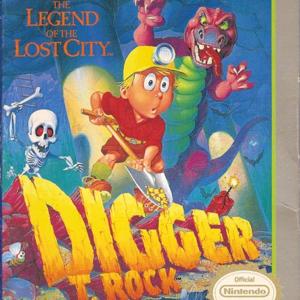
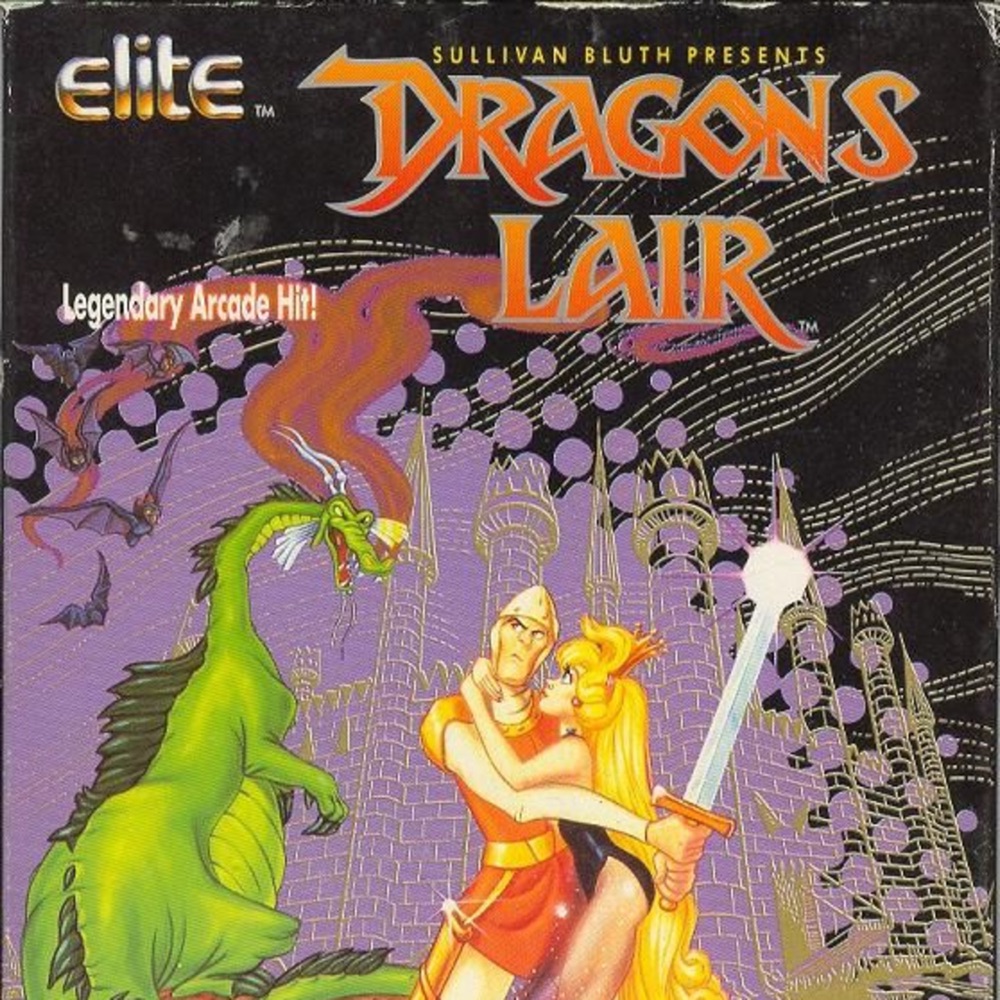
But just alone it was confusing. Well, that's why I pulled it. I pulled it. It's a good cut. And thank you for bringing it up. It's the most interesting part of the text, right? Well, now that we're here, Mike, you wanted to say some words about Daphne? No, I think I already said enough. But she is also on the box for the NES game drawn completely differently. And I just don't know. Like, is that are we sure she's royalty?
Like, she's wearing a crown, but otherwise you might think she got lost at the Playboy mansion, right? There also are a bunch of, like, lizards with crowns in this game. So I don't think that crowns really mean much. This is like a self-appointed thing. Yeah. Like, I declare myself princess. I declare bankruptcy.
Exactly. And we've talked about a lot in this game, even though Sean tried to divert the intentions of this podcast. I think he succeeded. Yeah, I think he actually did a great job, and people are going to demand a sprite game. So here's a question for you. If you're changing the game enough to basically become this platforming action game, did it need the instant death design? Did it still need that, like, punishing feel that the original arcade game had? Or could it have been something where, and I know not everything in the game is instant death, but basically everything in the game is.
Could it have just been, like, an actual energy meter that mattered? And, like, you're kind of like, okay, like, I could take this chip damage for a little bit, but I can't just, like, walk through every enemy in the game. Would that have even mattered, though, is another question.
That, like, the answer to that really depends on how they do everything else. Mm-hmm. And I think if they do that, and this is actually, like, a game that feels good to play, and it's just about, maybe there's more story, and it's really just the characters, then it's really, like, I guess it's still Dragon's Lair. But at least this still feels, again, like the ideas of Dragon's Lair kind of remixed. In a vacuum, maybe they should have done that, because it's just a, it would probably be a better game.
But that's a good question. I don't know if they, if they had a design doc they had to stick to. And the game starts you with six lives. So it knows it's hard, right? Like, you don't usually get six lives unless you do, like, some kind of cheat code thing. I, it's, this is, I'm having deja vu right now, because I feel like you said this in a very recent episode, like, almost verbatim. We had seven lives.
Was it deja vu? Uh, no, it was Atlantis Nonazo for the Bytes episode. Oh, okay, great. So great, great plug, Joe. Yeah. But you're having deja vu because, yes, we also recorded an episode called deja vu pretty recently, which everybody should listen to at least twice. At least. Yeah. Now, um, you started the game with six lives, as I mentioned, so they're aware of it being hard. But then you have, there's no continues, there's no passwords, there's no save.
Uh, there are some, there's the ability to find extra lives, but it's not like through points. It's, it's via these, the L icon that you just collect in the game, which all that stuff is so uninspired in these kinds of games, right? If this is supposed to be a cinematic game, why can't I just actually pick up axes or actually pick up lives? Is it that hard to make a sprite of gold?
Like a gold coin? Yes, right? Like the most, the most iconic collectible of any video game ever, a gold coin. They just put a letter G in a square instead. Well, I mean, he should like flick the gold coin with his thumb and then catch it or something. Like give, if he has the animation ability. Even without all the animation stuff, it's like just a yellow circle. Seems like it's less complicated than a G in a square. It's funny that you mentioned that because, and this is, this is another tangent, but at least it's video game related.
In Super Mario 64, the game obviously famous for being a 3D platformer that kind of redefined 3D platformers. The game, everybody's like, oh my God, look at all these polygons. Look at all this 3D stuff. It's Mario in 3D. The coins in that game are 2D sprites, just that they're like faked with some, like the ability to look like they're 3D because they're in a 3D world. So it's just funny that you mentioned like how hard could it be to do gold coins, but like they couldn't figure it out on the N64. But that's, they still did it. They figured it out. It looks 3D on the N64. Right, right. He could have just been collecting the letter G. That would have been a lot worse.
So if you lose all those lives, which is the point I was getting at, you start all the way back at the drawbridge. That's really unfair. Yeah, it's punishing. And so I think that's really everything I have to say about the NES game. But I have a bit of a, as long as we want to go tangent about Dragon's Lair. Let's go tangent, Mike. Let's tangent it up. Okay, so obviously the original arcade game was first. But this is not the first port of Dragon's Lair to consoles or computers. The first port of it was in 1984. That's right. The arcade game is actually all the way back in 1983, which is what makes it so damn impressive. But in 1984, it came to the Coleco Atom. Anyone ever heard of that?
Absolutely not. Right. I think it's just like, it was like a computer add-on or at least like maybe just a full computer. Oh, dear God. Yeah. It's a nightmare thing. But we'll also look at the Dragon's Lair port of Coleco Atom. That's what I'm looking at. Right. It's the first home conversion, though, of Dragon's Lair. And it's not an FMV port, but it uses traditional graphics and has its own gameplay. But it's not this game either. It's kind of weird that everybody was in on the idea of like, we can't make Dragon's Lair. Yeah. It's closer.
Sure. And there's more stages and there's like, it's based around the scenes in, you know, the stages are based on the scenes in the movie. I keep changing what it is. The movie game. Movie cartoon, laser disc. We should just, it's a cartoon. The entertainment experience. Honestly, I'm sure this plays horribly, but it looks pretty cool. Right, right. I am sure this plays horribly. Yeah. I'm sure it's terrible.
The next like version I want to mention is the Super Nintendo version of Dragon's Lair, because you would think, oh, it's, you know, we got eight extra bits on there. Like, did anything get better? What did they do? But it is another side-scrolling platformer where it's very similar in concept to the NES game. Still got a big sprite of Dirk, slow movement, stiff jumps.
But, like, I struggled to see other than graphics what was improved. Like, they had a chance to, like, fix the, because this game wasn't received well. It looks smoother at the very least. Yeah, way smoother. Yeah. And faster. It looks smoother, but it's not, I guess what I'm saying is it's like, it's not, it's not a noticeable improvement in gameplay over this game that, like, wasn't, people probably hated this game and understood how cheap it was, and, like, it wasn't reviewed kindly.
So why, like, throw it again? The gold is a circle with a G in it, and it's gold cards. How about that? What, yeah, what I gather from watching this is that it, like, and I don't know, I'm not, I'm not controlling it, so I can't tell, but it looks like it may be overcorrected for the stiffness, and I'm guessing that, like, one, you know, press of left on the D-pad makes you run, like, 12 steps or something. That's what it looks like, yeah. That's kind of what it looks like, and then he, like, skids to a halt. So it might be like, oh, we made it smoother, but we still had to make it just as frustrating, so we made it so it's like you can't stop once you start. Yeah. This looks a lot more like a typical side-scroller with normal enemies,
and maybe you even get a couple hits before you die. The guy I'm watching is very good at the game, but less of an experiment in pain and suffering than the NES version. The next iteration is on the Game Boy. Dragon's Lair The Legend came out in 1991, and it is just, like, there are no enemies to fight. The entire game is just precision platforming across moving platforms with, you know, different kinds of deaths and a timer through each thing. But your goal in this game is around collecting 194 fragments of the Lifestone. It's like, when did that, like, what? Where's Daphne?
Daphne is in the game. She's still at the end of the game. But, like, I don't remember. 194 fragments? Like, what? What does the Lifestone do? Is Daphne dead? Is this Shadow of the Colossus? You need to bring Daphne back to life? I don't know what happened to Daphne. I just know she's at the end of the game. This had to be something else that they just decided to make in the Translator. Why not, right? Yeah. Now, here's the interesting one. Game Boy Color, 10 years later, in 2001, it did do the FMV thing.
Whoa. It's not a 1-1. So it is, like, basically a recreation. But you watch small, very compressed scenes and input the directions as you watch the game. So it's kind of funny. This is crazy. It looks great for Game Boy Color. I would think this is almost Game Boy Advance. And isn't the Game Boy Color? Like, the Game Boy Color can't be anywhere worse than the NES was in terms of, like, power. Oh, yeah. I agree. So they could have done it. The tech was always there. They just didn't know it.
Actually, this Game Boy Color thing, though, started off as a tech demo for Tarzan. Wow. That's interesting. So they were, like, I guess they were showing that, like, they could take Tarzan and put it. It's like, all right. Don't do the Tarzan thing. Just remake what's already there.
And the next version. Oh, sorry. So not, like, the next sequential version. But there are, it is worth mentioning that there are two other official Dragon Lair entries in this trilogy of games. So there's Dragon Lair. Dragon's Lair 2. Time Warp. Where I guess they go to the Rocky Horror Picture Show and do the Time Warp again. And then Dragon's Lair 3. The Curse of Mordred. Now, I didn't really, like, because, again, these are just, like, you're watching them. So it's still QuickTime event-based.
But I think it's, like, there's some forgivingness added, at least in, like, the amount of time you have to respond. And also, if you die, you restart from, like, the current point you were at. Like, the most recent checkpoint rather than going back to the beginning. So that's nice.
But the third one I wanted to call out specifically because it didn't get an arcade port. It got ported directly to home. It got released on home computers. And so it kind of looks like all those Disney movies, like Little Mermaid 3 and, like, Bambi 2. The kind of shit you never knew, like, existed unless you were, like, you know, had a VHS player and just needed new versions of these movies to watch. Because you watched Snow White a thousand times. And you're, like, wonder what happens to Snow White after that? Well, we got Snow White 2, 3. I think they were up to, like, Cinderella 5. I was a big Aladdin 3 fan. Okay, but Aladdin 3, the Prince of Thieves. King of Thieves.
And Aladdin 2, the Return of Jafar, are both really good. I didn't know either of those existed. I loved them. But you know what, though? Actually, I think the best Disney sequel, like, straight-to-video sequel is Lion King 2. It's, like, as good as the original Lion King. Lion King 2 is good, but it's nowhere near Lion King 1 1⁄2. Well, yeah. I mean, that's probably the best movie. Well, what about Lion King 268 over 2?
Yeah. That's coming. Don't you worry. But if you didn't get a chance to check it out, do check it out. Dragon's Lair 3 just has a huge visual downgrade from the first two in a way that's got to be disappointing as, like, a conclusion to a trilogy. Looks kind of CDI. Is this CDI? I think it was released on CDI. Let's see. It was released on Amiga, Atari ST, MS-DOS. No, it was not released on CDI.
Dragon's Lair 3D Return to the Lair came out in 2002. It is a 3D action-adventure game on Xbox, GameCube, and PS2. But I do like this one, visually at least, because they went with, like, that cel-shaded graphics thing, which was, like, really good during that generation specifically. There are a lot of really good-looking cel-shaded games for GameCube and Xbox. I can't think of anything for PS2 off the top of my head, but I'm sure since they all got ports, they all have the same games. Now for the weird poll. The one that I was like, come on, like, do some more digging. There's got to be one weird Dragon's Lair entry, and unfortunately it has nothing to do with Princess Daphne.
It's Frankie, Joe, and Dirk on the Tiles, a Game Boy game released in 1993. That is the full title, Frankie, Joe, and Dirk on the Tiles. It is a Game Boy puzzle game using that tiles game where, you know, like, there's one empty space and you have to, like, drag everything across to make a picture. It's a slide puzzle. Yeah, the slide puzzle, and it's featuring three characters from three different Elite series, Dr. Franken, Joe and Mac, and Dragon's Lair.
Now, all three of those games are platformers, so there is some kind of, like, you know, cohesion between them, but, like, Dr. Franken is basically Frankenstein. Joe and Mac, they just gave us Joe? Like, what happened to Mac? No, this is the first Smash Brothers, man. Right, right, right. This is, everybody's here in 1993. Not even Mac.
Honestly, I think Sakurai doesn't have enough courage to put Frankie, Joe, and Dirk as a singular character that you can choose, and all of their moves are tile-based. Would love it. I'd play it. Now it's our turn to face one last perilous leap with the Essential Games List.
Well, we got to here, which is further than I thought we would for a game so punishing. I don't know what to say. I'm glad I was able to talk about this game for this long, and Sprite as well. Shout out to Sprite. Please sponsor us.
This game, like, I hate it. I really do. Like, I'm glad that they tried something. I'm glad I had something to talk about on this podcast. But this is absolutely going in, like, the worst games I've played of all time. It's not even up for discussion for me.
Any kind of merits it has, they diminish immediately. If there was ever a moment of joy in this game, I didn't feel it. But maybe you guys can convince me otherwise. Sean? Yeah, in the same boat here, I think to complete that thought, like, any merit that this game has is only viewed in comparison to the arcade game. Like, it's sort of like, oh, I can see what they're kind of going for here. Or I kind of get that there as, like, an homage or whatever. Like, oh, there's a cameo of that character here. On its own, this game is crap. And I will never play it again. And I would recommend that you don't either.
Not essential. Joe? Yeah, it's already a level removed from the game that was so popular. The original game. And the reason that original game was so popular is because of the time it came out in. It was impressive. Like, at the time. And, you know, you can still look at it and be like, that animation is impressive. Fine. But even going back to that now, where we have games, we have 3D games, we have games that are big adventures and everything. Going back to this, like, quick time event game that's really punishing.
I feel like it's really only appreciated in, like, a historical sense. And this is a lesser version spin-off of that that's, like, just trying to bask in a little bit of that. So, like, especially now, today, we're so far removed from finding the enjoyment in this game that, yeah, definitely not essential. I have never played the actual Dragon's Lair arcade cabinet, though. And even though I imagine that being, like, just as bad a time as this, especially if I have to actually put quarters in and not just some kind of, like, free play cabinet.
I kind of just want to see, because, you know, watching it on YouTube, like, yeah, the animation looks good and everything. But I kind of get the feeling that on, like, on those arcade cab CRTs, it might look even better. Like, in the sense of, like, what it was going for and everything. And so I kind of just want to, like, visually look at it. Because sometimes arcade cabinets are just cool to, like, take in. And I feel like we, you can't weigh that on these games when, like, you're playing them in an emulator.
And I'm not saying, like, 1942 becomes really cool when you're playing it in an arcade cabinet. Like, that kind of game doesn't transform. But some of them certainly do. I mean, you guys know. Like, when we go to the retro gaming conventions, it's, like, all the arcade cabinets together all making that sound. Like, everybody playing them. The lighting and all that shit. Like, it gets exciting.
The bleeping, the blooping, yeah. Yeah, the bleeping and the blooping. Of course. If things bleep, they also bloop. It's true. Yeah, I would definitely play this on an arcade if it were at, like, barcade or something. For maybe five quarters or whatever the equivalent of a quarter is nowadays. Which I think is, like, $18. But that also brings me to, and I haven't watched this.
So I cannot grant that it is a good watch. But I do see on YouTube right now how much did it cost to be Dragon's Lair in 1983. And I'm really probably going to watch that when we're done recording here. It's not really a QTE game in the same way that Dragon's Lair is. But for some reason, I was thinking about Azora's Wrath while we were recording this episode. And that has other things to do in it. It's, like, it's also a beat-em-up. And it becomes a rail shooter. And it has all sorts of crazy things. It's a pretty crazy game.
But I always thought it was, like, locked to the PS3 and the 360. And I just see now that it's on, like, PC right now for $2.99. Hopefully that's true. I'm going to click buy after the episode. But, like, this game is insane. And it has QuickTime moments that are actually, like, they actually feel cool. And it's like you're playing an episode of, like, Dragon Ball Z. And maybe that's the difference is, like, what you're doing in QuickTime events matters, too. And to have to do, like, everything in this cartoon to, like, make things happen. And all you're really doing is just, like, hitting the sword button to swing the sword and seeing it happen. Like, isn't as exciting as, like, you know. The Doom has really big muscles.
So. Yeah, exactly. But, like, in Azor's Wrath, it's right. It's exactly. It's, like, you've got to hold down RT and LT, like, really, really hard. And then you've got to press the A button at just the right time and swivel around the joystick. It's, like, I'm surprised that there were no, like, Street Fighter-like motions in this Dragon's Lair game. Where, like, you have to, like, half circle or quarter circle on some of these inputs. I'm surprised there were no Street Fighter-like portions in Dragon's Lair for NES. I guess. I meant in the arcade version. Oh, okay. But your point stands. That's even more of a ridiculous sentence.
I'm surprised that there wasn't a dance pad for Dragon's Lair in the arcade. You've got to hit the whammy bar to get star power. Also, not for nothing, because I don't want this episode to end, apparently. When you're playing the arcade game, it's, like, kind of frustrating that the input, like, is displayed on screen rather largely. Especially with the sword in the center of the action. It's like, I'm watching this.
Yeah, that is silly. But at least, you know, for our purposes, it helps to illustrate how it works. We don't have the game in front of us, though. That's true. But I just got a new TV, which I think is awesome, except for the fact that if I mute the TV, like, I want to mute the game I'm playing, so I don't hear the audio over and over and over again. The mute icon stays on the TV. I hate that. That's a huge no. Why do all TVs do that now? Right. I got to figure out how to turn that off. There's got to be a way. Blame your parents. Thank you.