IS NES BASEBALL HAUNTED?
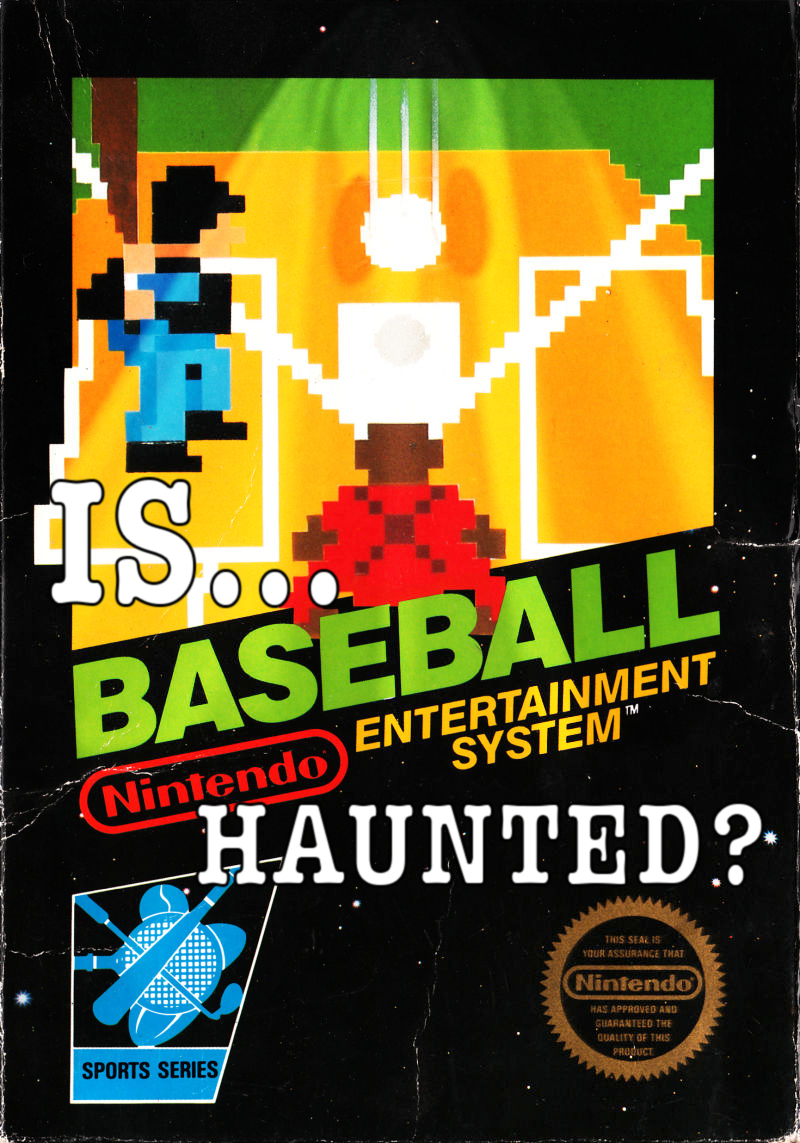
Six pieces of evidence that NES Baseball is haunted, including one the instruction booklet admits to.
So you stumbled onto this article, and instead of scrolling past you decided to find out for yourself whether NES Baseball is haunted. I have good news and bad news. The good news is that NES Baseball is definitely haunted, so you have not wasted your time by clicking. The bad news is that NES Baseball is haunted.
It's true. While I was playing and reviewing every NES launch game from Nintendo's limited 1985 North American run, Baseball looked perfectly innocent. It was designed by Shigeru Miyamoto at Nintendo R&D1, and it was both necessary for the console and a labor of love for the company. So why would Nintendo build a haunted game and slip it into millions of living rooms? I honestly think it was an accident. The paranormal origins of NES Baseball are nothing more than bad luck.
Then again, Miyamoto went on to produce Luigi's Mansion, a game where you walk through a haunted house and suck up ghosts with a vacuum. Nobody does that by accident.
So now that you're convinced, you'll want evidence. I pulled the file. I also pulled the instruction booklet, which turns out to be the most incriminating document of all.
The evidence
If you are hit by a pitch, it goes right through you
Crazy, right? Baseball has been played every year since at least 1856 (a very haunted time in America), and in well over 100,000 plate appearances no one can name a single time a batter was hit by a pitch and the ball went straight through them. That's because it only happens to ghosts. Thankfully the umpire is smart enough to know that if you weren't actually touched by the ball, you don't deserve first base. The ruling in NES Baseball is just "Ball."
The team names spell something
Pick a word. The tiles will do the rest.
The game makes you pick your team by its initial. Most fans of the haunted NES Baseball know that the A, C, D, P, R and Y are the first letters of the teams they represent. But have you ever looked at those letters in a different order? You can spell CRY, PRY and PRAY. CRY, of course, because of the terror of playing a haunted NES game. PRY, as in the spirit of Baseball's Past prying your loved ones out of your arms. And PRAY, because the only thing left to do is hope your God (or gods) will forgive you for bringing that demonic possession into your house.
You don't control your fielders
What looks like a design choice carries some deeper lore. The instruction booklet says it plainly: "The fielders automatically run after a ball hit into play." You get a say in where the ball goes once they have it, and that's it. They don't move because it was programmed that way. They move because they are all dead. At the very least they were once dead and are now zombies, shuffling toward a ball that means nothing to them. I've heard a theory that they believe the baseball is a human brain, which explains the chase.
The fielders vanish, and the manual says that's normal
This is my favorite piece of evidence, and I didn't have to dig for it. It's printed in the official booklet, in a list of notes about how to play: "Occasionally, fielders may temporarily disappear from the screen. This is not a malfunction." Read that again. In 1985 Nintendo told its customers, in writing, that their players might vanish into thin air and that everything was fine. Nobody asked. They just wanted you to know.
The scoreboard hides runs from you
The booklet has one more confession. If a team scores 10 or more runs in a single inning, the scoreboard only has room to show one digit, but the real number still gets added to the final score. So the game keeps track of runs you cannot see. Somebody out there is scoring on you, and the scoreboard won't say who.
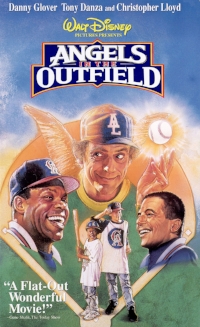
Disney made a movie of NES Baseball, and it stars Danny Glover and Tony Danza
It was called Angels in the Outfield. Seriously. Angels in the Outfield is a 1994 American sports horror film. In it, a young boy named Roger, who has lost his mother, is living separated from his father. He prays for the California Angels to win the pennant, and over the next hour and forty-two minutes he is forced to watch his friends, family and the city of Los Angeles pay the ultimate price for his greed. It spawned two direct-to-video sequels, Angels in the Endzone and Angels in the Infield (neither verified by the Author to be about NES games).